Staphylococcus haemolyticus is a Gram-positive, coagulase-negative coccus that forms part of the normal skin microbiota and has emerged as an important opportunistic and healthcare-associated pathogen, particularly in patients with foreign bodies and invasive devices.
Basic Characteristics
Taxonomy
Domain: Bacteria
Phylum: Bacillota (Firmicutes)
Class: Bacilli
Order: Bacillales
Family: Staphylococcaceae
Genus:Staphylococcus
Species:Staphylococcus haemolyticus
Microscopy & Gram Stain
Gram-positive cocci
Cells occur singly, in pairs, and in irregular clusters
Oxygen Relationship
Facultatively anaerobic
Rapid Identification Tests
Catalase: positive
Coagulase: negative
Haemolysis on blood agar: often present, but variable
Routine identification: morphology alone is insufficient; species confirmation requires standard identification methods
Ecology and Clinical Relevance
Natural Habitat
Human skin flora
Particularly frequent on axillary, inguinal, and perineal skin
May colonize hospitalized patients and healthcare environments
Common Clinical Specimens
Blood cultures
Catheter-related samples
Wound swabs
Prosthetic-device-associated specimens
Urine and other nosocomial clinical materials
Clinical Significance
Important opportunistic pathogen among coagulase-negative staphylococci
Frequently associated with healthcare-associated and device-related infections
Can cause bloodstream, wound, bone, joint, and urinary tract infections
Often notable for multidrug resistance
Differential Considerations
Staphylococcus aureus, especially when colonies are haemolytic or faintly yellow-pigmented
Other coagulase-negative staphylococci such as S. epidermidis and S. lugdunensis
Micrococcus species
Important clues include coagulase negativity, variable but often prominent haemolysis, and the need for species-level identification beyond plate appearance alone
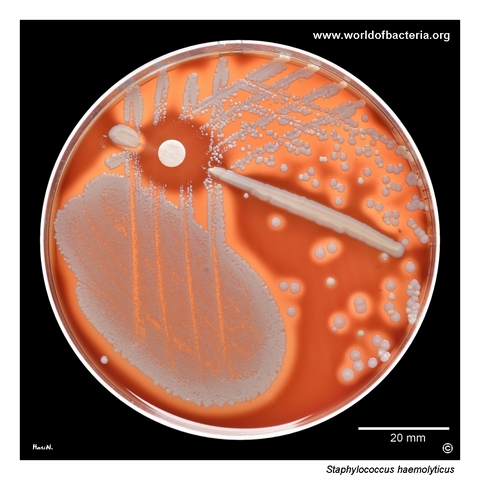
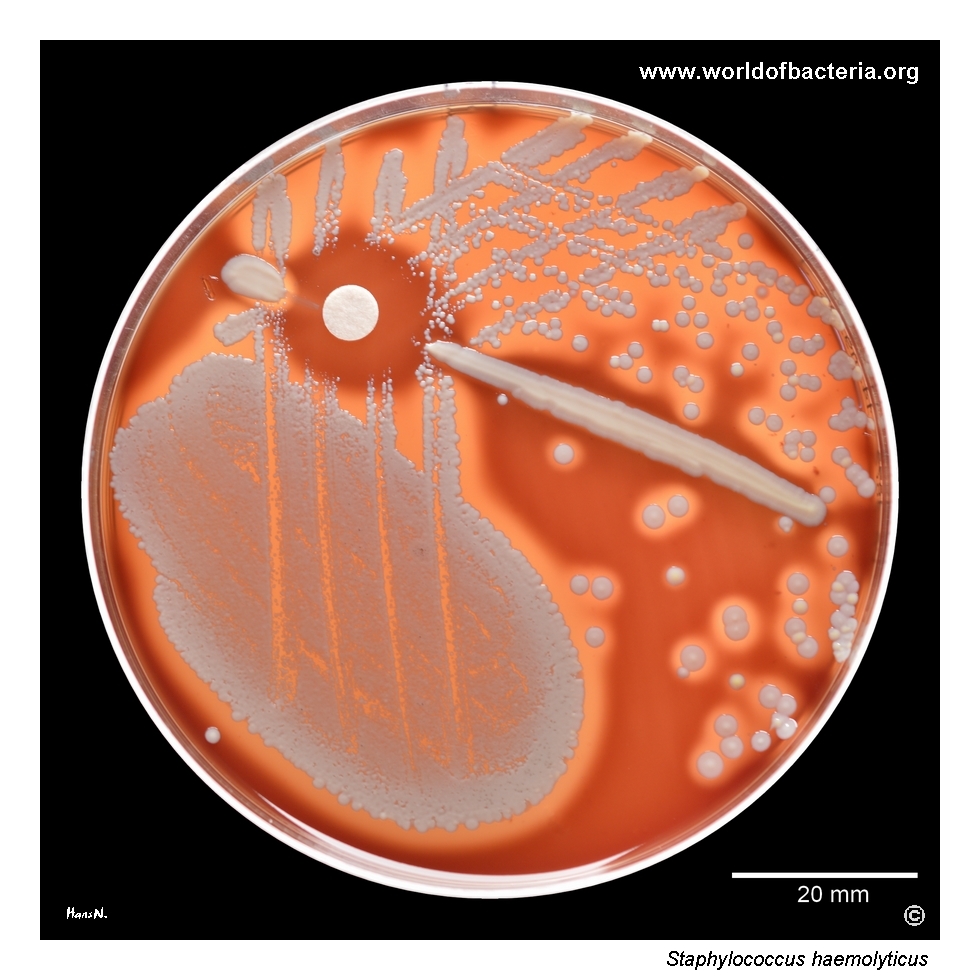
A skin swab from the glans penis was cultured directly on blood agar and incubated for 24 hours at 36 °C in 5% CO2. A streak of Staphylococcus aureus ATCC 25923 and a bacitracin disk were included on the plate. The culture is dominated by beta-haemolytic colonies of Staphylococcus haemolyticus surrounded by a conspicuous zone of haemolysis. This species may closely resemble more pathogenic staphylococci when judged by colony appearance alone.
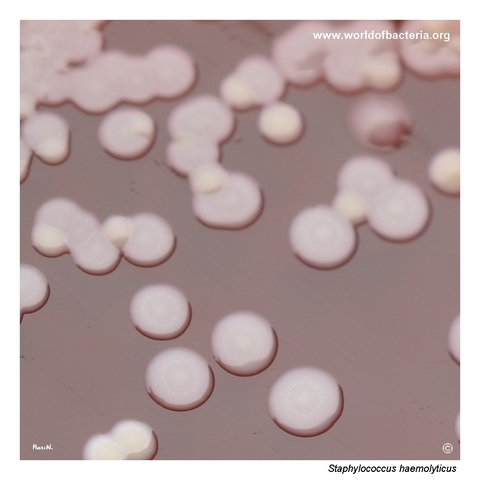
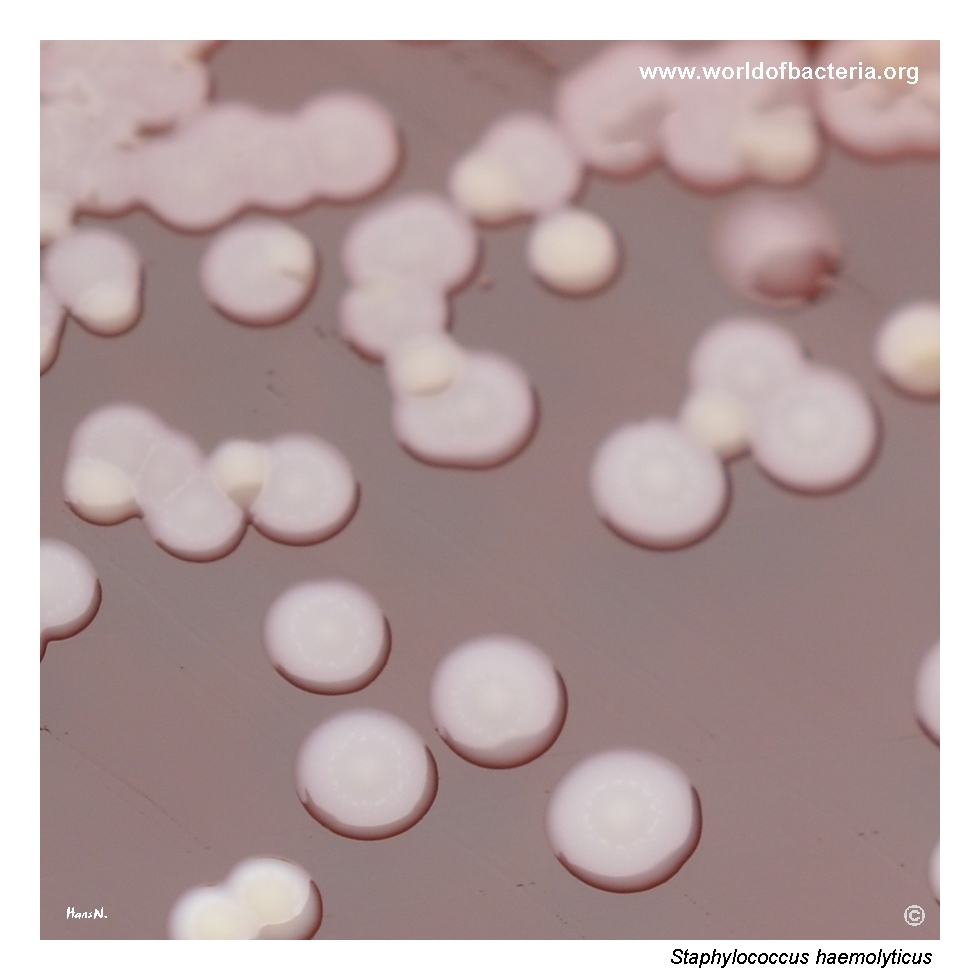
In this isolate, Staphylococcus haemolyticus produces only faint yellow pigmentation. Some strains, however, form distinctly yellow colonies and are often surrounded by marked beta-haemolysis, much like Staphylococcus aureus. On blood agar, such isolates may therefore be difficult to distinguish from many S. aureus strains by morphology alone, illustrating why reliable species identification cannot be based only on colony colour and haemolysis.
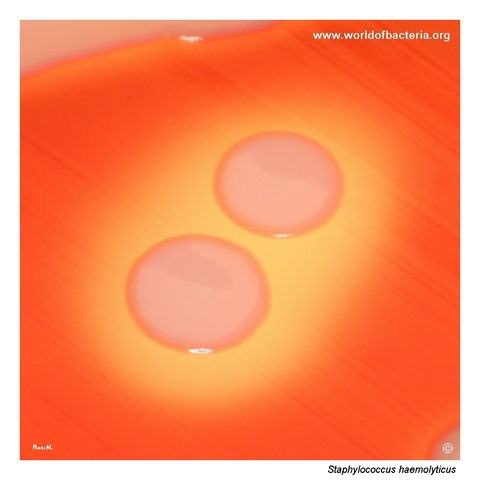
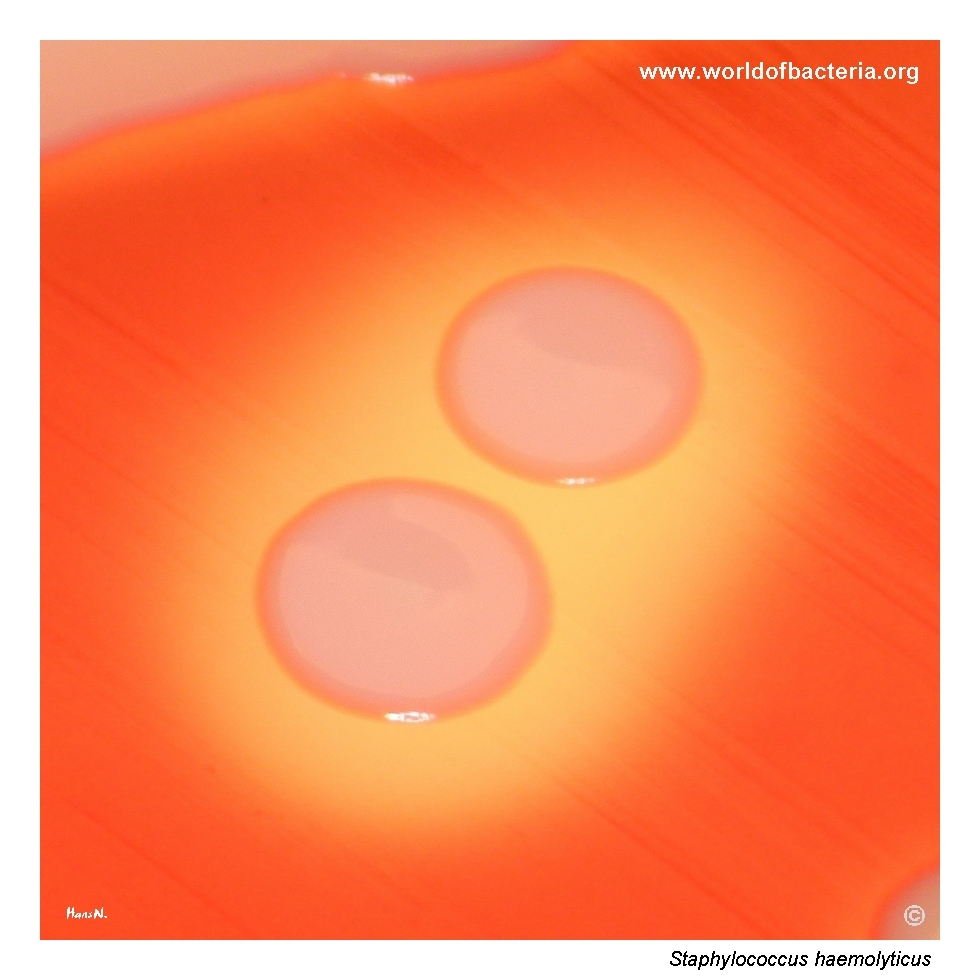
Grey-white, smooth, convex colonies of Staphylococcus haemolyticus with entire margins, surrounded by a prominent zone of beta-haemolysis. Blood agar, 24 hours, 36 °C, 5% CO2 atmosphere. This appearance is notable because pronounced haemolysis is unusual among many coagulase-negative staphylococci and may lead to confusion with haemolytic strains of Staphylococcus aureus if only the culture plate is evaluated.
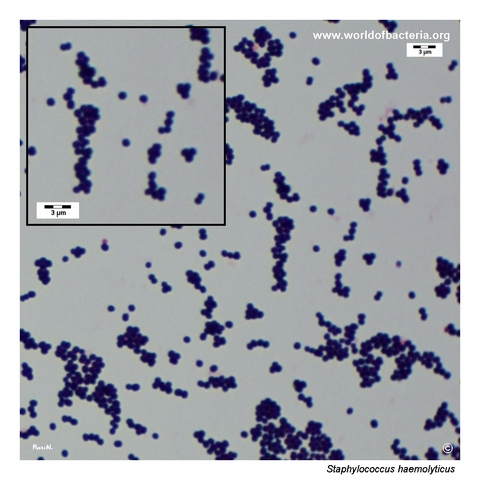
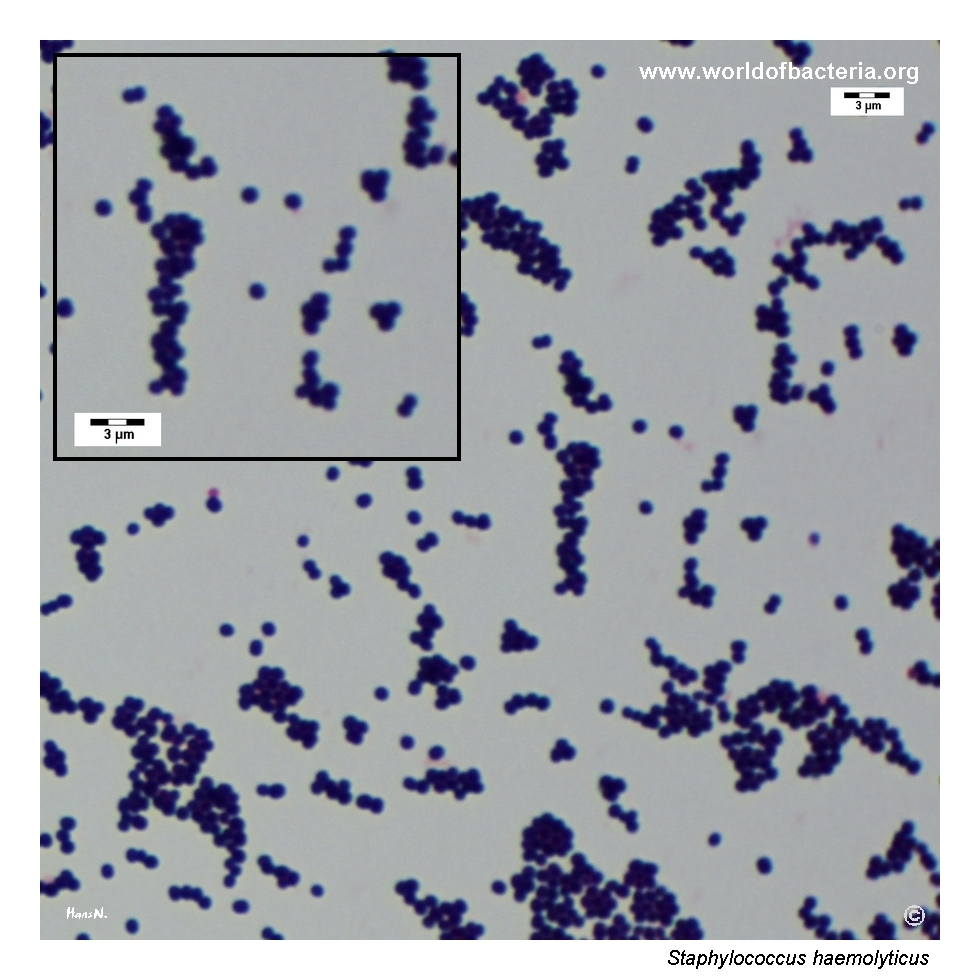
Gram-stained smear prepared from a colony of Staphylococcus haemolyticus grown on blood agar. The organism appears as Gram-positive cocci occurring singly and in clusters, a microscopic pattern typical of the genus Staphylococcus. As with other staphylococci, microscopic morphology alone does not allow reliable differentiation at the species level and must be interpreted together with culture characteristics and identification tests.
Diagnostic and Clinical Notes
Staphylococcus haemolyticus belongs to the coagulase-negative staphylococci (CoNS) and is a regular colonizer of human skin, especially in moist body areas. Although often a commensal, it has become well recognized as an opportunistic pathogen in hospitalized and otherwise vulnerable patients.
Among clinically important CoNS, S. haemolyticus is frequently cited as one of the major species encountered in healthcare-associated infections and is often considered second only to Staphylococcus epidermidis in clinical importance among CoNS.
A notable diagnostic feature is that many isolates produce clear beta-haemolysis on blood agar, which can make them resemble more virulent staphylococci, including some strains of S. aureus. For this reason, colony morphology and haemolysis should be interpreted cautiously and never used as the sole basis for species identification.
Clinically, S. haemolyticus is strongly associated with bloodstream infections, catheter-related infections, prosthetic material, and other foreign-body-associated infections. Biofilm formation and adaptation to the hospital environment may facilitate persistence in these settings.
Another major feature of this species is its tendency toward multidrug resistance, including frequent methicillin resistance among nosocomial isolates. Laboratory susceptibility testing is therefore particularly important when this organism is recovered from clinically significant specimens.
Laboratory Identification
Colony Morphology
On blood agar incubated at 35–37 °C, colonies of Staphylococcus haemolyticus are typically smooth, convex, round, and grey-white, although some isolates may show faint or even distinct yellow pigmentation. A striking feature of many strains is prominent beta-haemolysis, which may be far more evident than in many other coagulase-negative staphylococci.
Microscopy
Gram staining reveals Gram-positive cocci occurring singly, in pairs, and in irregular clusters. As in other members of the genus Staphylococcus, the microscopic appearance is not sufficient for species-level identification.
Key Identification Clues
Gram-positive cocci in clusters
Strongly catalase positive
Coagulase negative
Often haemolytic on blood agar
Can mimic S. aureus by colony colour and haemolysis, so routine species confirmation is required
Modern Identification Methods
Species-level identification in clinical microbiology laboratories is commonly achieved using MALDI-TOF mass spectrometry. Automated biochemical systems and molecular methods may further support identification and help characterize resistance determinants in clinically relevant isolates.
Antibiotic Characteristics
Staphylococcus haemolyticus is notable for its high level of antimicrobial resistance compared with many other coagulase-negative staphylococci. Hospital-associated isolates are frequently methicillin resistant and may show reduced susceptibility to several other antimicrobial classes.
This resistance profile has made the species an increasingly important nosocomial pathogen and may complicate both empirical and targeted therapy.
Biofilm-associated growth on catheters and implanted materials can further reduce treatment success by promoting persistence and limiting antimicrobial effectiveness.
Note: Antimicrobial susceptibility varies between isolates and clinical settings; therapy should always be guided by laboratory susceptibility testing and clinical context.