Staphylococcus lugdunensis is a Gram-positive, coagulase-negative coccus that is widely regarded as one of the most clinically important pathogens within the CoNS group because it may behave more aggressively than many other coagulase-negative staphylococci.
Basic Characteristics
Taxonomy
Domain: Bacteria
Phylum: Bacillota (Firmicutes)
Class: Bacilli
Order: Bacillales
Family: Staphylococcaceae
Genus:Staphylococcus
Species:Staphylococcus lugdunensis
Microscopy & Gram Stain
Gram-positive cocci
Cells occur singly, in pairs, and in irregular clusters
Oxygen Relationship
Facultatively anaerobic
Rapid Identification Tests
Catalase: positive
Coagulase: negative
Haemolysis on blood agar: often variable but commonly present
Clinical implication: more aggressive behaviour than many other CoNS
Ecology and Clinical Relevance
Natural Habitat
Human skin flora
Particularly associated with the perineal and inguinal region
May colonize healthy individuals while still retaining substantial pathogenic potential
Common Clinical Specimens
Blood cultures
Urine specimens
Skin and soft tissue samples
Abscess material
Deep tissue or device-associated specimens
Clinical Significance
One of the most important pathogenic species among coagulase-negative staphylococci
May cause skin and soft tissue infection, bacteremia, endocarditis, and other invasive infections
Can behave clinically more like Staphylococcus aureus than like low-virulence CoNS
Should not be dismissed too readily as a contaminant when recovered from significant specimens
Differential Considerations
Staphylococcus aureus, especially when colonies are yellowish and haemolytic
Other coagulase-negative staphylococci with lower virulence
Pigmented or haemolytic staphylococci in urine and invasive specimens
Important clues include species identification by routine methods and careful clinical interpretation of a CoNS isolate with unexpectedly aggressive behaviour
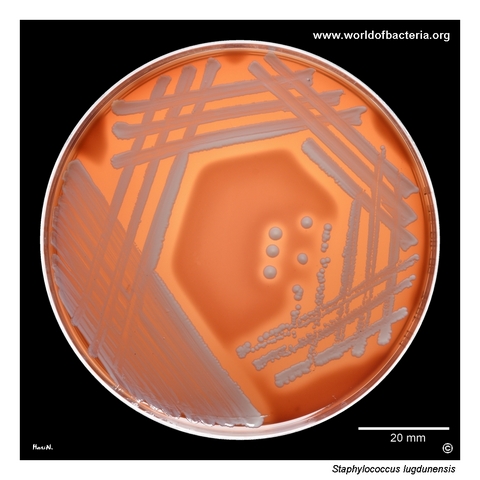
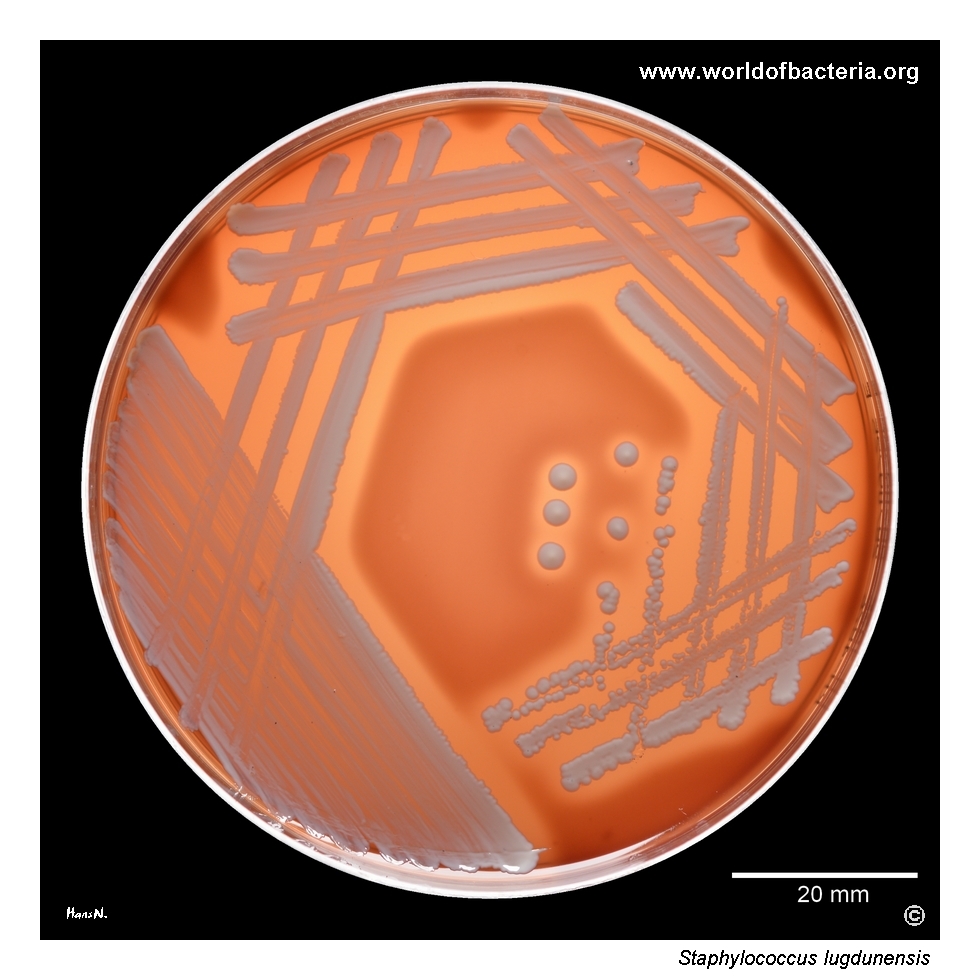
Staphylococcus lugdunensis on blood agar after 48 hours of incubation at 36 °C in 5% CO2. The strain was originally isolated from a urine specimen of an 80-year-old woman with the diagnosis R50.9: fever, unspecified. Growth exceeding 105 CFU/ml suggested a probable urinary tract infection. Although classified among coagulase-negative staphylococci, S. lugdunensis is clinically important because it may behave more aggressively than many other members of this group.
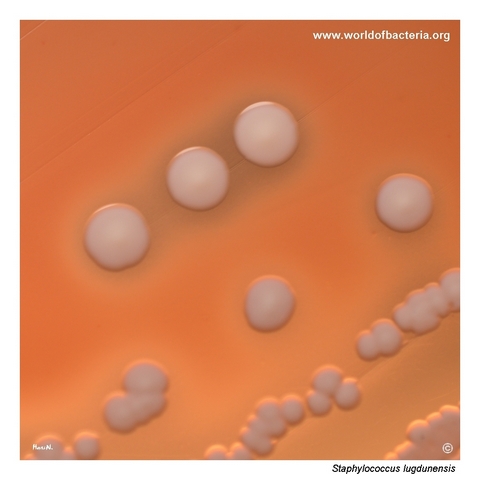
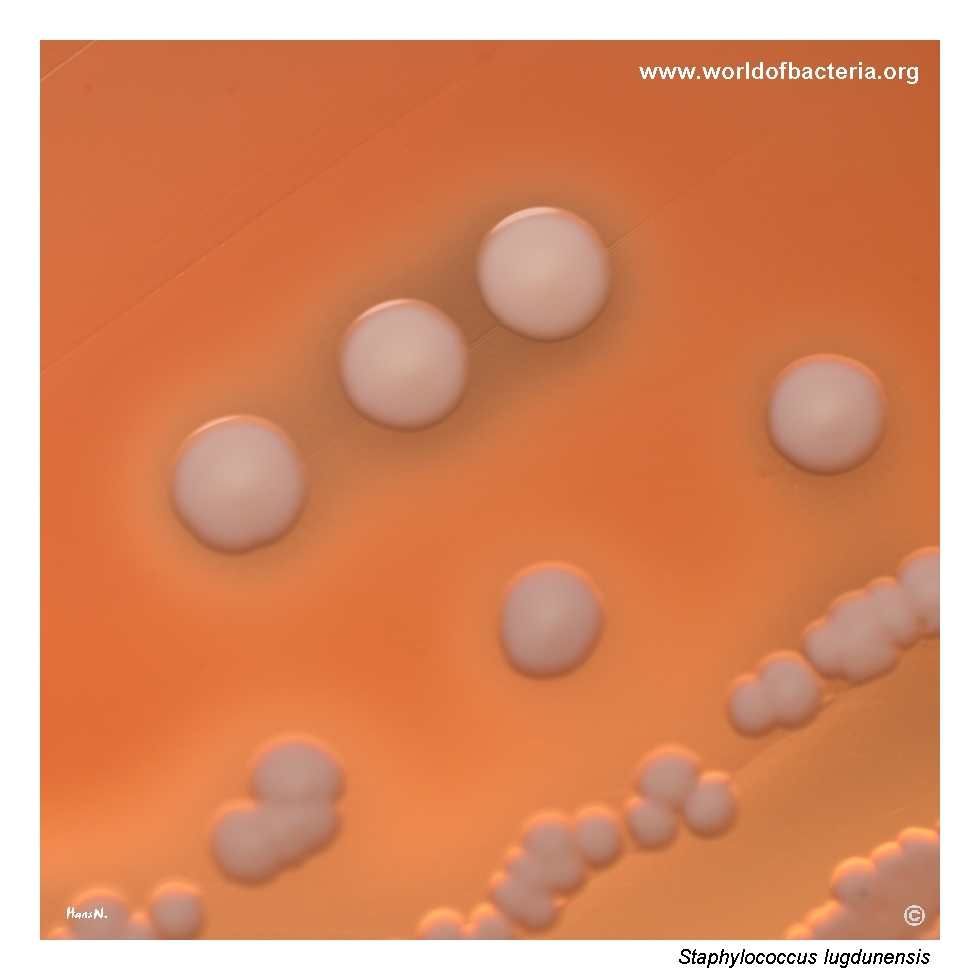
Colonies of Staphylococcus lugdunensis often show a yellowish tinge, especially after prolonged incubation of 48 hours. They are typically smooth, convex, and round with entire margins, and the colony centre may appear slightly raised. On blood agar, variable haemolysis is usually present around the colonies, reflecting the ability of this species to lyse erythrocytes to different degrees and making it resemble more virulent staphylococci.
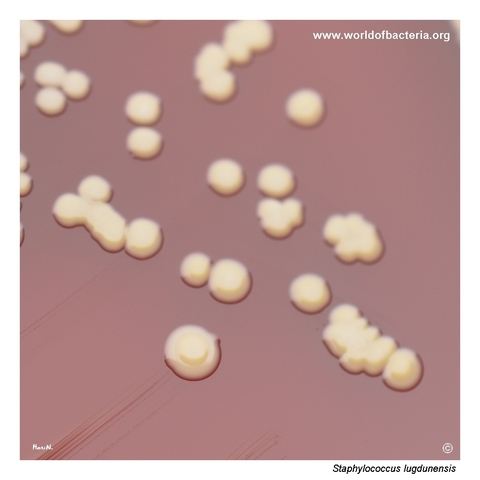
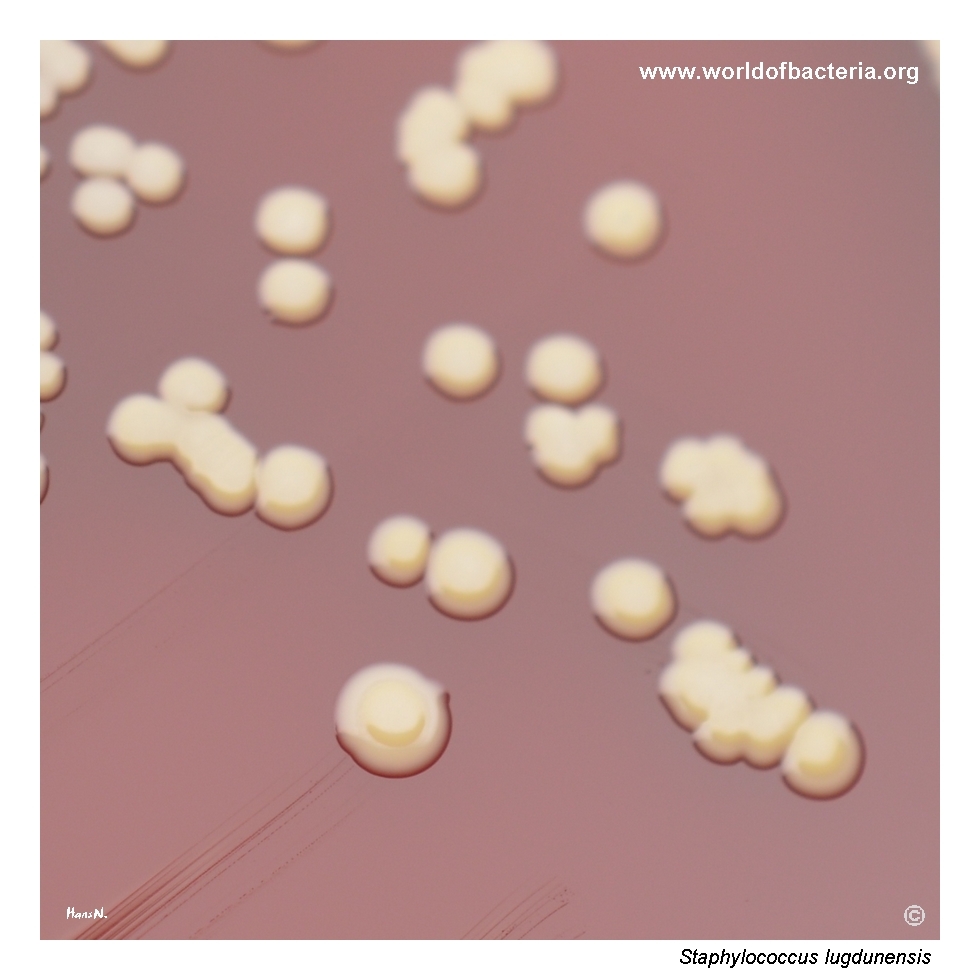
Some clinical isolates of Staphylococcus lugdunensis produce more conspicuous yellow pigment, as in this example. Such strains may appear strikingly similar to pigmented isolates of Staphylococcus aureus on blood agar. This visual resemblance is one reason why species identification should not rely on colony colour alone, even when the overall morphology appears highly characteristic at first glance.
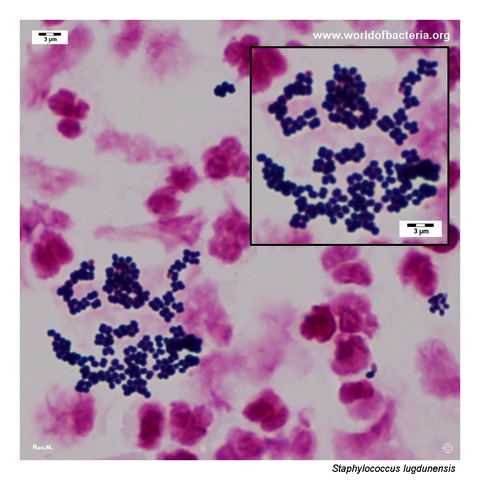
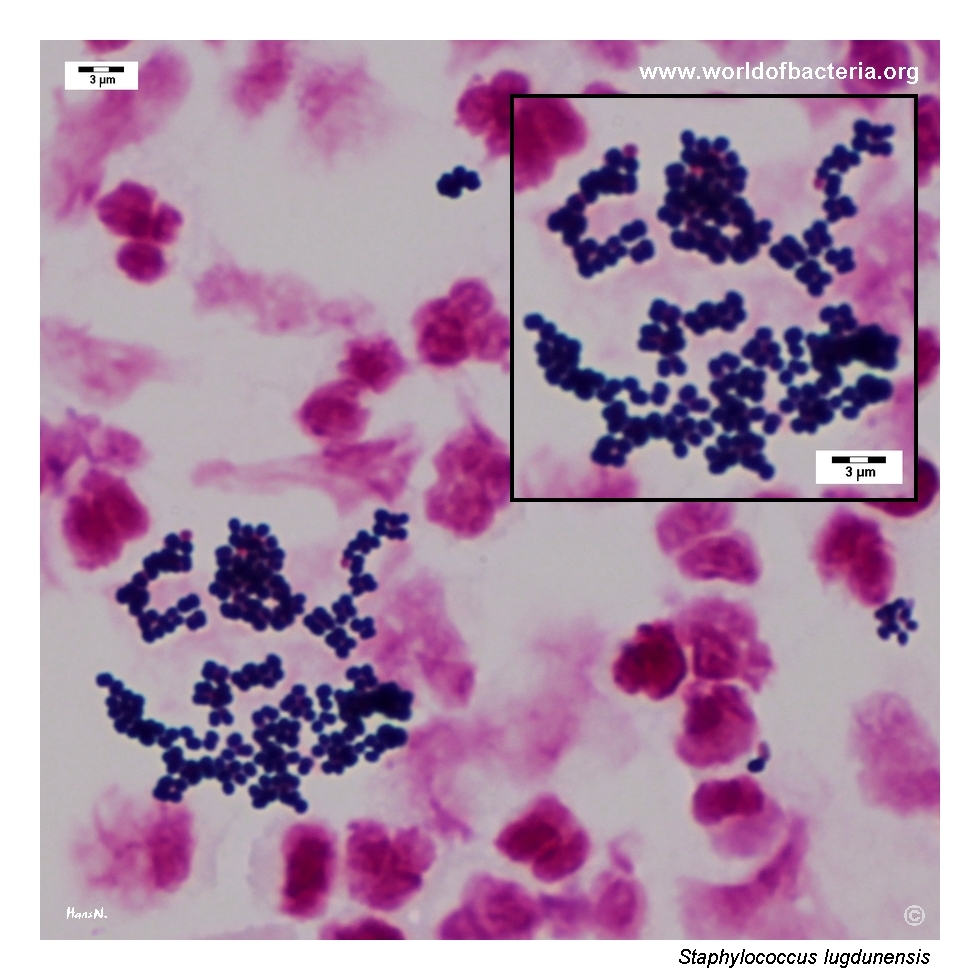
Staphylococcus lugdunensis in a urine specimen. During urinary tract infection, for example in cystitis, large numbers of leukocytes, especially polymorphonuclear neutrophils, may appear in the urine. These immune cells participate directly in the elimination of the infecting bacteria, here represented by S. lugdunensis. The simultaneous presence of abundant bacteria and inflammatory cells supports the interpretation of true infection rather than simple contamination.
Diagnostic and Clinical Notes
Staphylococcus lugdunensis is now widely regarded as one of the most clinically important pathogens within the group of coagulase-negative staphylococci. In contrast to many CoNS that are often interpreted as low-virulence commensals or contaminants, S. lugdunensis may cause clinically significant and sometimes severe disease.
This species is particularly important because its behaviour can resemble that of Staphylococcus aureus more than that of typical low-pathogenicity CoNS. It has been associated with skin and soft tissue infection, bacteremia, infective endocarditis, and other invasive presentations.
In routine culture, the organism may produce smooth, convex colonies with yellowish pigmentation and variable haemolysis, creating a visual impression similar to more overtly virulent staphylococci. This resemblance is diagnostically useful, but it also means that morphology alone should not be used for definitive identification.
Recovery of S. lugdunensis from urine may be clinically meaningful, particularly when quantitative growth is high and the specimen context supports urinary infection. More generally, clinically significant isolates should be interpreted with greater caution than many laboratories might apply to an unspecified CoNS.
For practical laboratory work, the key message is that S. lugdunensis deserves species-level identification whenever possible, because dismissing it too quickly as “just a coagulase-negative staphylococcus” may underestimate its potential importance.
Laboratory Identification
Colony Morphology
On blood agar incubated at 35–37 °C, colonies of Staphylococcus lugdunensis are typically smooth, convex, round, and may show a yellowish tinge, especially after prolonged incubation. The colony centre may appear slightly raised. Variable haemolysis is often present and can contribute to a phenotype resembling more virulent staphylococci.
Microscopy
Gram staining reveals Gram-positive cocci occurring singly, in pairs, and in irregular clusters. As with other staphylococci, the microscopic appearance supports the genus but is not sufficient for species-level identification.
Key Identification Clues
Gram-positive cocci in clusters
Strongly catalase positive
Coagulase negative
Often yellow-tinged colonies after prolonged incubation
Variable haemolysis on blood agar
Clinically important CoNS that may resemble S. aureus
Modern Identification Methods
Species-level identification in clinical microbiology laboratories is commonly achieved using MALDI-TOF mass spectrometry. Automated biochemical systems may also be used, but accurate species assignment is especially important in this organism because of its greater pathogenic potential compared with many other CoNS.
Antibiotic Characteristics
Staphylococcus lugdunensis is clinically important not only because of its virulence but also because treatment decisions should be based on the specific susceptibility result of the isolate rather than on assumptions commonly applied to unspecified CoNS.
In practice, correct species identification is a crucial first step because the clinical response to a confirmed S. lugdunensis isolate is often more active than it would be for many other coagulase-negative staphylococci.
When recovered from significant sterile-site material or from clearly symptomatic infection, the organism should be taken seriously and evaluated in close correlation with the clinical picture.
Note: Antimicrobial therapy should always be guided by laboratory susceptibility testing, specimen significance, and clinical context.