Staphylococcus aureus is a Gram-positive coccus that commonly colonizes human skin and the anterior nares and is one of the most important bacterial pathogens in clinical microbiology.
Basic Characteristics
Taxonomy
Domain: Bacteria
Phylum: Bacillota (Firmicutes)
Class: Bacilli
Order: Bacillales
Family: Staphylococcaceae
Genus:Staphylococcus
Species:Staphylococcus aureus
Microscopy & Gram Stain
Gram-positive cocci
Cells typically arranged in irregular clusters resembling grape-like aggregates
Oxygen Relationship
Facultatively anaerobic
Rapid Identification Tests
Catalase: strongly positive
Coagulase: positive
Oxidase: negative
Ecology and Clinical Relevance
Natural Habitat
Human skin
Anterior nasal cavity
Upper respiratory tract mucosa
Common Clinical Specimens
Wound swabs
Abscess material
Blood cultures
Sputum
Respiratory secretions
Clinical Significance
Skin and soft tissue infections
Abscess formation in various organs
Bacteremia and sepsis
Lower respiratory tract infections and bacterial pneumonia
Post-influenza pneumonia
Differential Considerations
Staphylococcus epidermidis and other coagulase-negative staphylococci
Streptococcus species
Micrococcus species
Distinguishing clues include strong catalase activity, coagulase positivity, and characteristic cluster arrangement of cells.
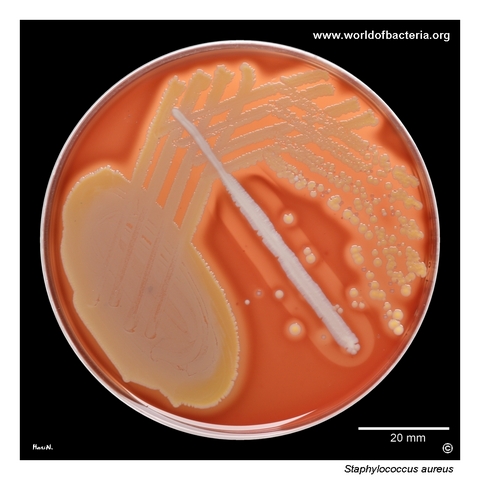
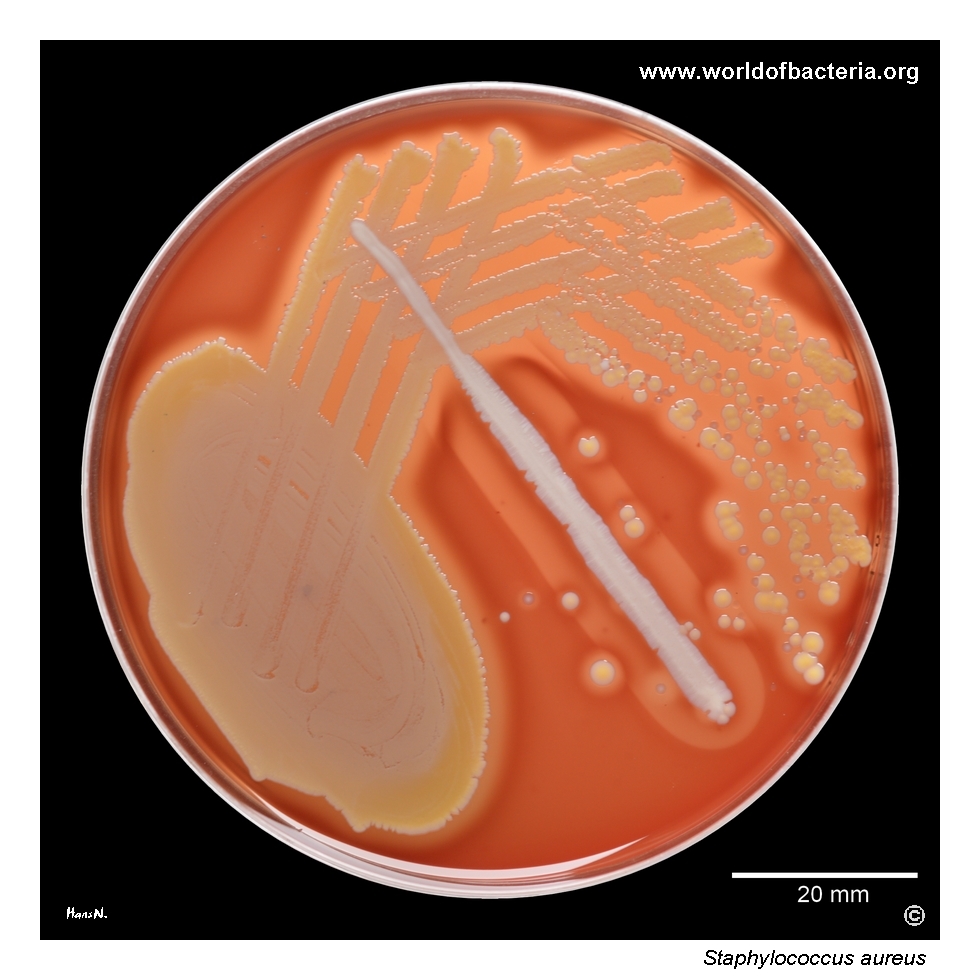
A paracentesis specimen from a six-year-old boy, cultured on blood agar after enrichment, shows well-developed Staphylococcus aureus colonies surrounded by a clear zone of β-haemolysis after approximately 18 hours of aerobic incubation at 36 °C. A control streak of Staphylococcus aureus ATCC 25923 was included to facilitate detection of satellite growth of Haemophilus influenzae, if present. The sample contains intensely yellow-pigmented S. aureus colonies alongside non-pigmented Streptococcus pyogenes with partially suppressed growth.
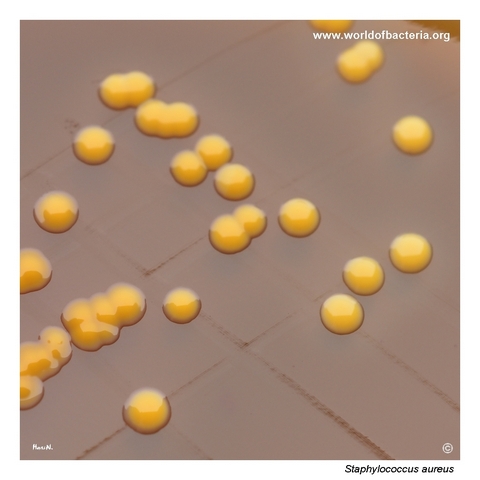
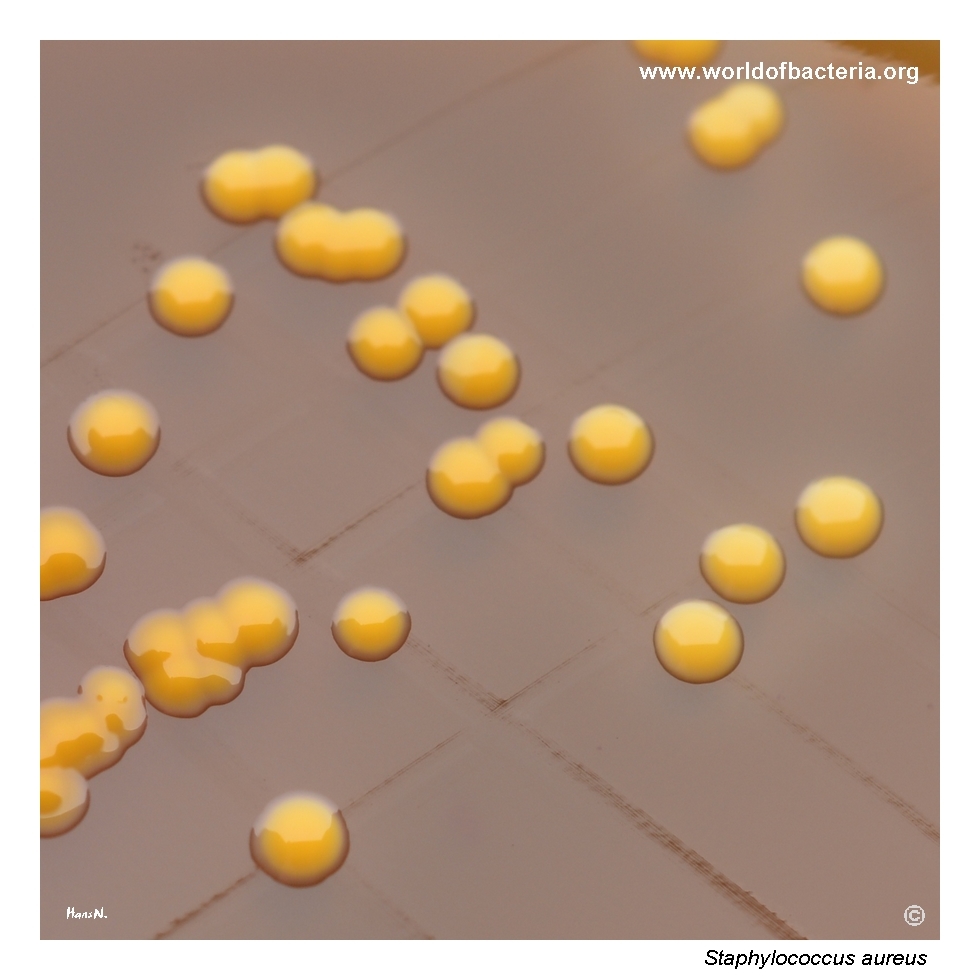
Staphylococcus aureus is a facultative anaerobe capable of growth in the absence of oxygen. After 48 hours of incubation at 36 °C under anaerobic conditions on Schaedler agar, colonies appear smooth, convex, and circular with entire margins. Some strains produce the characteristic golden pigment staphyloxanthin, which contributes to oxidative stress resistance and may enhance bacterial survival in host tissues.
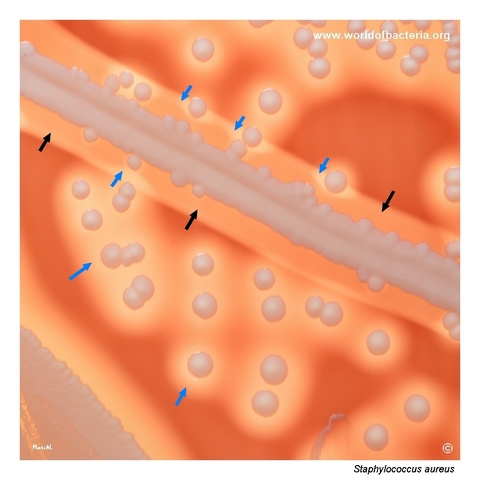
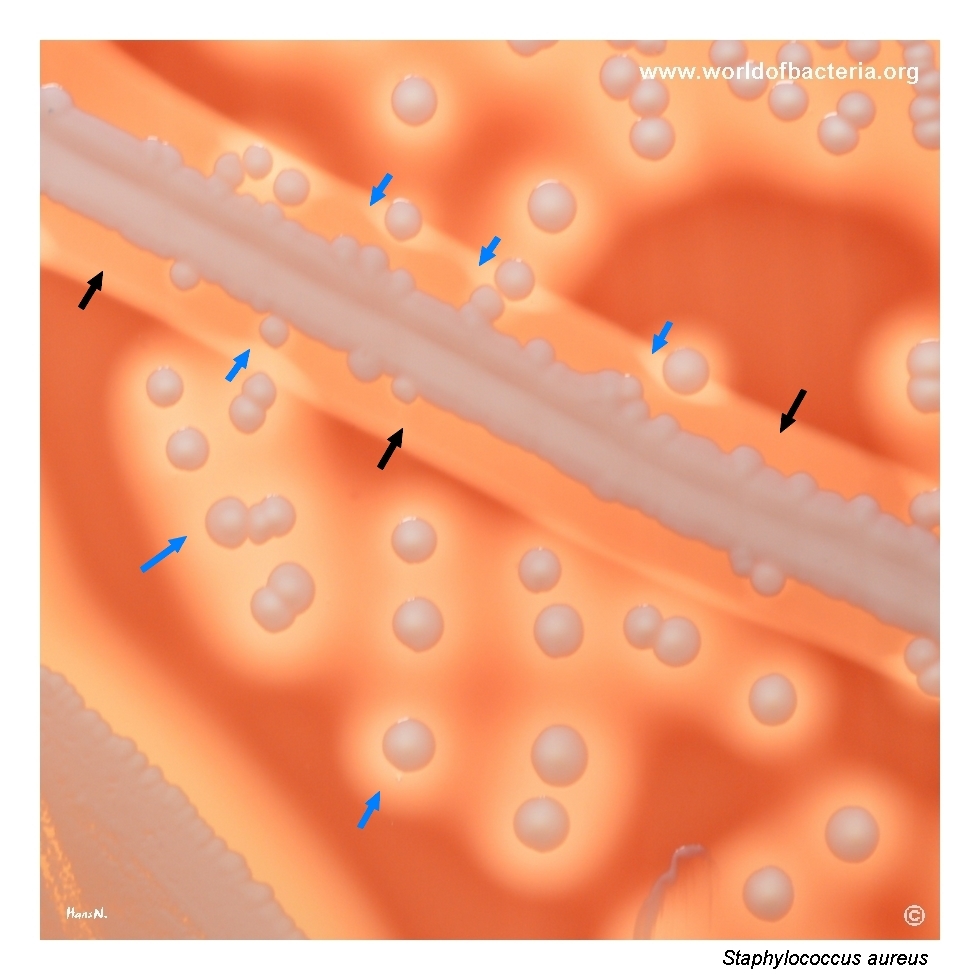
Colonies of Staphylococcus aureus isolated from a clinical specimen are visible near the control strain S. aureus ATCC 25923, inoculated onto the agar surface as a streak. Both strains are characterized by the absence of yellow pigmentation. On sheep blood agar, strain ATCC 25923 produces a zone of incomplete haemolysis (black arrows), whereas colonies isolated from the clinical material are surrounded by a zone of complete haemolysis (blue arrows).
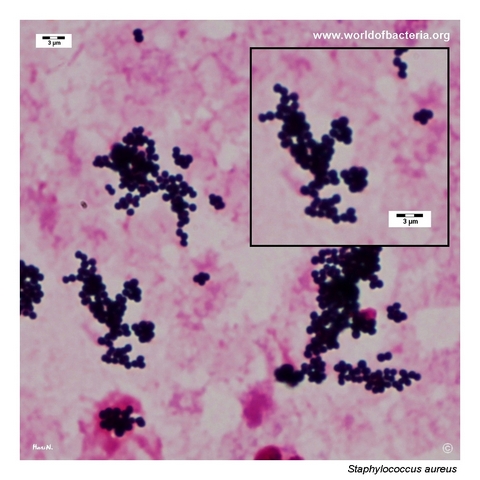
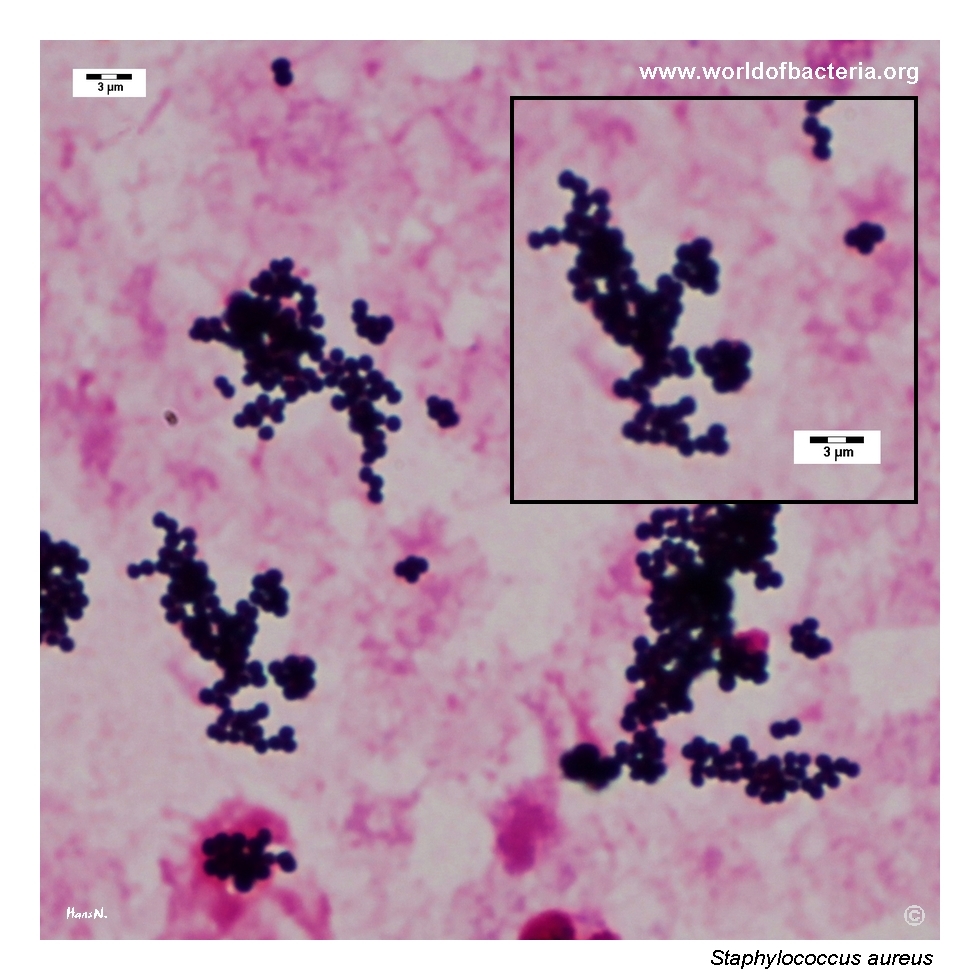
Gram-stained smear prepared from a positive aerobic blood culture bottle shows Gram-positive cocci arranged in irregular clusters. Individual cells measure approximately 1 µm in diameter. This morphology is typical for Staphylococcus aureus but is not species-specific, as similar size and arrangement may be observed in other members of the genus Staphylococcus and in some related Gram-positive cocci.
Diagnostic and Clinical Notes
Staphylococcus aureus is one of the most important bacterial pathogens in human medicine and can cause a broad spectrum of infections ranging from superficial skin disease to severe invasive illness.
The organism frequently colonizes the skin and nasal mucosa of healthy individuals. From these colonization sites it may invade tissues and cause infection, particularly after disruption of epithelial barriers, in immunocompromised patients, or following viral respiratory infections.
Infections of the lower respiratory tract caused by S. aureus may be severe and sometimes rapidly progressive. Before the introduction of antibiotics, staphylococcal pneumonia was associated with very high mortality, especially during influenza epidemics.
A key diagnostic feature of S. aureus is a strongly positive catalase reaction, which helps distinguish staphylococci from catalase-negative streptococci and enterococci. Coagulase positivity remains another major conventional clue in routine microbiology.
Clinical interpretation always depends on specimen type and context. Isolation from blood cultures or deep tissue samples is usually significant, whereas recovery from superficial sites may represent colonization as well as infection.
Laboratory Identification
Colony Morphology
On blood agar incubated at 35–37 °C, colonies typically appear smooth, round, and opaque after 18–24 hours. Many strains produce a characteristic golden-yellow pigment known as staphyloxanthin, although pigment intensity is variable.
Microscopy
Gram staining reveals Gram-positive cocci arranged in irregular clusters. Cells are non-motile and non-spore-forming.
Key Identification Clues
Gram-positive cocci arranged in clusters
Strongly catalase positive
Coagulase positive
Growth on blood agar with characteristic colony morphology
Modern Identification Methods
Species-level identification in clinical microbiology laboratories is commonly achieved using MALDI-TOF mass spectrometry. Automated biochemical systems and molecular assays, including PCR-based detection of species-associated or resistance-associated genes, may also be used for rapid and reliable identification.
Antibiotic Characteristics
Staphylococcus aureus displays variable susceptibility to antimicrobial agents depending on the presence of resistance mechanisms such as β-lactamase production or methicillin resistance.
Many methicillin-susceptible isolates remain susceptible to several commonly used agents, including antistaphylococcal penicillins, first-generation cephalosporins, clindamycin, and trimethoprim-sulfamethoxazole. Local susceptibility patterns, however, may differ substantially.
Methicillin-resistant S. aureus (MRSA) has major clinical and epidemiological importance because it limits empirical and targeted treatment options and may require specific infection-control measures.
Note: Antimicrobial susceptibility patterns may vary between isolates and clinical settings; antimicrobial therapy should always be guided by laboratory susceptibility testing and clinical evaluation.