Salmonella enterica subsp. enterica includes the principal serovars associated with human salmonellosis. The laboratory images on this page show serovar Enteritidis, a major foodborne pathogen capable of causing gastroenteritis and, in vulnerable patients, invasive infection.
Basic Characteristics
Taxonomy
Domain: Bacteria
Phylum: Pseudomonadota (Proteobacteria)
Class: Gammaproteobacteria
Order: Enterobacterales
Family: Enterobacteriaceae
Genus:Salmonella
Species:Salmonella enterica
Subspecies:Salmonella enterica subsp. enterica
Illustrated serovar: Enteritidis (antigenic formula 9,12:g,m:-)
Microscopy & Gram Stain
Short Gram-negative rods
Cells usually occur singly
Microscopy is not specific for Salmonella
Oxygen Relationship
Facultatively anaerobic
Rapid Identification Tests
Oxidase: negative
Catalase: positive
Motility: usually positive
Lactose fermentation: negative during routine incubation
Hydrogen sulphide: usually produced by serovar Enteritidis
Urease: negative
Lysine decarboxylase: usually positive
Ecology and Clinical Relevance
Natural Habitat
Intestinal tracts of humans and numerous animal species
Poultry and eggs are important reservoirs for serovar Enteritidis
Food, water, animal environments, and surfaces contaminated with faecal material
Common Clinical Specimens
Stool
Rectal swabs
Blood cultures
Other normally sterile specimens in invasive disease
Food and public-health surveillance samples
Clinical Significance
Important cause of foodborne gastroenteritis
May produce diarrhoea, abdominal cramps, fever, nausea, and vomiting
Bacteraemia and focal extraintestinal infection may occur
Young children, older adults, and immunocompromised patients are at increased risk of invasive disease
Serovar Enteritidis is epidemiologically associated particularly with poultry and eggs
Differential Considerations
Escherichia coli and other Enterobacterales on non-selective media
Shigella species and other lactose-non-fermenting enteric bacteria
Proteus species and hydrogen-sulphide-producing Citrobacter on selective media
Other Salmonella enterica serovars, which require antigenic or molecular characterization
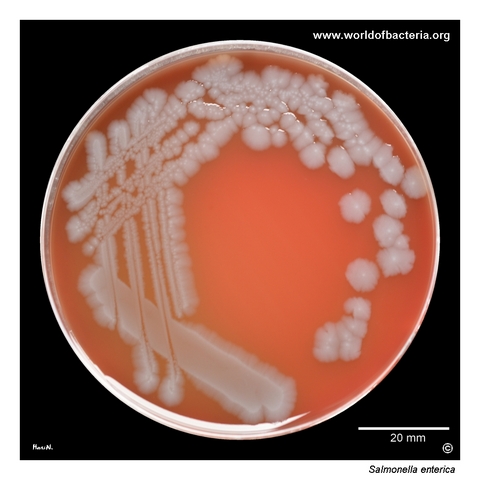
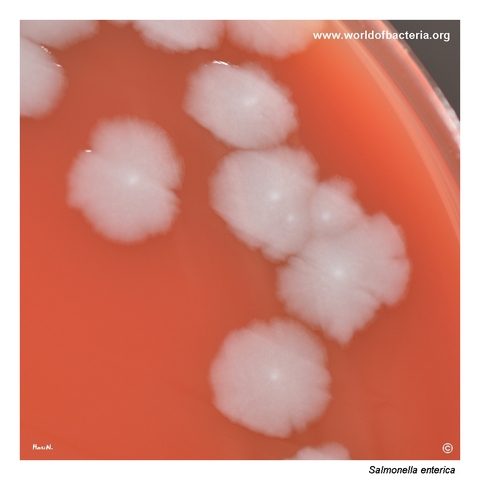
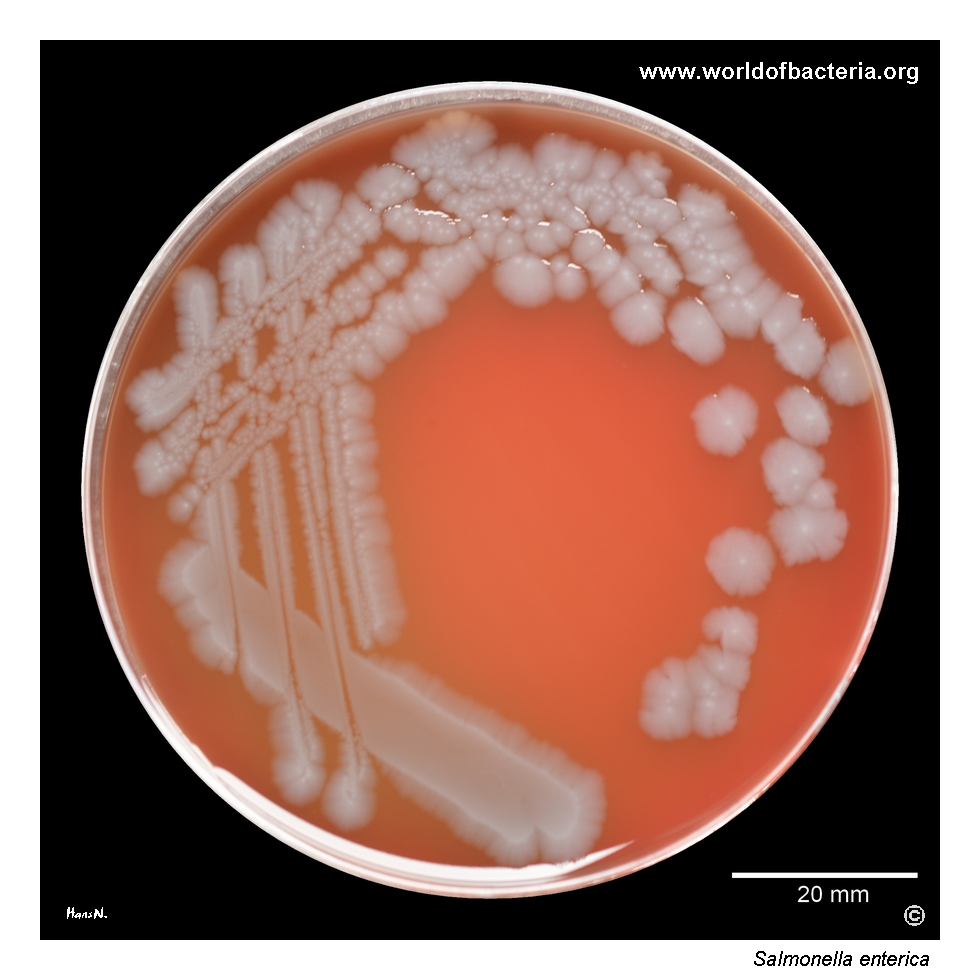
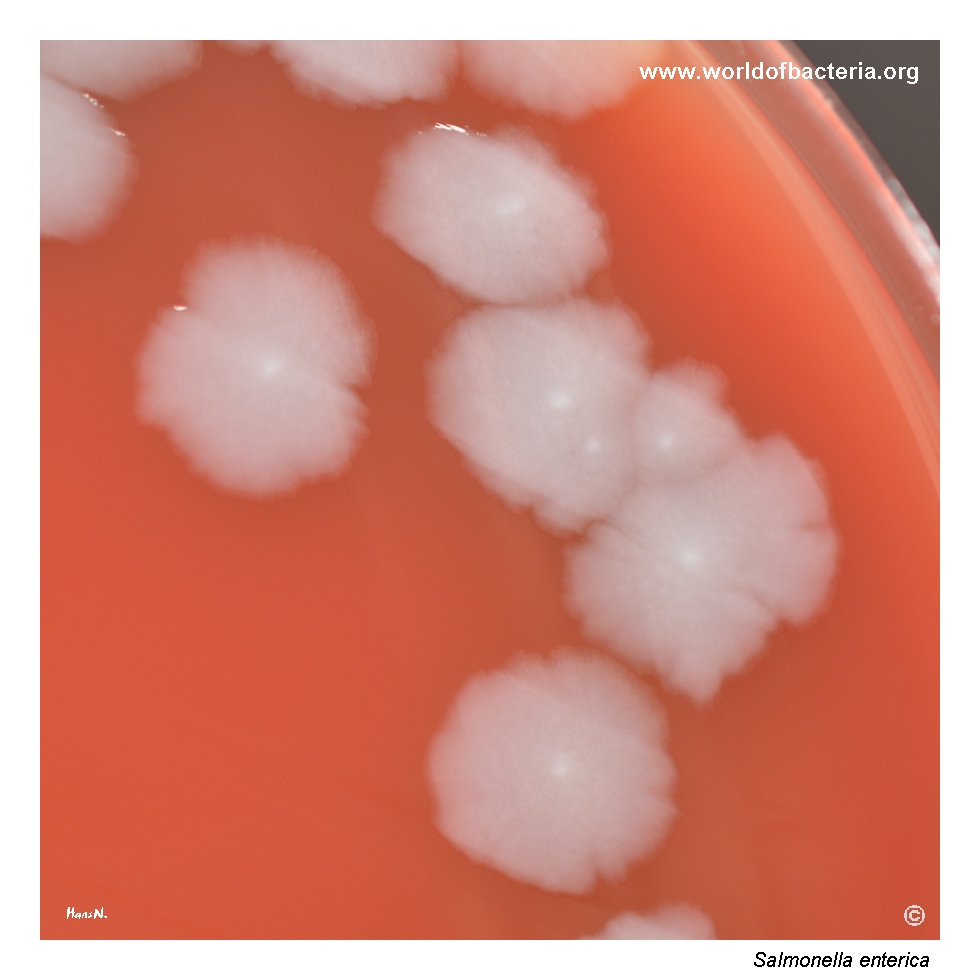
Salmonella enterica subsp. enterica serovar Enteritidis on blood agar after 24 hours of incubation at 36 °C in ambient air. The image shows collection strain CCM 4420, with the antigenic formula 9,12:g,m:-. This strain is used for testing the growth-supporting properties of culture media and related laboratory quality-control procedures. On blood agar, its colonies have a relatively inconspicuous appearance that is not specific for salmonellae.
On blood agar, Salmonella enterica subsp. enterica may form smooth, convex colonies resembling those of Escherichia coli, or flatter grey-white colonies with irregular margins. This variation means that colony morphology on a non-selective medium provides only limited assistance in identification. Selective and differential media, together with biochemical, serological, or molecular testing, are required to confirm the isolate.
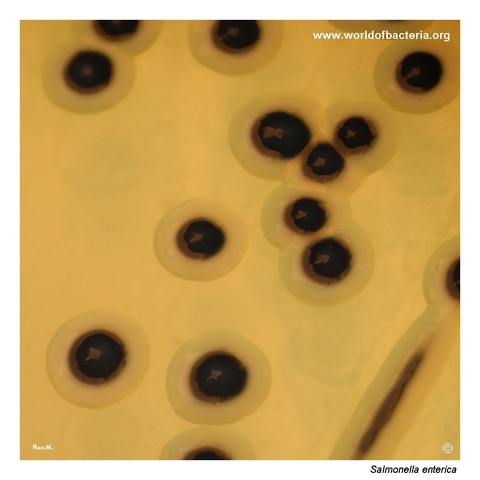
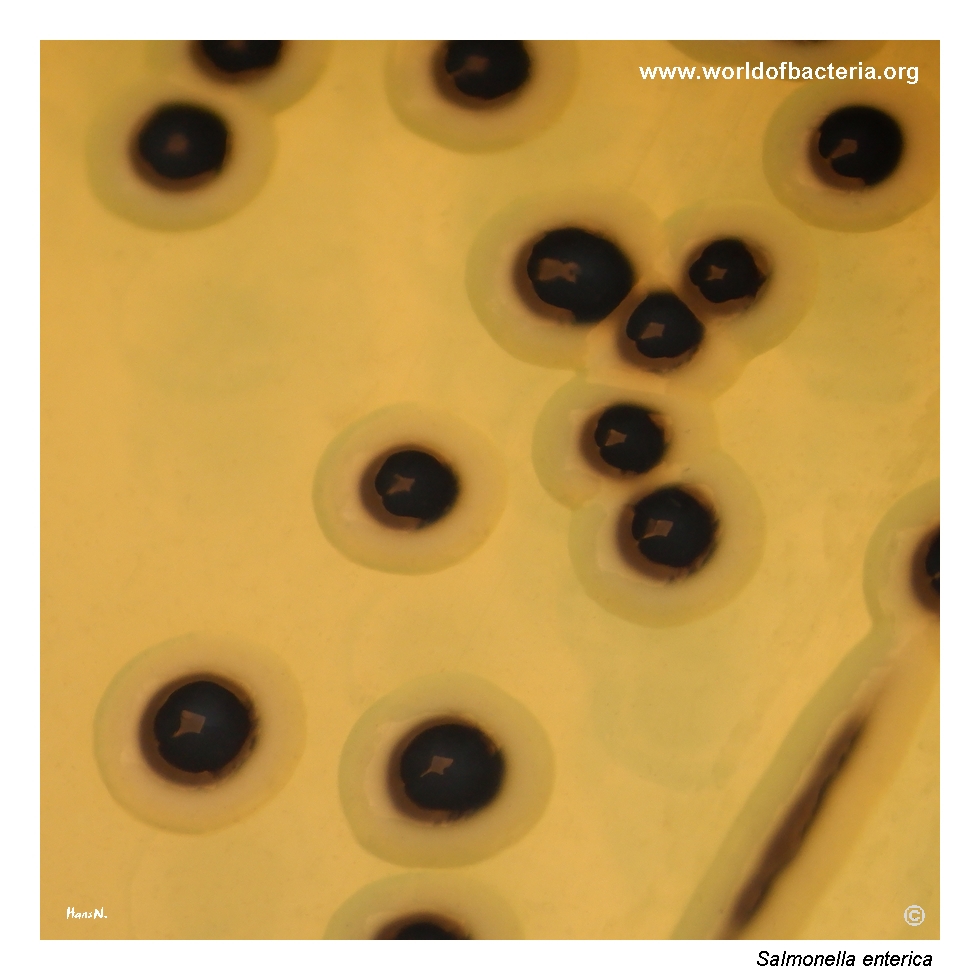
Close-up view of Salmonella Enteritidis colonies on deoxycholate citrate agar after 24 hours at 36 °C in ambient air. Salmonellae tolerate the selective effect of bile salts and produce hydrogen sulphide, visible here as blackening in the colony centres. Similar colonies may also be formed by Proteus species and some strains of Citrobacter, so this appearance should be regarded as presumptive rather than species-specific.
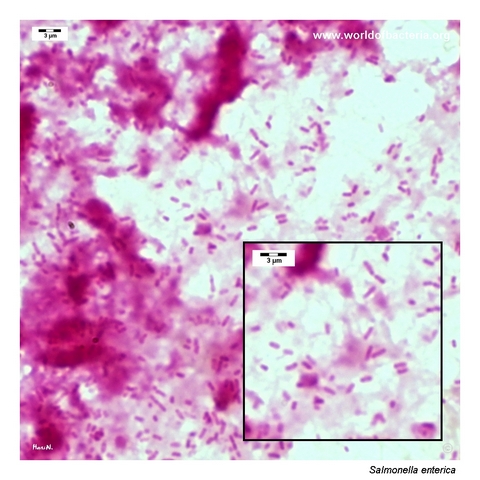
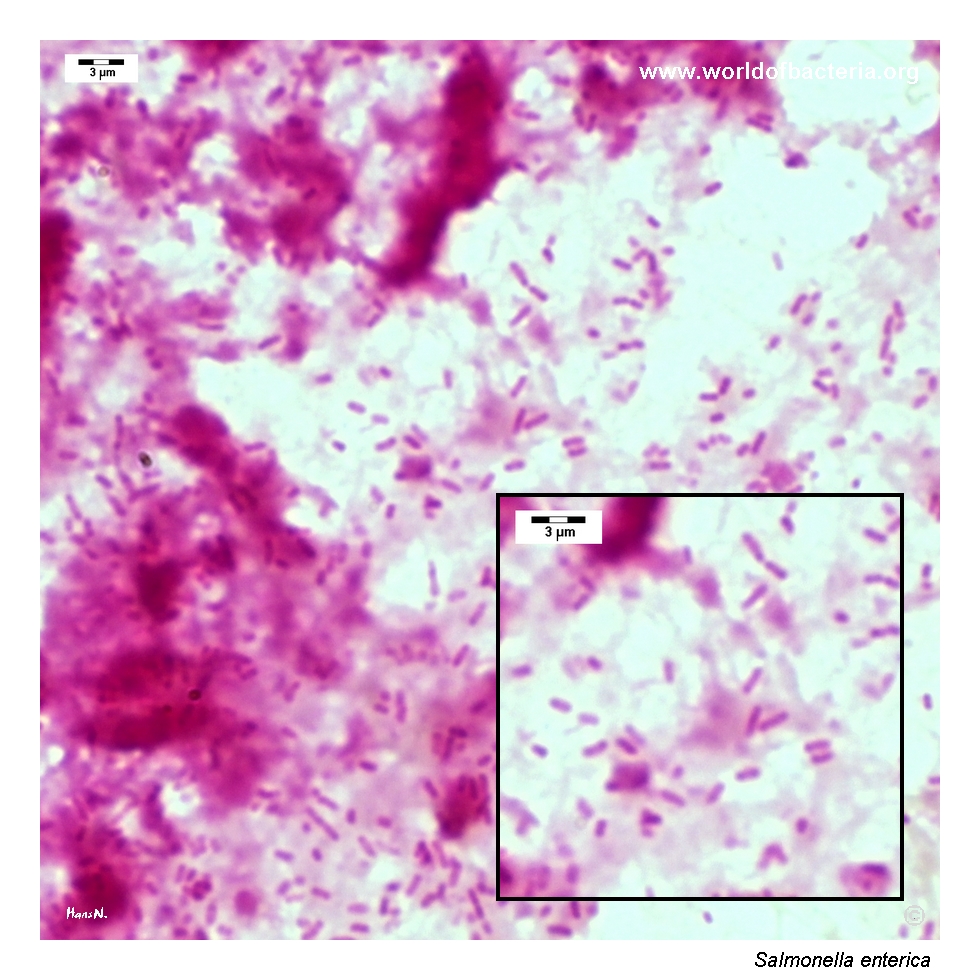
Salmonella Enteritidis in a positive blood culture, appearing as Gram-negative rods. Salmonellae can spread beyond the gastrointestinal tract and cause bacteraemia or other invasive infections, particularly in young children, older adults, and immunocompromised patients. Recovery from blood is therefore a clinically significant finding and requires species or serovar confirmation together with antimicrobial susceptibility testing.
Diagnostic and Clinical Notes
Salmonella enterica subsp. enterica contains most serovars responsible for human and warm-blooded-animal infection. The images on this page show serovar Enteritidis, one of the best-known causes of non-typhoidal salmonellosis.
Serovar Enteritidis is strongly associated epidemiologically with poultry, eggs, and foods contaminated during production or preparation. Transmission usually occurs by ingestion, although direct or indirect animal contact may also lead to infection.
Most infections present as self-limited acute gastroenteritis, but the organism can cross the intestinal barrier and cause bacteraemia, endovascular infection, osteoarticular infection, or other focal disease. Invasive infection is especially important in infants, older adults, and immunocompromised patients.
The illustrated strain CCM 4420 is a quality-control collection strain with antigenic formula 9,12:g,m:-. Its ordinary appearance on blood agar demonstrates why non-selective colony morphology cannot be used to identify salmonellae reliably.
Black-centred colonies on deoxycholate citrate agar reflect hydrogen sulphide production and provide a useful presumptive clue. The reaction is not specific, because similar blackening may be produced by Proteus and some Citrobacter isolates. Confirmation therefore requires a broader biochemical profile and serological or molecular characterization.
Laboratory Identification
Colony Morphology
On blood agar after 18–24 hours, Salmonella enterica subsp. enterica generally forms grey-white, non-haemolytic colonies that may be smooth and convex or flatter with irregular margins. On selective enteric media, colonies are usually lactose non-fermenting. Hydrogen sulphide-producing strains may develop black centres on media containing an appropriate iron indicator.
Microscopy
Gram staining reveals short Gram-negative rods occurring mainly singly. This microscopic appearance is shared by many Enterobacterales and does not identify the genus, subspecies, or serovar.
Key Identification Clues
Short Gram-negative rods
Facultatively anaerobic and oxidase negative
Usually motile
Lactose non-fermenting during routine incubation
Urease negative
Hydrogen sulphide usually produced by serovar Enteritidis
Lysine decarboxylase usually positive
Serovar assignment requires antigenic or molecular characterization
Modern Identification Methods
Presumptive laboratory identification combines selective and differential culture with biochemical testing or MALDI-TOF mass spectrometry. Serovar determination is based on somatic and flagellar antigen characterization or increasingly on molecular and whole-genome-sequencing methods. Public-health laboratories use genomic analysis for outbreak detection, source attribution, resistance surveillance, and comparison of related isolates.
Antibiotic Characteristics
Most uncomplicated non-typhoidal Salmonella gastroenteritis is managed with hydration and other supportive measures rather than routine antimicrobial treatment.
Antibiotic therapy should be considered for severe infection, bacteraemia, focal extraintestinal disease, and patients at increased risk of invasive infection, including infants, older adults, and immunocompromised individuals.
Susceptibility to fluoroquinolones, third-generation cephalosporins, azithromycin, ampicillin, and trimethoprim–sulfamethoxazole varies, and resistant or multidrug-resistant strains occur.
Note: Antimicrobial susceptibility testing is particularly important for blood-culture and other invasive isolates and should guide therapy together with the clinical context and current recommendations.