A Shiga toxin-producing Escherichia coli (STEC) O157:H7 isolate carrying the stx2 gene, recovered from a young child with bloody diarrhoea and representing a clinically important intestinal pathotype associated with haemorrhagic colitis and haemolytic uraemic syndrome.
Basic Characteristics
Taxonomy
Domain: Bacteria
Phylum: Pseudomonadota (Proteobacteria)
Class: Gammaproteobacteria
Order: Enterobacterales
Family: Enterobacteriaceae
Genus:Escherichia
Species:Escherichia coli
Serotype: O157:H7
Pathotype: Shiga toxin-producing E. coli (STEC)
Microscopy & Gram Stain
Short Gram-negative rods
Cells occur mainly singly, with pairs and short arrangements also possible
Microscopy does not distinguish STEC from other E. coli
Oxygen Relationship
Facultatively anaerobic
Rapid Identification Tests
Oxidase: negative
Catalase: positive
Indole: usually positive
Motility: usually positive
Sorbitol fermentation: classically absent or delayed in typical O157:H7 strains
Shiga toxin:stx2 detected in this isolate
Ecology and Clinical Relevance
Natural Habitat
Intestinal tract of ruminants, particularly cattle
Faecally contaminated food, water, soil, and animal environments
Infected humans during symptomatic or asymptomatic intestinal carriage
Common Clinical Specimens
Stool
Rectal swabs
Stool enrichment cultures
Public-health reference isolates submitted for confirmation and typing
Clinical Significance
Important cause of acute diarrhoeal illness and haemorrhagic colitis
May cause severe abdominal pain and bloody diarrhoea
Can progress to haemolytic uraemic syndrome, especially in young children
The stx2 gene is an important marker associated with higher-risk STEC lineages
Cases require prompt laboratory recognition and appropriate public-health follow-up
Differential Considerations
Other Shiga toxin-producing Escherichia coli serogroups
Sorbitol-fermenting non-O157 E. coli and commensal intestinal strains
Shigella species and other causes of bloody bacterial diarrhoea
The sorbitol phenotype is useful for screening typical O157:H7 strains but does not replace toxin testing or molecular confirmation
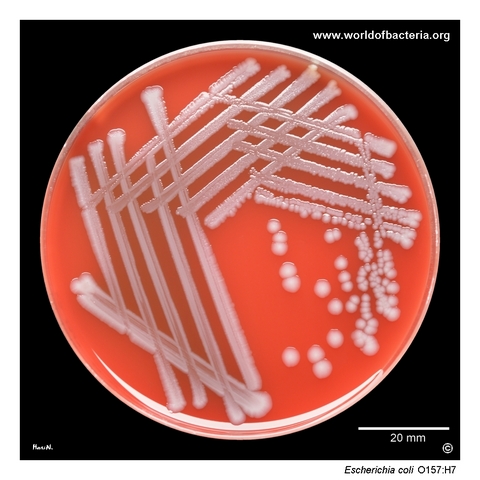
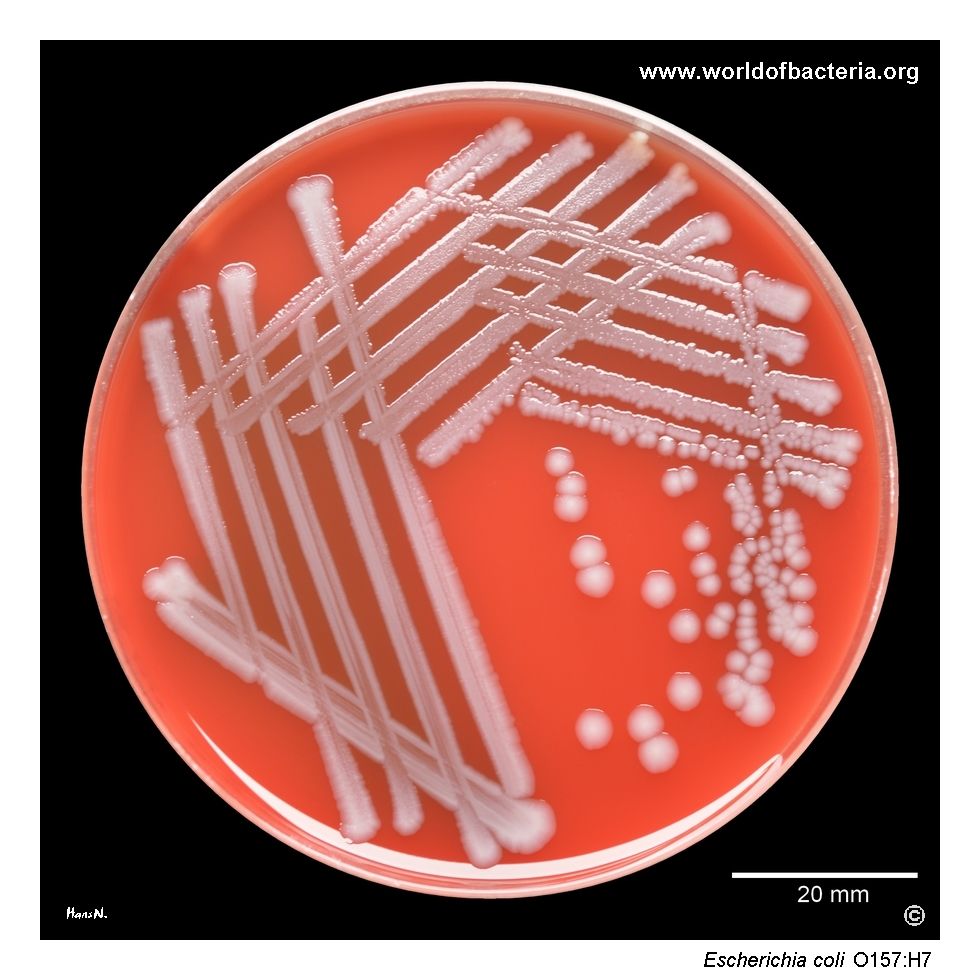
Escherichia coli isolated from a stool specimen from a two-year-old boy with the diagnosis R10.4, other and unspecified abdominal pain. The clinical history included diarrhoea containing mucus and blood. A reference laboratory confirmed serotype O157:H7 and the presence of the stx2 gene encoding Shiga toxin 2. The patient’s older brother developed haemolytic uraemic syndrome. Culture conditions: 24 hours at 36 °C in ambient air.
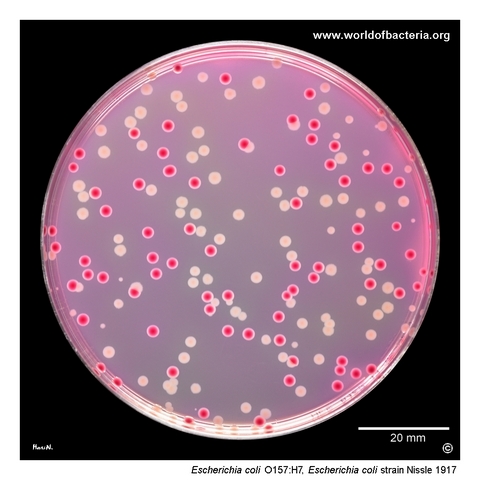
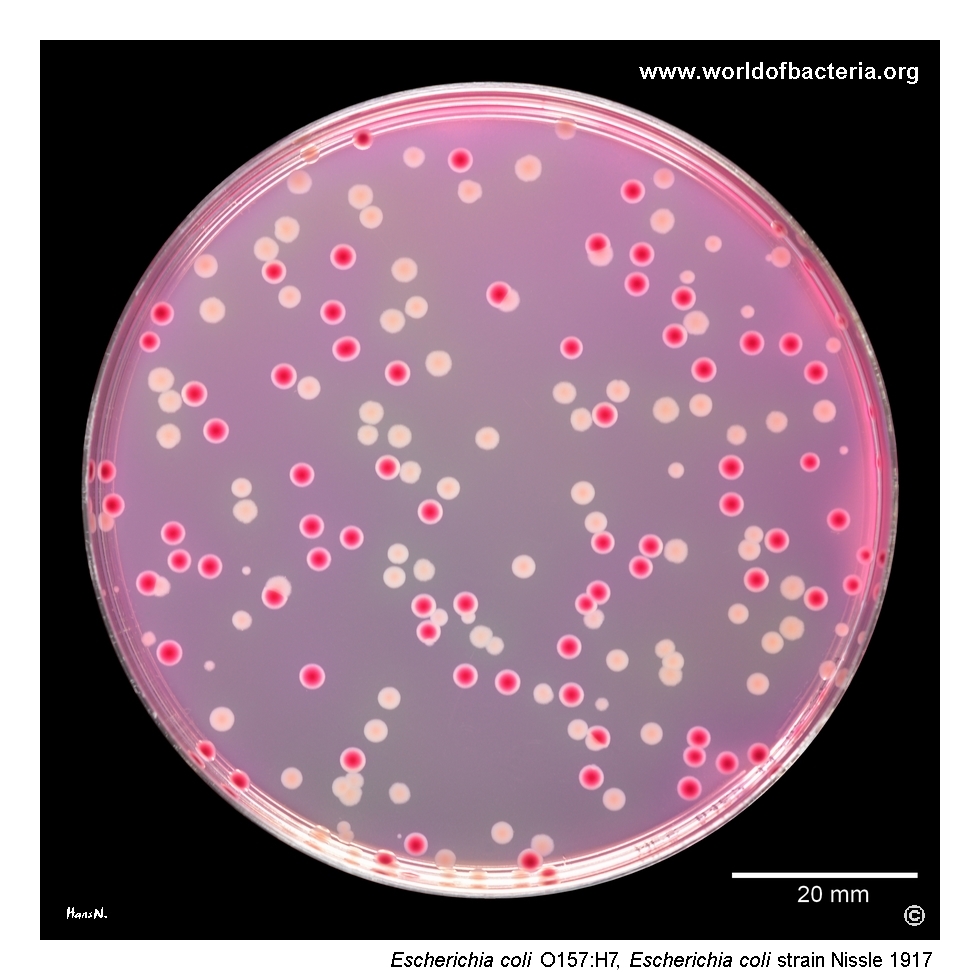
Classic Escherichia coli O157:H7 strains typically do not ferment sorbitol rapidly, unlike most other E. coli. On sorbitol MacConkey agar, they therefore form pale or colourless colonies, whereas sorbitol-fermenting strains produce coloured colonies. The plate shows the O157:H7 STEC isolate together with E. coli Nissle 1917 as an example of a sorbitol-fermenting strain.
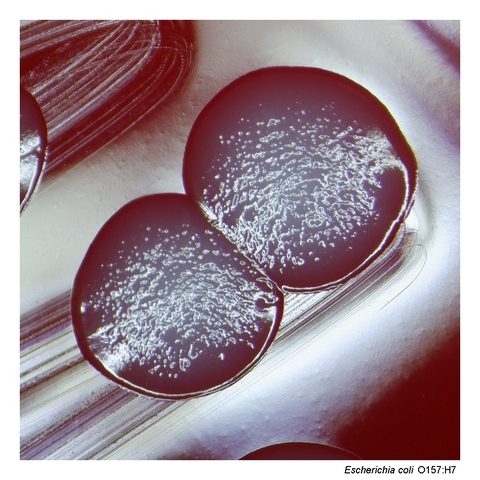
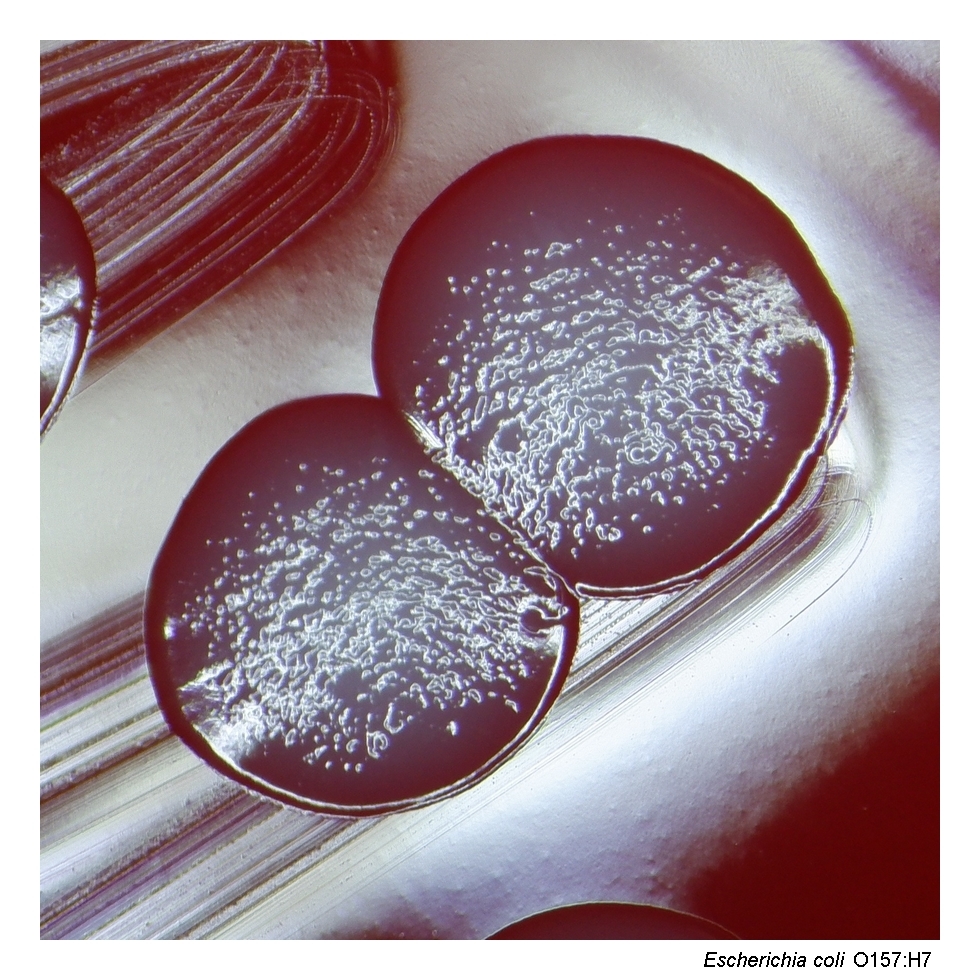
Close-up view of Escherichia coli O157:H7 colonies on blood agar after 24 hours at 36 °C in ambient air. The strain carries the gene for Shiga toxin 2 production. At higher magnification, the convex colonies show an uneven surface. This appearance is not specific to toxigenic strains and should not be interpreted as a marker of STEC. After repeated subculture, the colonies may develop a more typical smooth surface.
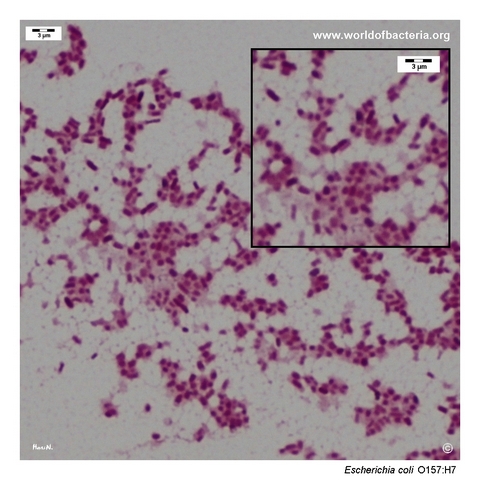
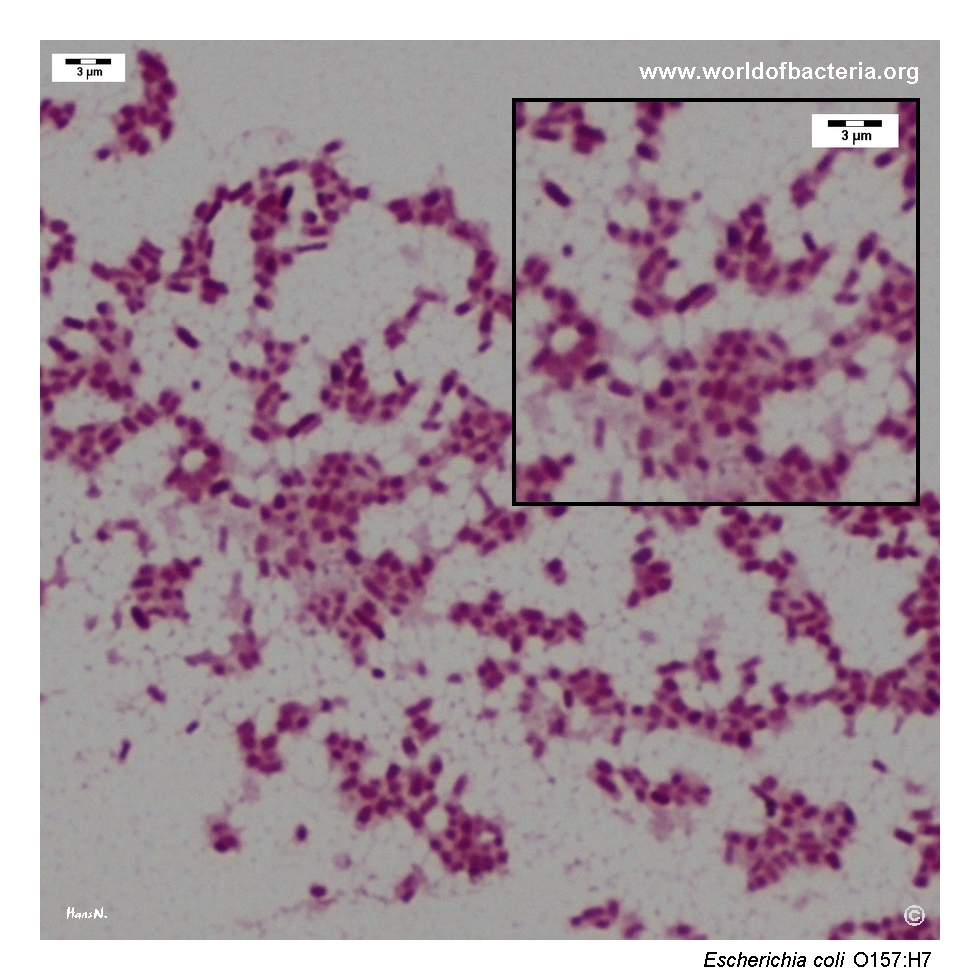
Gram-stained smear prepared from a colony of the STEC isolate grown on blood agar. The organism appears as short, relatively small Gram-negative rods. This morphology is typical of Escherichia coli but does not distinguish Shiga toxin-producing strains from other pathogenic or commensal isolates. Confirmation therefore depends on serotyping and detection of Shiga toxin or the corresponding stx genes.
Diagnostic and Clinical Notes
Shiga toxin-producing Escherichia coli are defined by their ability to produce Shiga toxin. They may cause disease ranging from uncomplicated diarrhoea to haemorrhagic colitis and life-threatening haemolytic uraemic syndrome.
Escherichia coli O157:H7 is the most widely recognized STEC serotype. The isolate illustrated here was recovered from a two-year-old child with mucus- and blood-containing diarrhoea and was confirmed by a reference laboratory as O157:H7 carrying stx2.
Shiga toxin 2 is an important virulence determinant associated with high-risk STEC isolates and an increased likelihood of severe disease. The occurrence of haemolytic uraemic syndrome in the patient’s older brother underlines the potential seriousness of the clinical episode represented by this culture.
Classic O157:H7 strains characteristically fail to ferment sorbitol rapidly and therefore form pale colonies on sorbitol MacConkey agar. This is a useful screening feature, but it is not absolute: sorbitol-fermenting O157 variants occur, and most non-O157 STEC cannot be recognized by this phenotype alone.
Rapid recognition has both clinical and public-health importance. Presumptive O157 isolates and Shiga toxin-positive specimens should be confirmed and further characterized using toxin detection, molecular testing, serotyping, and, where appropriate, genomic typing.
Laboratory Identification
Colony Morphology
On blood agar after 18–24 hours at 35–37 °C, Escherichia coli O157:H7 may form medium-sized convex grey-white colonies. Surface appearance can vary and is not a marker of toxin production. On sorbitol MacConkey agar, classic O157:H7 isolates are typically non-sorbitol-fermenting or slow sorbitol fermenters and therefore remain pale or colourless while most ordinary E. coli colonies become coloured.
Microscopy
Gram staining shows short Gram-negative rods, generally occurring singly. The microscopic appearance is indistinguishable from that of non-toxigenic Escherichia coli and cannot identify the serotype or demonstrate Shiga toxin production.
Key Identification Clues
Gram-negative rods
Facultatively anaerobic growth
Oxidase negative and catalase positive
Usually indole positive and motile
O157:H7 serotype confirmed in this isolate
Classic O157:H7 phenotype: absent or delayed sorbitol fermentation
stx2 detected by reference laboratory testing
Modern Identification Methods
Diagnosis should combine culture for O157 with assays that detect Shiga toxin or the corresponding stx genes, because culture on sorbitol MacConkey agar alone does not detect most non-O157 STEC. Presumptive isolates may be confirmed by O- and H-antigen serotyping, PCR, toxin immunoassays, and whole-genome sequencing for public-health investigation and strain comparison.
Antibiotic Characteristics
Management of suspected or confirmed STEC infection is primarily supportive, with particular attention to hydration and monitoring for signs of haemolytic uraemic syndrome.
Antimicrobial susceptibility may vary between isolates, but an in-vitro result does not establish that antibiotic treatment is clinically appropriate for STEC diarrhoeal disease.
Antibiotics are generally avoided when the clinical syndrome suggests STEC infection because antimicrobial exposure may increase the risk of haemolytic uraemic syndrome. Antimotility agents should also be avoided in bloody diarrhoea and confirmed STEC infection.
Note: Treatment decisions belong to the responsible clinical team and should follow current clinical and public-health guidance. Early recognition, supportive care, and prompt assessment of possible HUS are more important than routine antimicrobial therapy.