Escherichia coli Nissle 1917 is a well-characterized non-pathogenic probiotic strain of serotype O6:K5:H1, used for more than a century and studied for its ability to colonize the intestinal environment and antagonize selected enteric pathogens.
Basic Characteristics
Taxonomy
Domain: Bacteria
Phylum: Pseudomonadota (Proteobacteria)
Class: Gammaproteobacteria
Order: Enterobacterales
Family: Enterobacteriaceae
Genus:Escherichia
Species:Escherichia coli
Strain: Nissle 1917 (DSM 6601)
Serotype: O6:K5:H1
Microscopy & Gram Stain
Short Gram-negative rods
Cells occur mainly singly, with pairs and short arrangements also possible
Microscopy does not distinguish Nissle 1917 from pathogenic or other non-pathogenic E. coli strains
Oxygen Relationship
Facultatively anaerobic
Rapid Identification Tests
Oxidase: negative
Catalase: positive
Indole: usually positive
Motility: positive
Lactose fermentation: positive
Sorbitol fermentation: positive
Haemolysis on blood agar: absent in the illustrated strain
Ecology and Clinical Relevance
Natural Habitat
Human intestinal tract during administration and temporary colonization
Probiotic pharmaceutical preparations containing the defined Nissle 1917 strain
Laboratory cultures used in probiotic, host–microbe, and microbial competition research
Common Laboratory and Study Material
Reference and collection cultures
Probiotic preparations
Experimental mixed cultures with intestinal pathogens
Stool specimens collected during colonization or probiotic studies
Biological and Clinical Significance
One of the most intensively studied Gram-negative probiotic bacterial strains
Used since the early twentieth century in selected gastrointestinal indications
Capable of competing with and antagonizing several enteric microorganisms under experimental conditions
Its probiotic identity depends on the defined strain and cannot be inferred from ordinary E. coli morphology
Differential Considerations
Commensal and pathogenic strains of Escherichia coli
Shigella flexneri and other non-lactose-fermenting enteric bacteria on MacConkey agar
Shiga toxin-producing and other diarrhoeagenic E. coli pathotypes
Strain-level verification is required because routine species identification does not establish Nissle 1917 identity
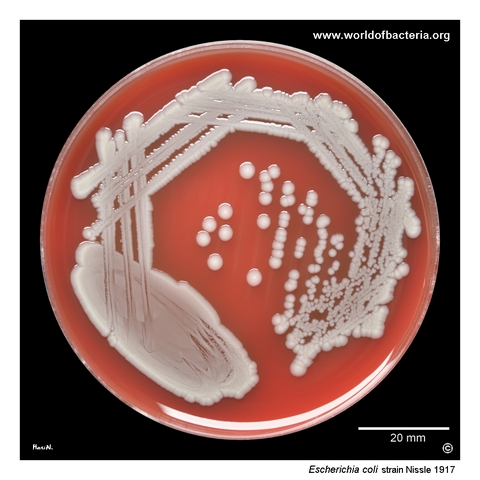
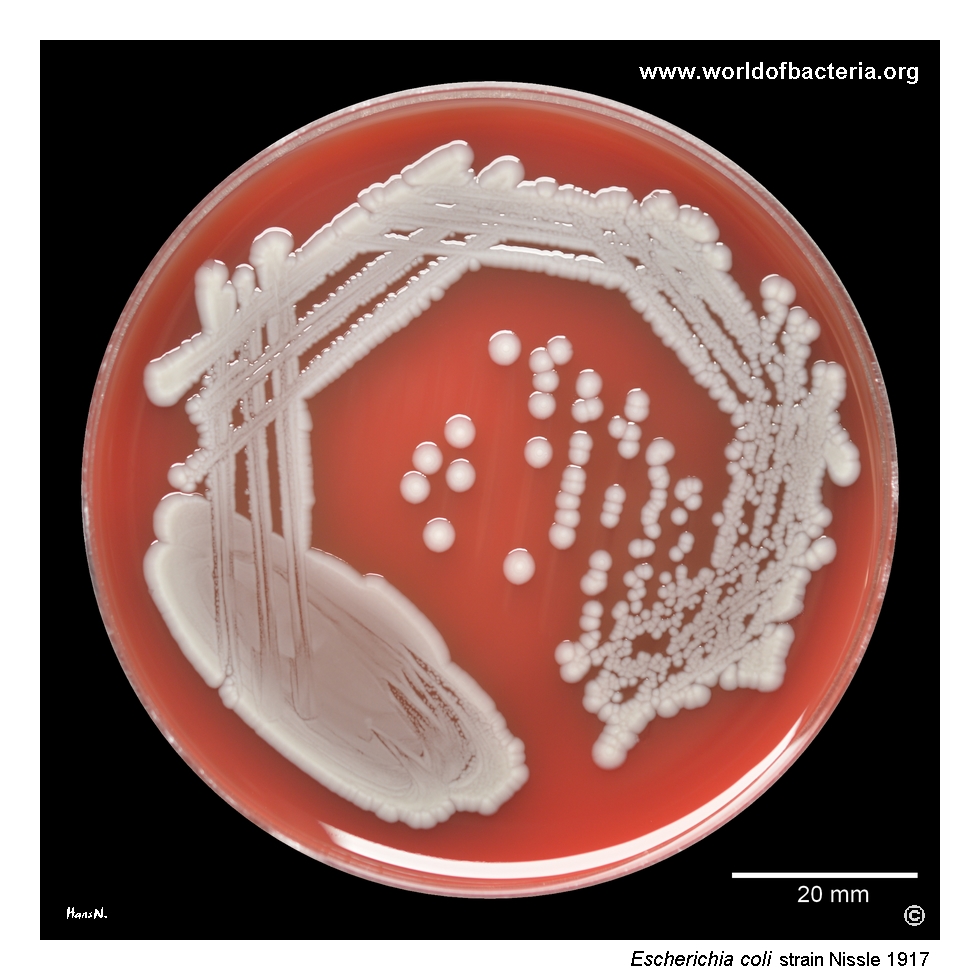
Escherichia coli Nissle 1917 on blood agar after 24 hours of incubation at 36 °C in ambient air. Its growth and colony morphology do not differ visibly from those of many other non-haemolytic E. coli strains. This probiotic strain, serotype O6:K5:H1, has been used since 1917 and is known for antagonistic effects against several intestinal pathogens. Colony appearance alone does not reveal its unusual biological properties.
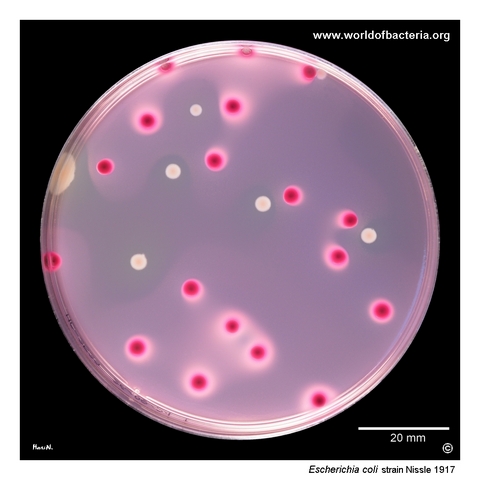
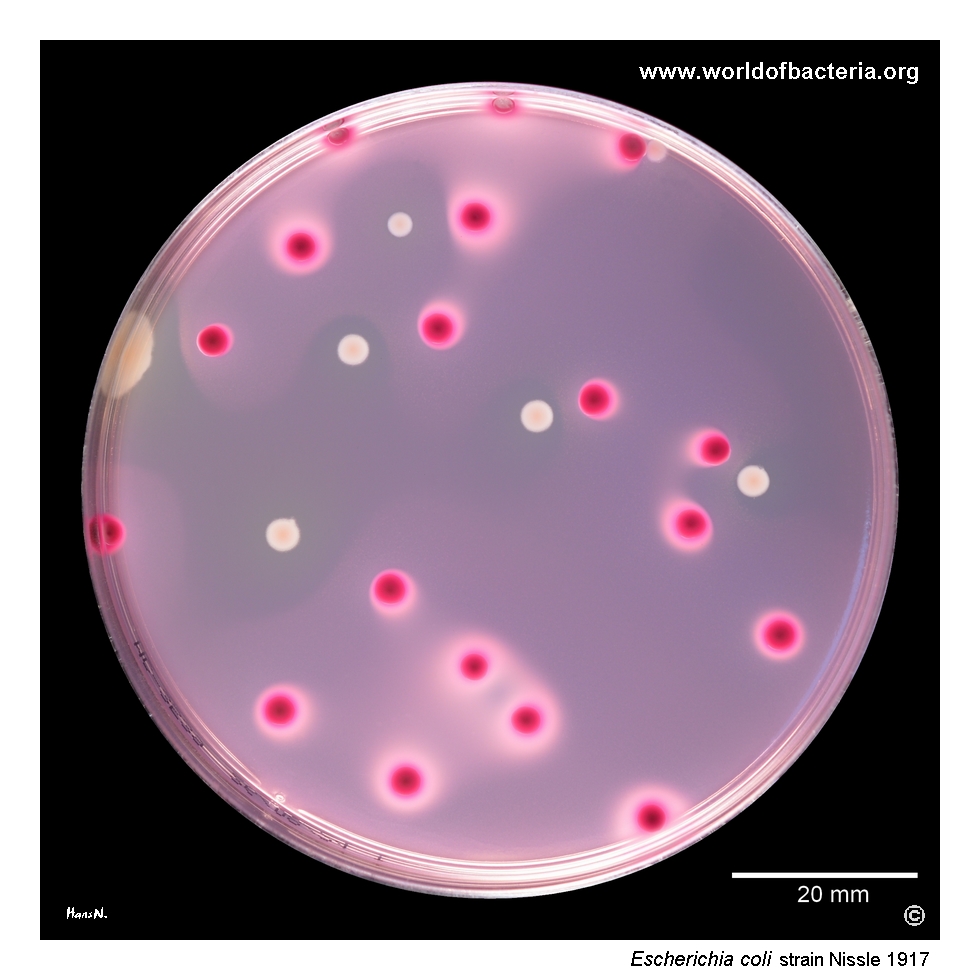
Escherichia coli Nissle 1917 and Shigella flexneri on MacConkey agar after 24 hours at 36 °C in ambient air. Like most E. coli strains, Nissle 1917 ferments lactose and therefore forms deep pink to red colonies. S. flexneri does not ferment lactose during routine incubation and consequently produces pale colonies. The colour contrast allows the two organisms to be distinguished readily in this mixed culture.
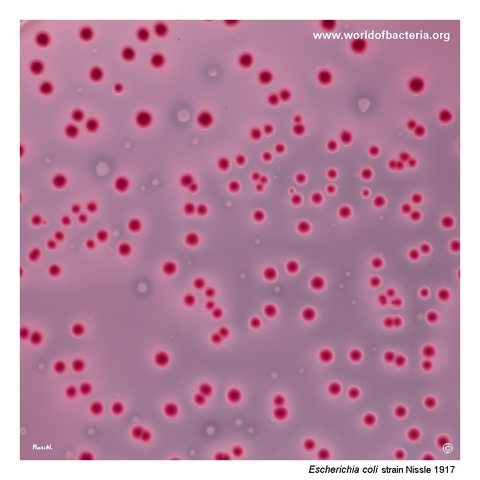
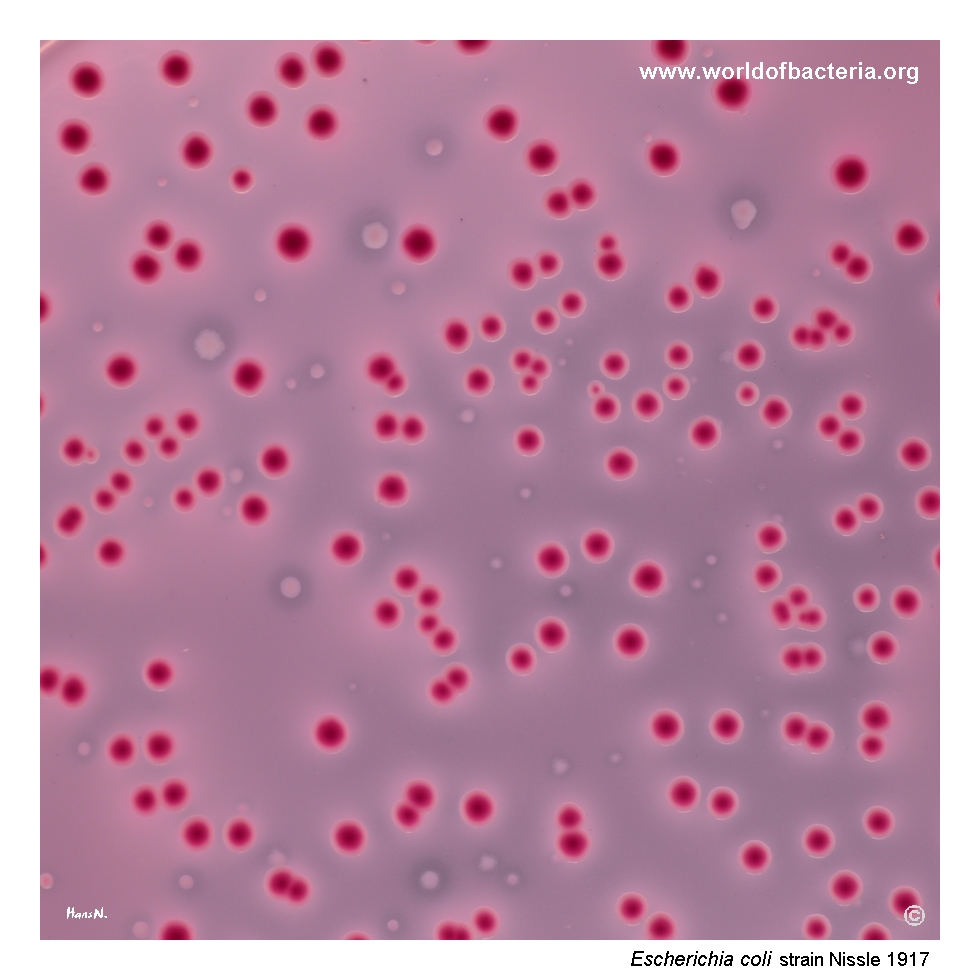
Escherichia coli Nissle 1917 and Shigella flexneri growing together on MacConkey agar. When both organisms are present at sufficiently high density, an inhibitory effect is visible: colonies of S. flexneri growing near Nissle 1917 remain markedly smaller than colonies outside the affected area. The image demonstrates antagonism under these experimental culture conditions and should not be interpreted from colony size without comparison with uninhibited growth. EcN is also known experimentally to interfere with invasion of epithelial cells by S. flexneri.
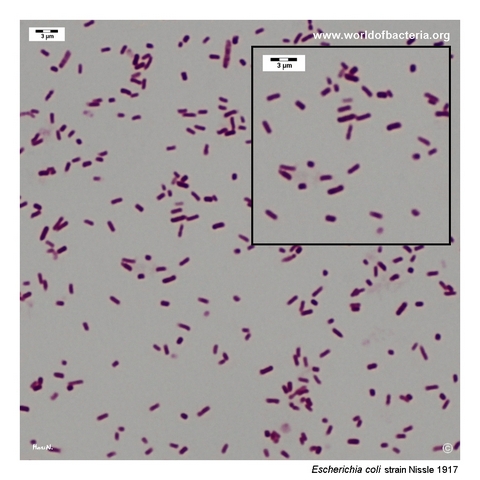
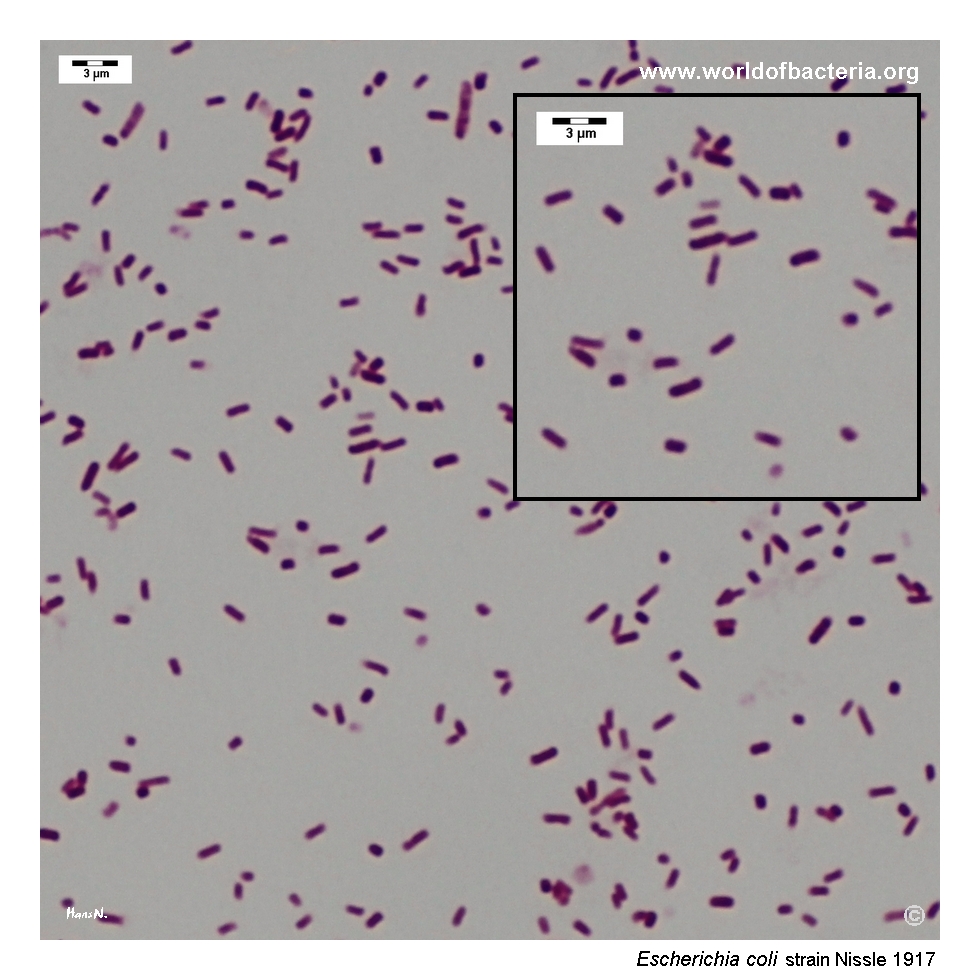
Gram-stained smear prepared from a colony of Escherichia coli Nissle 1917 grown on blood agar. The organism appears as Gram-negative rods, microscopically indistinguishable from pathogenic and other non-pathogenic strains of E. coli. Its probiotic identity and biological properties therefore cannot be determined from Gram stain or ordinary colony morphology and depend on knowledge of the strain and its specific characterization.
Diagnostic and Clinical Notes
Escherichia coli Nissle 1917, commonly abbreviated EcN, is a defined probiotic strain of serotype O6:K5:H1 and collection designation DSM 6601. Its ordinary plate and microscopic morphology remain those of E. coli and do not independently reveal its strain identity.
The strain has been used since the early twentieth century and is among the most extensively investigated Gram-negative probiotics. Its biological behaviour reflects a combination of intestinal fitness, competition for nutrients and micronutrients, interactions with the host epithelium, and antagonistic effects against selected microorganisms.
The MacConkey agar images provide two complementary teaching points. Lactose fermentation produces deep pink to red EcN colonies and distinguishes them visually from pale, non-lactose-fermenting Shigella flexneri colonies under the illustrated conditions.
In the experimental mixed culture, S. flexneri colonies remain smaller close to dense Nissle 1917 growth. This is evidence of antagonism in that specific assay, but the visible phenotype should not be generalized into a single mechanism or interpreted as proof of bactericidal activity without additional testing.
Experimental studies have also shown that EcN can interfere with invasion of intestinal epithelial cells by S. flexneri and other invasive pathogens. Such properties are strain-specific and cannot be assigned to unrelated E. coli isolates identified only at species level.
Laboratory Identification
Colony Morphology
On blood agar after 18–24 hours at 35–37 °C, Escherichia coli Nissle 1917 forms smooth, convex, grey-white, non-haemolytic colonies similar to those of many ordinary E. coli strains. On MacConkey agar it ferments lactose and develops pink to red colonies. Neither appearance establishes the Nissle 1917 strain identity.
Microscopy
Gram staining shows short Gram-negative rods, usually occurring singly. Microscopy is indistinguishable from pathogenic, commensal, and other probiotic Escherichia coli strains.
Key Identification Clues
Gram-negative rods
Facultatively anaerobic growth
Oxidase negative and catalase positive
Usually indole positive and motile
Lactose- and sorbitol-fermenting phenotype
Non-haemolytic growth in the illustrated culture
Defined strain designation Nissle 1917 / DSM 6601
Serotype O6:K5:H1
Modern Identification Methods
Routine MALDI-TOF MS or biochemical identification can establish the species Escherichia coli but ordinarily does not prove that an isolate is Nissle 1917. Reliable strain-level verification requires documented provenance or strain-specific molecular characterization, potentially supported by whole-genome sequencing and comparison with authenticated EcN reference data.
Antibiotic Characteristics
Escherichia coli Nissle 1917 is used as a probiotic strain rather than as an antimicrobial drug, and its antagonistic effects should not be equated with antibiotic treatment.
Antimicrobial susceptibility is a strain property and should be assessed directly whenever relevant to quality control, research, or an unexpected clinical recovery. Ordinary colony morphology does not predict susceptibility.
Species-level identification as E. coli does not confirm probiotic identity or safety. Authenticated strain provenance and appropriate characterization are essential, particularly because unrelated E. coli isolates may carry virulence or acquired antimicrobial-resistance determinants.
Note: Probiotic preparations should be used only according to their authorized product information and appropriate clinical guidance; laboratory observations of antagonism do not establish efficacy for treatment of an individual infection.
For broader information about Escherichia coli Nissle 1917, its history, genomic characteristics, and experimentally studied probiotic properties, see: