Staphylococcus auricularis is a Gram-positive, coagulase-negative coccus associated particularly with the external auditory canal and nearby skin, where it may occur as part of the local microbiota and only occasionally act as an opportunistic pathogen.
Basic Characteristics
Taxonomy
Domain: Bacteria
Phylum: Bacillota (Firmicutes)
Class: Bacilli
Order: Bacillales
Family: Staphylococcaceae
Genus:Staphylococcus
Species:Staphylococcus auricularis
Microscopy & Gram Stain
Gram-positive cocci
Cells may occur singly, in pairs, tetrads, and clusters
Oxygen Relationship
Facultatively anaerobic
Rapid Identification Tests
Catalase: positive
Coagulase: negative
Haemolysis on blood agar: usually absent
Colony growth: often slow and relatively inconspicuous
Ecology and Clinical Relevance
Natural Habitat
External auditory canal
Adjacent skin of the ear region
May be present in healthy individuals as part of the local microbiota
Common Clinical Specimens
Ear swabs
Paracentesis material
Skin swabs from the auricular region
Occasional opportunistic clinical isolates from other sites
Clinical Significance
Usually regarded as a low-virulence commensal organism
May be encountered in otological material because of its ecological association with the auditory canal
In some specimens, recovery may represent contamination rather than true infection
Clinical significance depends on specimen type, quantity of growth, and correlation with other findings
Differential Considerations
Other coagulase-negative staphylococci with small non-pigmented colonies
Micrococcus species when tetrad-like arrangements are noted microscopically
Skin commensals recovered from otological specimens
Important clues include association with the auditory canal, slow growth, non-haemolytic small colonies, and the need for species confirmation
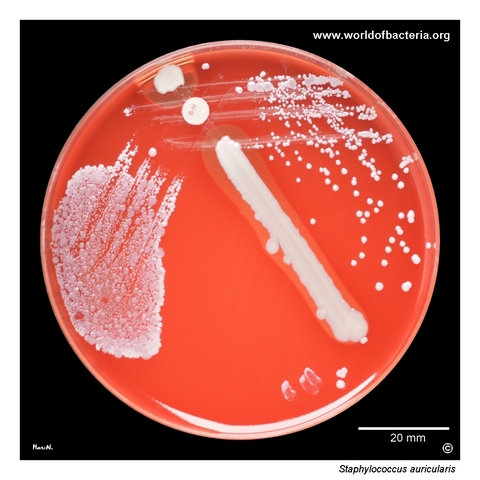
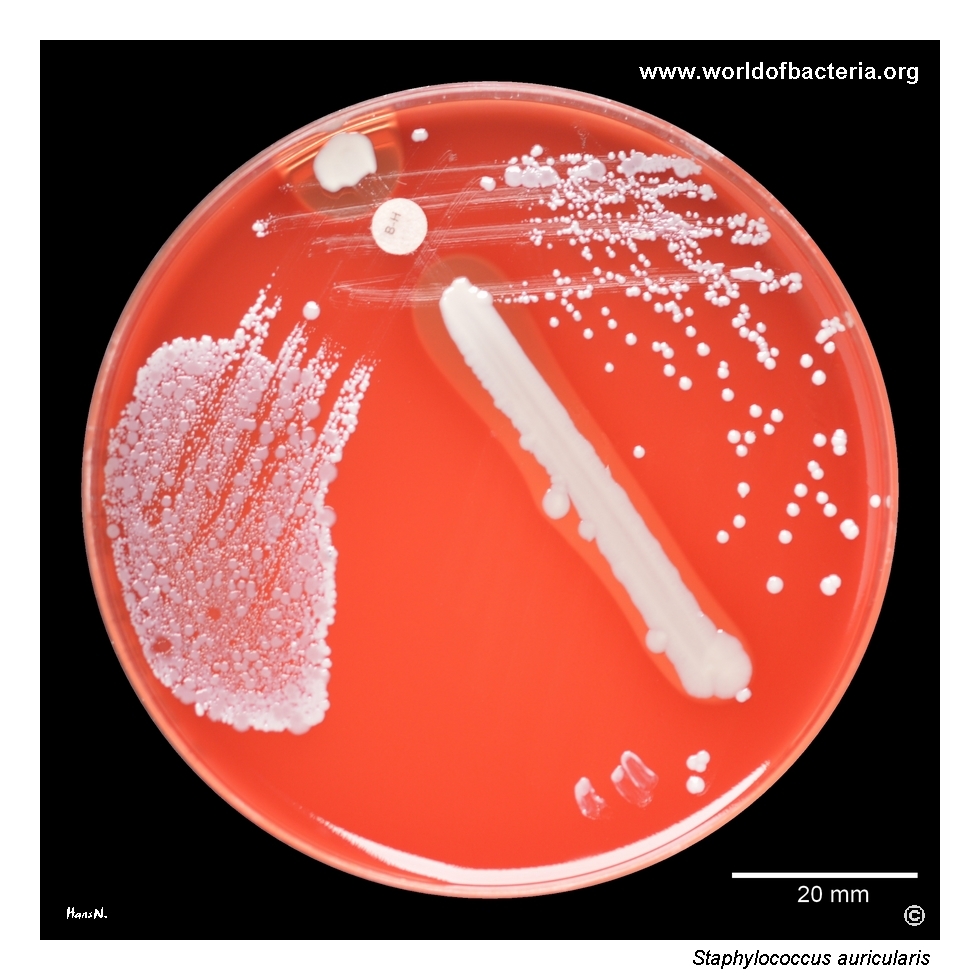
Pus obtained by paracentesis from a six-year-old child with acute suppurative otitis media. Primary culture on blood agar was incubated for 48 hours at 36 °C in 5% CO2, followed by 24 hours at room temperature. A streak of Staphylococcus aureus ATCC 25923 and a bacitracin disk were included on the plate. Colonies of Staphylococcus auricularis remained small, non-pigmented, and non-haemolytic, measuring only about 2–3 mm in diameter.
Staphylococcus auricularis belongs to the more slowly growing staphylococci. It typically forms small, non-pigmented colonies that remain relatively inconspicuous even after prolonged incubation of three or more days. Compared with many other staphylococcal species, colony enlargement is limited, which can make this organism easy to overlook on primary culture unless the plate is examined carefully over an extended incubation period.
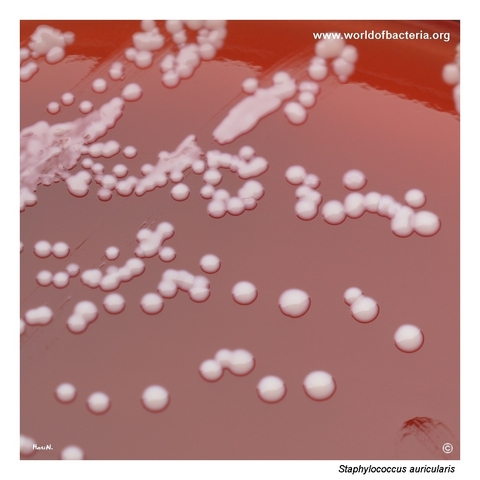
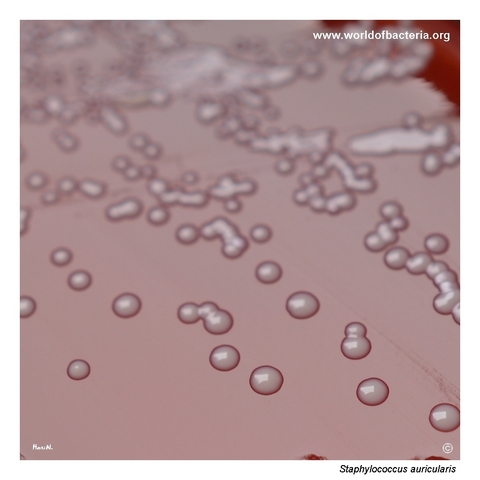
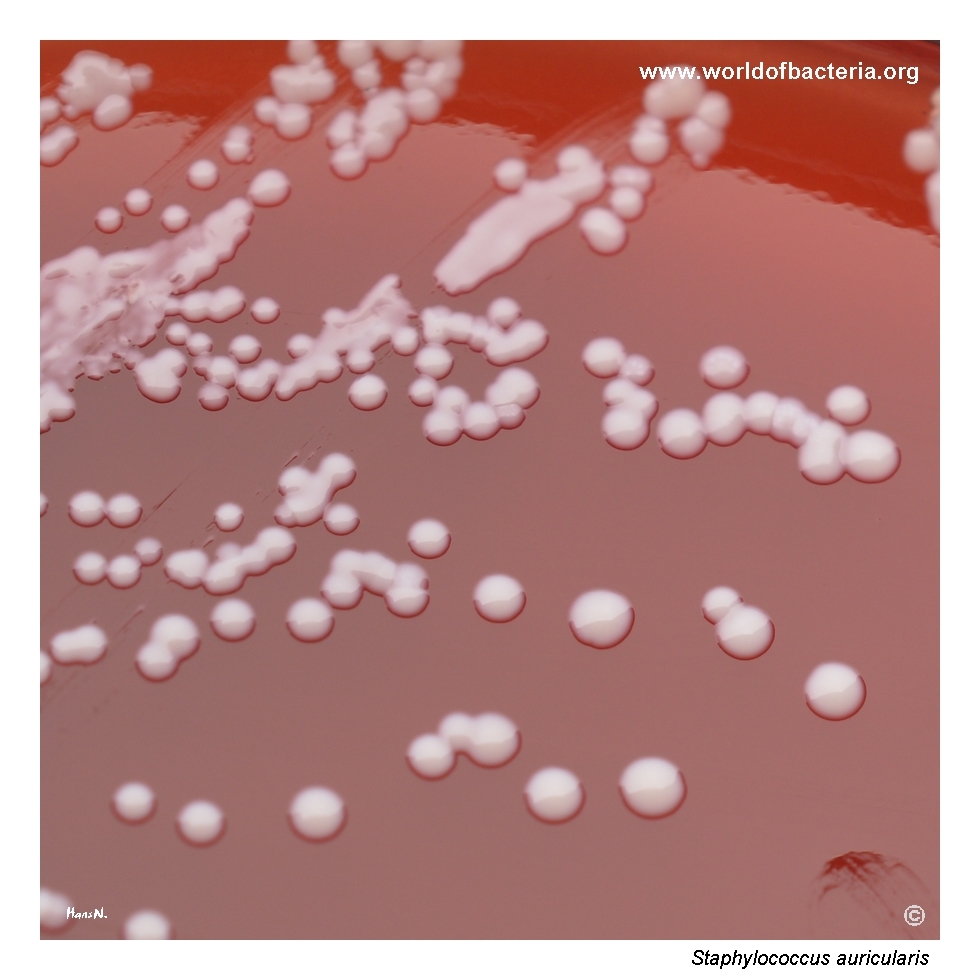
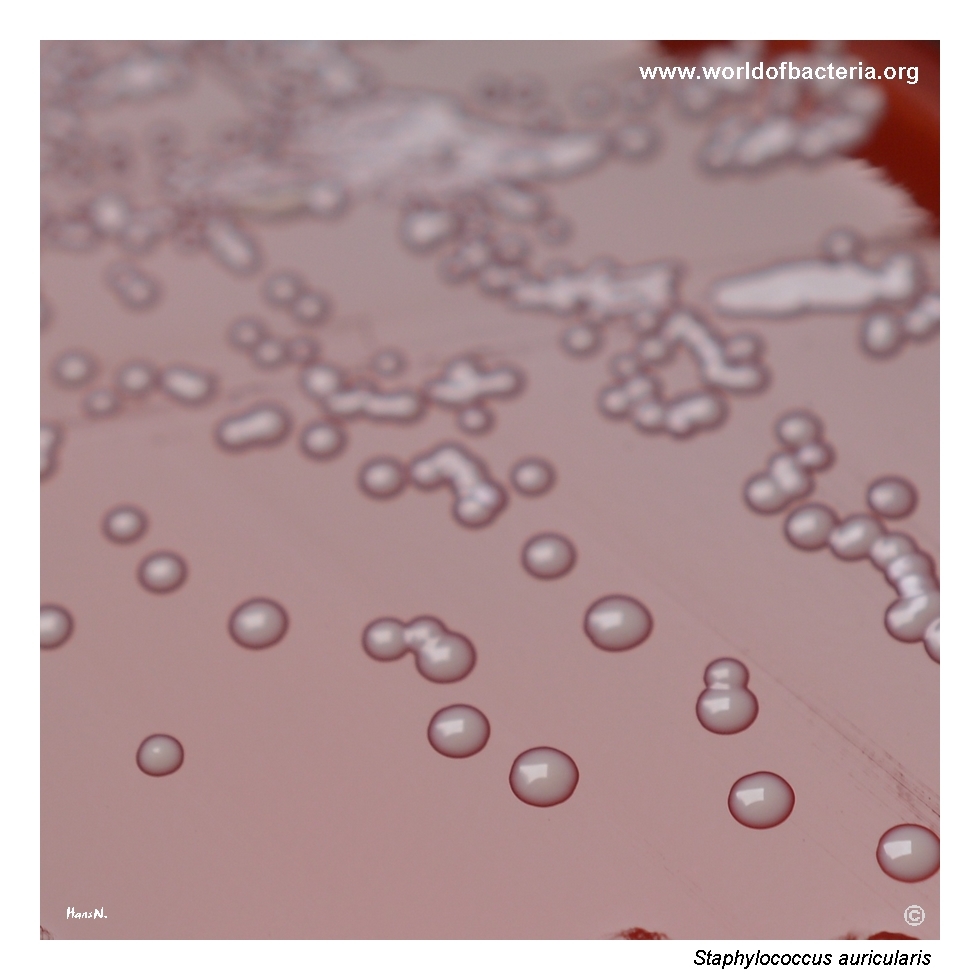
Small, shiny, convex colonies with entire margins on blood agar. Staphylococcus auricularis is closely associated with the external auditory canal and may also be found in healthy individuals as part of the local microbiota. In paracentesis material, its presence may therefore reflect secondary contamination during specimen collection, although heavy growth raises the possibility of a true pathogenic role. Anaerobic culture remained negative after 48 hours.
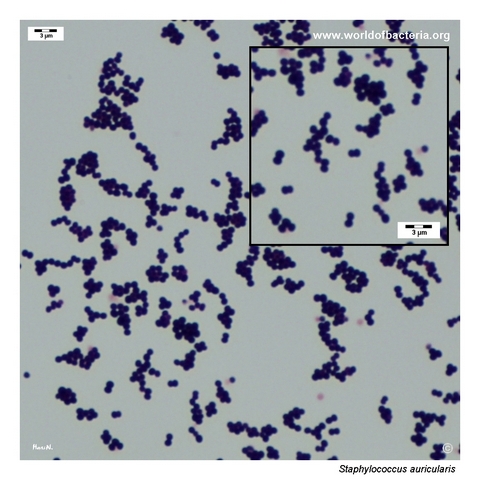
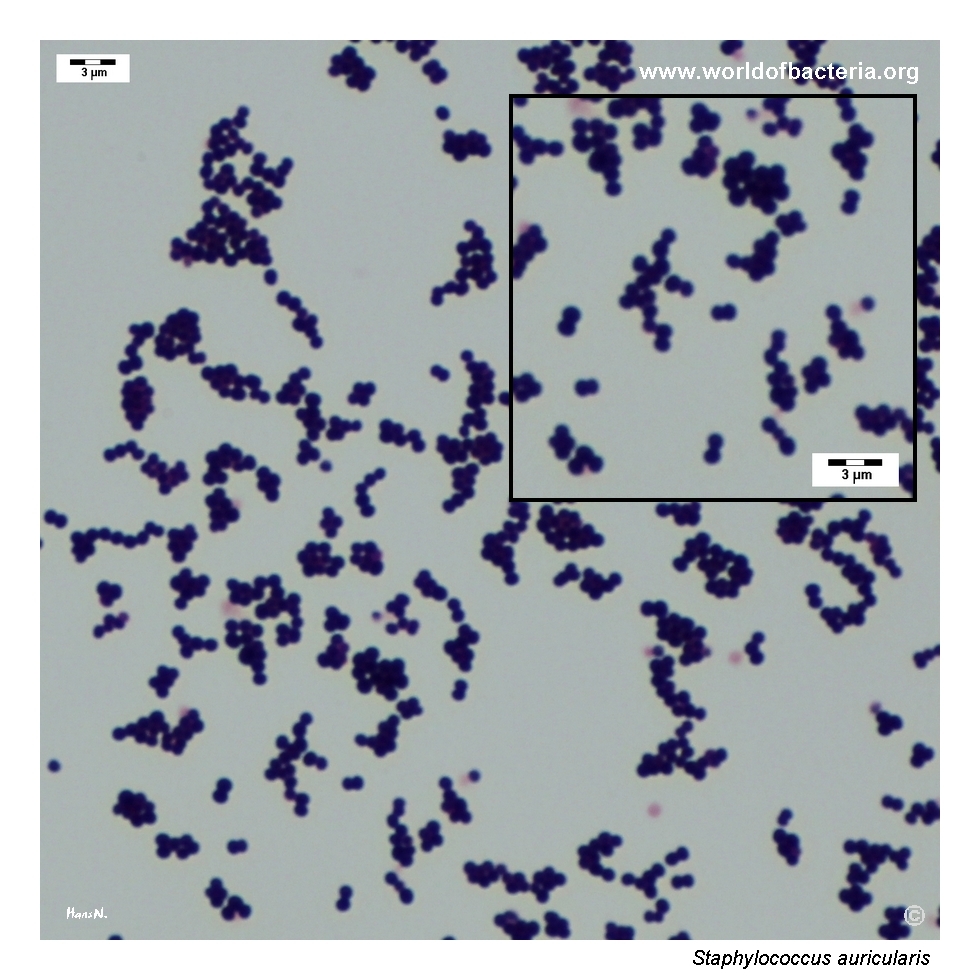
Gram-stained smear prepared from a colony of Staphylococcus auricularis grown on blood agar. The organism appears as Gram-positive cocci occurring singly, in pairs, tetrads, and clusters. Arrangement in tetrads is sometimes mentioned as a characteristic feature of this species, although it is not sufficient on its own for definitive identification and should always be interpreted together with culture characteristics and other laboratory findings.
Diagnostic and Clinical Notes
Staphylococcus auricularis is one of the less commonly discussed coagulase-negative staphylococci and is notable mainly because of its close ecological association with the external auditory canal. In this location it may occur as part of the normal local microbiota in otherwise healthy individuals.
When the organism is recovered from otological material, interpretation requires caution. Its presence may represent true participation in disease, but it may also reflect secondary contamination introduced during specimen collection from a site naturally colonized by the species.
A useful practical feature is the organism’s relatively slow growth and its tendency to form small, non-pigmented, non-haemolytic colonies that may remain inconspicuous even after extended incubation. For this reason, the species can be overlooked unless primary culture plates are examined carefully over time.
Because of its low apparent virulence and ecological niche, S. auricularis is generally not regarded as a major pathogen. Nevertheless, heavy growth from appropriately collected material, together with compatible clinical findings and exclusion of more likely pathogens, may support a clinically relevant role.
As with many coagulase-negative staphylococci, definitive interpretation always depends on specimen quality, culture purity, quantity of growth, and the broader microbiological and clinical context.
Laboratory Identification
Colony Morphology
On blood agar incubated at 35–37 °C, colonies of Staphylococcus auricularis are typically small, shiny, convex, non-pigmented, and non-haemolytic, usually measuring only a few millimetres even after prolonged incubation. In comparison with many other staphylococci, colony enlargement tends to remain limited.
Microscopy
Gram staining reveals Gram-positive cocci occurring singly, in pairs, tetrads, and clusters. Although tetrad formation is sometimes noted, this finding is not specific enough for definitive identification and must be interpreted with culture characteristics and routine identification methods.
Key Identification Clues
Gram-positive cocci in pairs, tetrads, and clusters
Strongly catalase positive
Coagulase negative
Small, non-pigmented, non-haemolytic colonies
Relatively slow growth and limited colony enlargement
Association with the external auditory canal
Modern Identification Methods
Species-level identification in clinical microbiology laboratories is commonly achieved using MALDI-TOF mass spectrometry. Automated biochemical systems may also be used, but because the species is relatively uncommon and phenotypically subtle, modern methods are especially useful for reliable confirmation.
Antibiotic Characteristics
Staphylococcus auricularis is not among the most intensively studied staphylococcal pathogens, and clinically significant isolates should therefore be interpreted cautiously and tested individually rather than judged by broad assumptions.
As with other coagulase-negative staphylococci, antimicrobial susceptibility may vary between isolates, and resistance patterns should be determined by routine laboratory testing when the organism appears clinically relevant.
In otological material, treatment decisions should also consider whether the isolate represents colonization or contamination rather than true infection.
Note: Antimicrobial therapy should always be guided by laboratory susceptibility testing, specimen quality, and clinical context.