Acinetobacter baumannii is a non-fermenting, oxidase-negative Gram-negative coccobacillus and a major healthcare-associated opportunistic pathogen, particularly important because of its environmental persistence and frequent multidrug and carbapenem resistance.
Basic Characteristics
Taxonomy
Domain: Bacteria
Phylum: Pseudomonadota (Proteobacteria)
Class: Gammaproteobacteria
Order: Pseudomonadales
Family: Moraxellaceae
Genus:Acinetobacter
Species:Acinetobacter baumannii
Microscopy & Gram Stain
Very short Gram-negative rods or coccobacilli
Cells may appear almost coccoid, especially in dense preparations
Usually occur singly, in pairs, or in small groups
Oxygen Relationship
Strictly aerobic
Non-fermenting; energy is generated through oxidative metabolism
Rapid Identification Tests
Oxidase: negative
Catalase: positive
Motility: negative
Glucose metabolism: oxidative, non-fermentative
Haemolysis on blood agar: usually absent
MacConkey agar: growth as a non-lactose-fermenting organism
Ecology and Clinical Relevance
Natural Habitat
Healthcare environments and contaminated hospital surfaces
Medical equipment and moist or dry environmental reservoirs
Soil and water, although clinical lineages are strongly associated with healthcare settings
May colonize the skin, respiratory tract, wounds, and gastrointestinal tract of hospitalized patients
Common Clinical Specimens
Respiratory specimens from ventilated and critically ill patients
Blood cultures
Wound, burn, and soft-tissue specimens
Urine and catheter-associated urinary specimens
Device-associated and surveillance specimens
Clinical Significance
Important healthcare-associated opportunistic pathogen
Associated with ventilator-associated pneumonia, bloodstream infection, wound infection, urinary infection, and device-related infection
Particularly relevant in intensive-care units and among severely ill or immunocompromised patients
Environmental persistence facilitates transmission and outbreaks in healthcare facilities
Differential Considerations
Other members of the Acinetobacter calcoaceticus–baumannii complex, including A. nosocomialis and A. pittii
Pseudomonas aeruginosa, Stenotrophomonas maltophilia, and Achromobacter xylosoxidans
Gram-negative cocci such as Neisseria or Moraxella may be considered when cells appear almost coccoid
Helpful clues include oxidase negativity, nonmotility, non-fermentative metabolism, and coccobacillary morphology
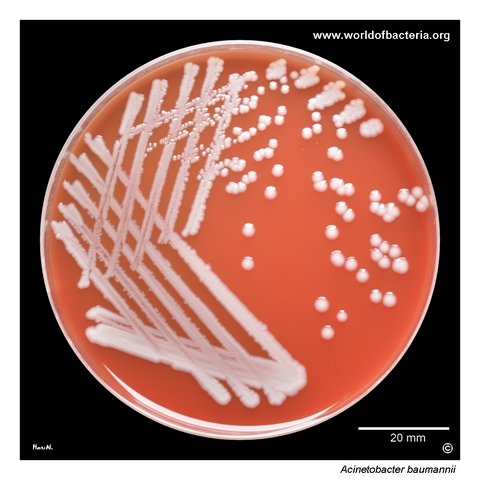
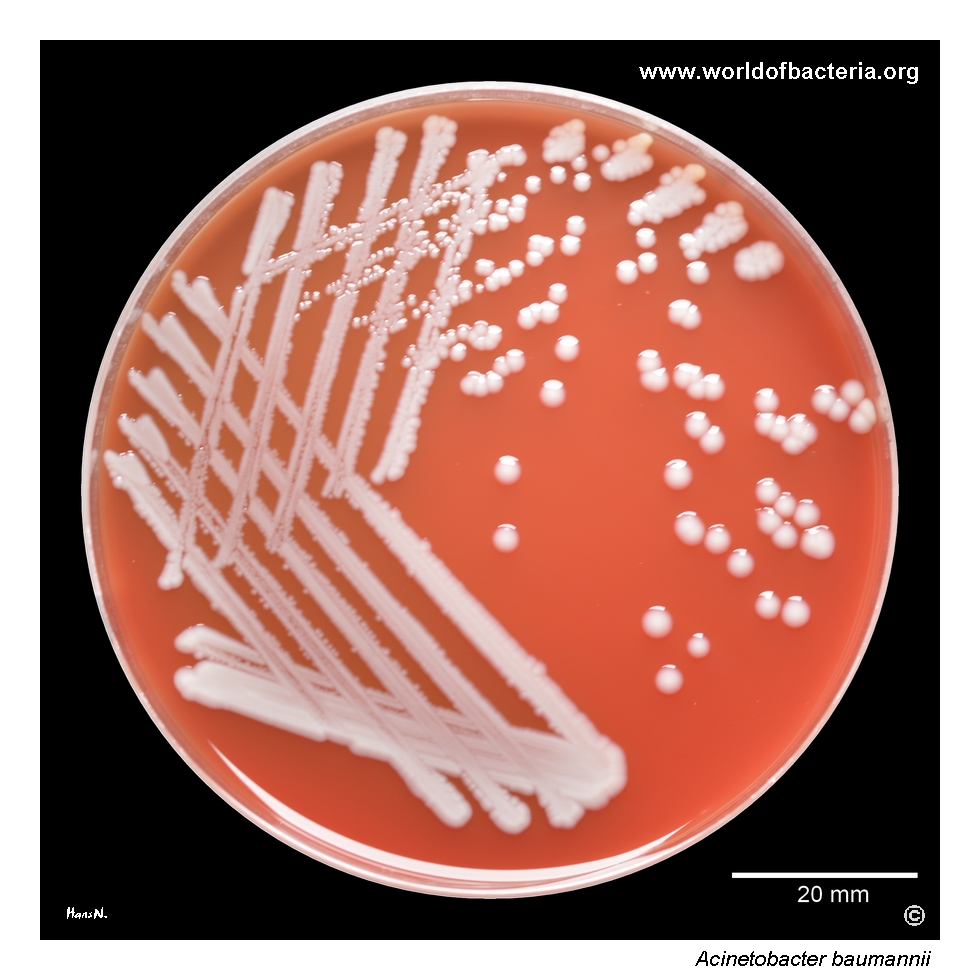
Acinetobacter baumannii isolated in low quantity from a 45-year-old patient hospitalized in the intensive care unit with the diagnosis J96.90, respiratory failure, unspecified, type I. The antimicrobial susceptibility profile is particularly important in this isolate. PCR confirmed the presence of the blaOXA-24-like and intrinsic blaOXA-51-like carbapenemase genes, consistent with a clinically significant mechanism of carbapenem resistance. Culture conditions: 24 hours at 36 °C in ambient air.
Colonies of Acinetobacter baumannii on blood agar after 24 hours of incubation at 36 °C in ambient air. The colonies are inconspicuous, smooth, convex, glistening, grey-white, and round with entire margins, making them difficult to distinguish visually from many other Gram-negative bacteria. A. baumannii belongs to the non-fermenting Gram-negative bacteria, together with organisms such as Pseudomonas aeruginosa and Stenotrophomonas maltophilia.
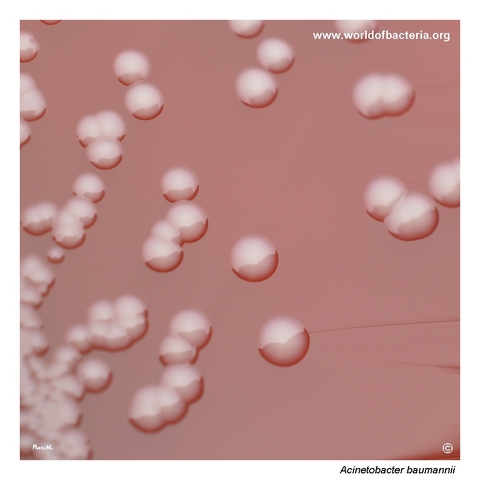
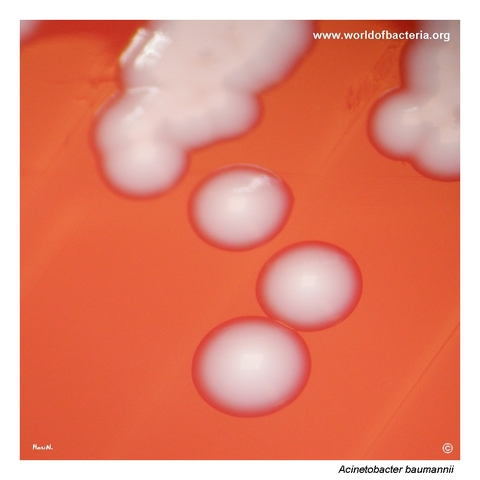
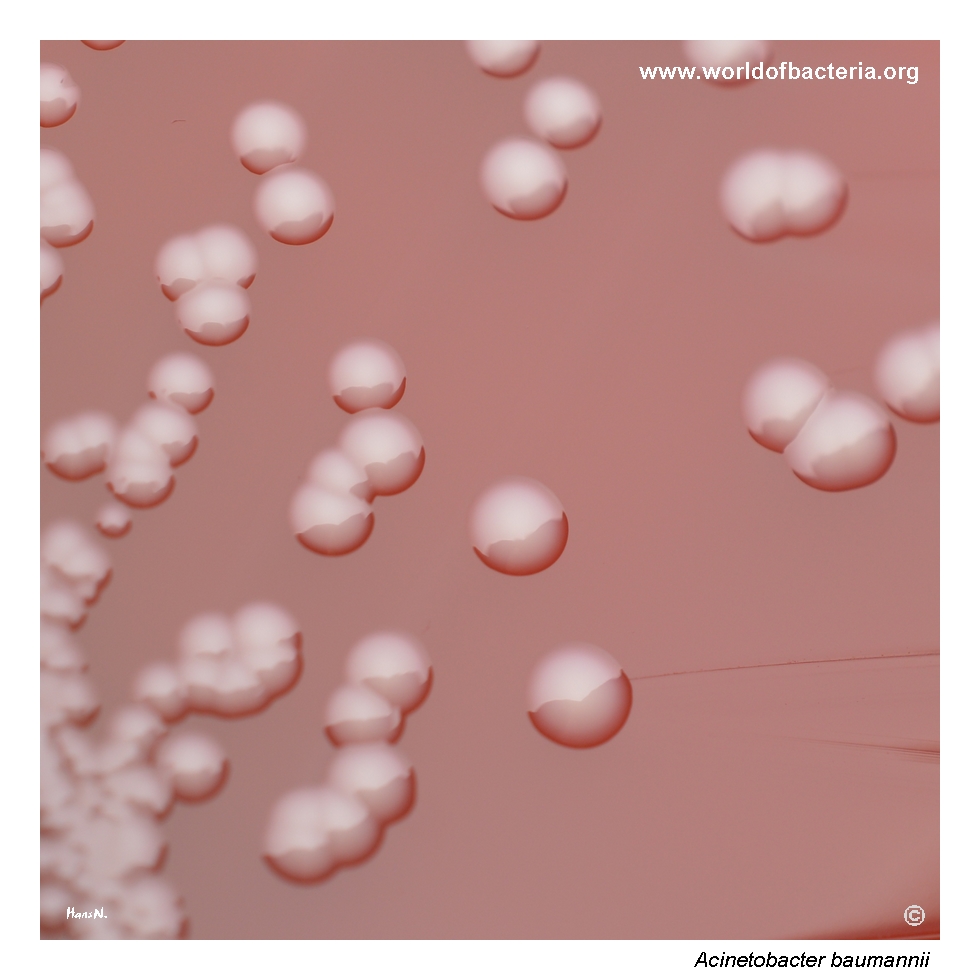
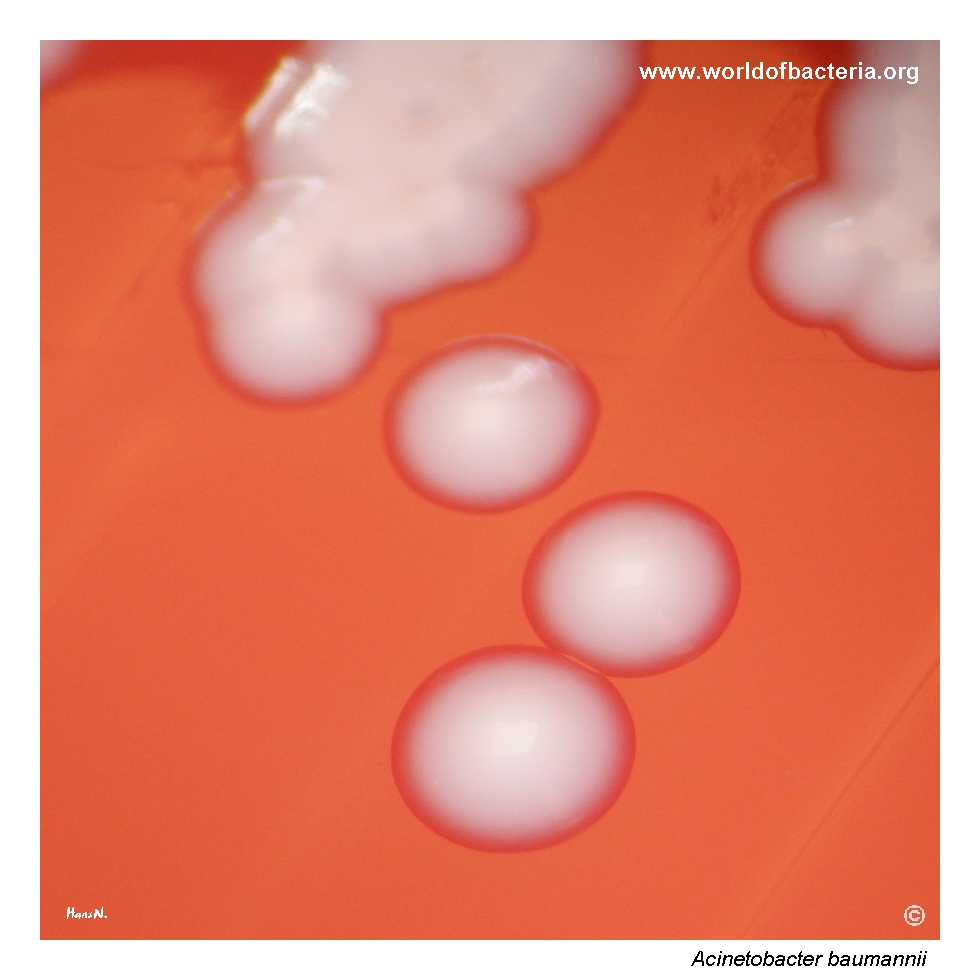
Close-up view of non-haemolytic Acinetobacter baumannii colonies on blood agar. The colonies are smooth, convex, grey-white, and round with entire margins. This isolate carried the blaOXA-24-like and blaOXA-51-like genes. Because carbapenem activity was compromised, treatment could not rely on this antibiotic group and had to be guided by the complete susceptibility profile. Culture conditions: 24 hours at 36 °C in ambient air.
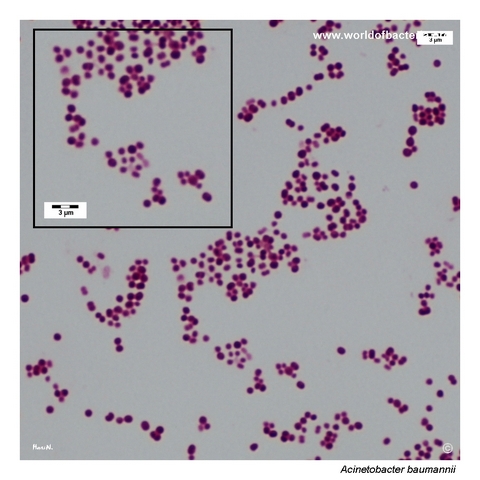
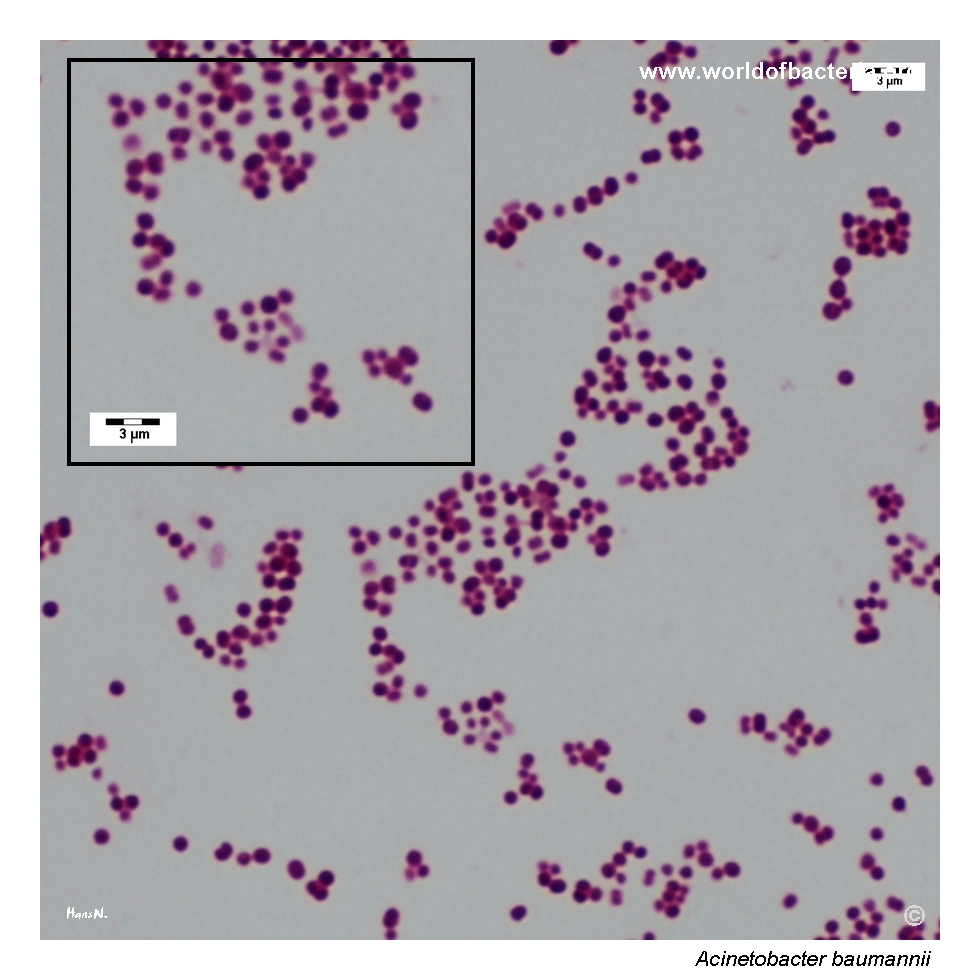
Gram-stained smear prepared from a colony of Acinetobacter baumannii grown on blood agar. Members of the genus Acinetobacter characteristically appear as very short Gram-negative rods or coccobacilli, and some cells may look almost coccoid. This compact morphology can initially cause confusion with Gram-negative cocci, especially in direct clinical specimens or preparations containing densely grouped cells.
Diagnostic and Clinical Notes
Acinetobacter baumannii is a major healthcare-associated pathogen with a particular ability to persist on environmental surfaces, tolerate desiccation, colonize vulnerable patients, and spread within intensive-care and other high-risk hospital units.
The organism may be recovered from respiratory secretions, skin, wounds, urine, or surveillance material without necessarily representing active infection. Interpretation therefore depends on the specimen type, quantity, host condition, inflammatory findings, and evidence of a compatible clinical syndrome.
Species-level recognition can be challenging because A. baumannii belongs to the closely related Acinetobacter calcoaceticus–baumannii complex. Reliable differentiation from A. nosocomialis, A. pittii, and related species requires a validated MALDI-TOF database or molecular and genome-based methods.
The intrinsic blaOXA-51-like gene is characteristic of A. baumannii and has historically been used as a molecular identification marker. Its presence alone does not necessarily predict clinically important carbapenem resistance, because expression level and surrounding mobile elements are important.
In the illustrated isolate, detection of an acquired blaOXA-24-like carbapenemase determinant together with blaOXA-51-like and the phenotypic susceptibility profile supported clinically significant carbapenem resistance. Such results are important for treatment selection, infection control, and epidemiological surveillance.
Laboratory Identification
Colony Morphology
On blood agar after approximately 18–24 hours at 35–37 °C, Acinetobacter baumannii usually forms small to medium-sized, smooth, convex, glistening, grey-white, non-haemolytic colonies with entire margins. The appearance is relatively inconspicuous and not species-specific.
Microscopy
Gram staining reveals short, plump Gram-negative rods or coccobacilli. Some cells may be almost spherical and can be mistaken for Gram-negative cocci, particularly in direct preparations or older cultures.
Key Identification Clues
Very short Gram-negative rods or coccobacilli
Strictly aerobic and non-fermenting
Oxidase negative and catalase positive
Nonmotile
Usually non-haemolytic on blood agar
Growth on MacConkey agar as a non-lactose-fermenting organism
Possible carbapenem resistance mediated by acquired OXA-type carbapenemases
Modern Identification Methods
MALDI-TOF mass spectrometry is commonly used for routine identification, but reliable separation of members of the Acinetobacter calcoaceticus–baumannii complex depends on the instrument and reference database. Molecular assays, sequencing, or whole-genome analysis may be required for definitive species assignment, outbreak investigation, and characterization of resistance determinants such as blaOXA-23-like, blaOXA-24/40-like, blaOXA-58-like, blaNDM, and related genes.
Antibiotic Characteristics
Acinetobacter baumannii readily accumulates intrinsic and acquired resistance mechanisms, including beta-lactamases, target alterations, reduced permeability, active efflux, aminoglycoside-modifying enzymes, and resistance genes carried on mobile genetic elements.
Carbapenem resistance is frequently associated with class D OXA-type carbapenemases. Acquired OXA-23-like, OXA-24/40-like, and OXA-58-like enzymes are particularly important, while the intrinsic OXA-51-like enzyme may contribute when strongly expressed.
Carbapenem-resistant A. baumannii may also be resistant to multiple other antimicrobial classes, leaving limited therapeutic options. The presence of resistance genes must be interpreted together with phenotypic susceptibility results because genotype alone does not define the activity of every agent.
Note: Clinically significant isolates require antimicrobial susceptibility testing using validated methods. Treatment selection should follow the complete susceptibility profile, infection site, disease severity, and current clinical guidance; colony morphology cannot predict resistance.
For broader information about Acinetobacter baumannii, healthcare-associated infection, carbapenem resistance, laboratory identification, and current taxonomy, see: