Kingella kingae is a fastidious, facultatively anaerobic Gram-negative coccobacillus that colonizes the oropharynx of young children and is an important cause of paediatric osteoarticular infection, bacteraemia, and occasionally infective endocarditis.
Basic Characteristics
Taxonomy
Domain: Bacteria
Phylum: Pseudomonadota (Proteobacteria)
Class: Betaproteobacteria
Order: Neisseriales
Family: Neisseriaceae
Genus:Kingella
Species:Kingella kingae
Microscopy & Gram Stain
Short, plump Gram-negative rods or coccobacilli
Cells often occur in pairs and short chains
Microscopic morphology may resemble Neisseria, Moraxella, or other delicate Gram-negative coccobacilli
Oxygen Relationship
Facultatively anaerobic and capnophilic
Grows on blood and chocolate agar, but typically not on MacConkey agar
Rapid Identification Tests
Oxidase: positive
Catalase: negative
Urease: negative
Indole: negative
Motility: negative
Haemolysis: usually beta-haemolytic on blood agar
Carbohydrate utilization: acid commonly produced from glucose and maltose
Ecology and Clinical Relevance
Natural Habitat
Human oropharynx, especially in infants and young children
Asymptomatic carriage is commonest in the toddler age group
Transmission may occur through close contact in households and childcare settings
Common Clinical Specimens
Joint fluid and synovial specimens
Bone aspirates and other osteoarticular material
Blood cultures
Cardiac valve or endocarditis-associated specimens
Occasionally other normally sterile specimens
Clinical Significance
Major bacterial cause of septic arthritis and osteomyelitis in children younger than approximately four years
May cause bacteraemia, spondylodiscitis, and other invasive osteoarticular infections
A member of the HACEK group and an uncommon but important cause of infective endocarditis
Osteoarticular disease may present with only mild fever and modest inflammatory-marker elevation
Differential Considerations
Kingella denitrificans, K. negevensis, and other members of the genus Kingella
Neisseria and Moraxella species with coccobacillary morphology
Other fastidious HACEK organisms recovered from blood culture or endocarditis material
Helpful clues include beta-haemolysis, oxidase positivity, catalase negativity, and characteristic small colonies that may pit the agar
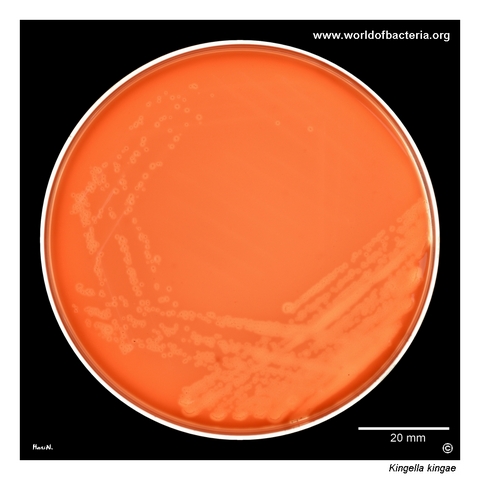
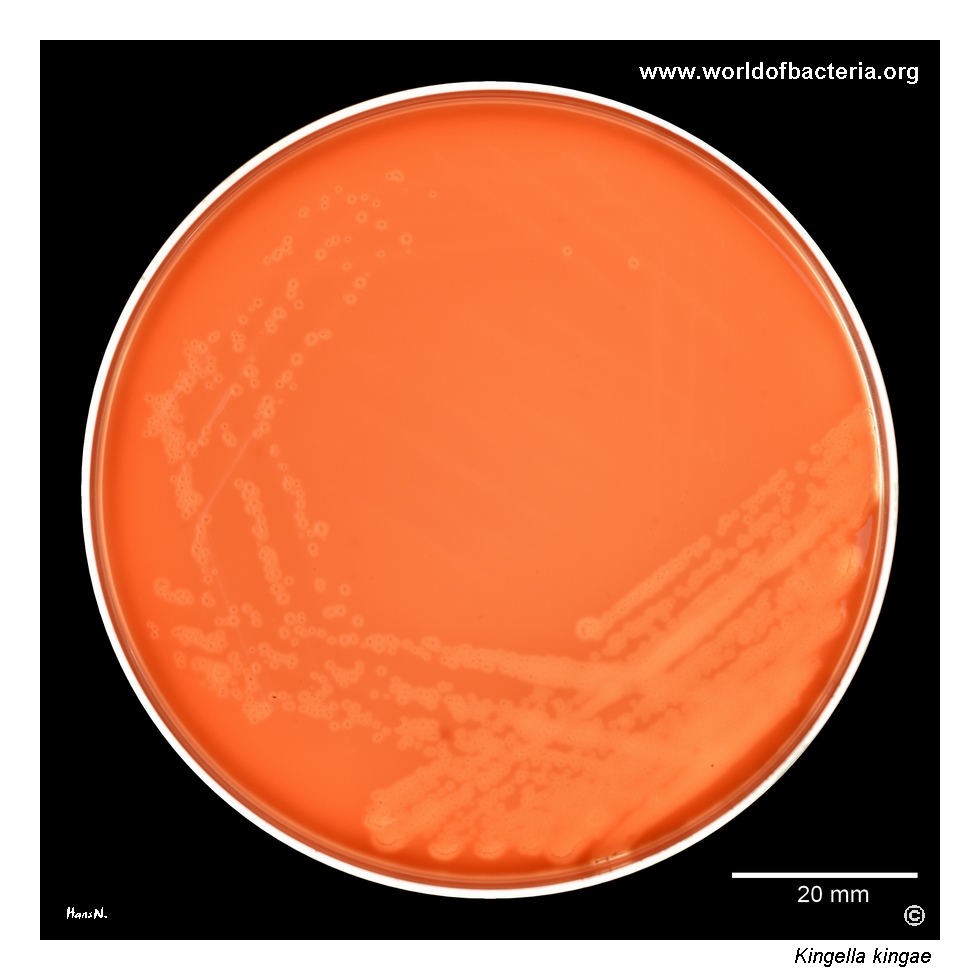
Kingella kingae isolated from the blood culture of a patient with suspected endocarditis. This organism is only rarely recovered in routine laboratory practice, and blood culture represents one of the clinically important settings in which it may be detected. The isolate forms very small colonies surrounded by beta-haemolysis. Culture conditions: 48 hours at 36 °C in an atmosphere containing 5% CO2.
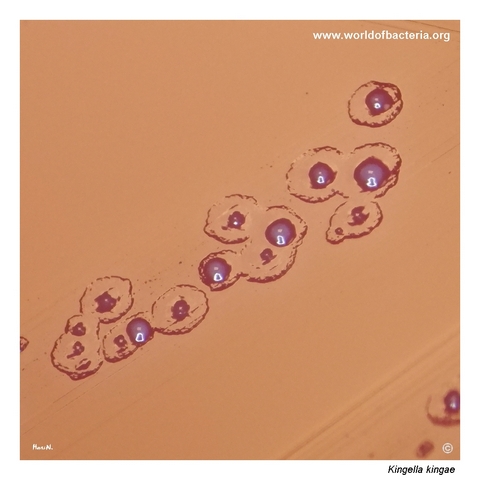
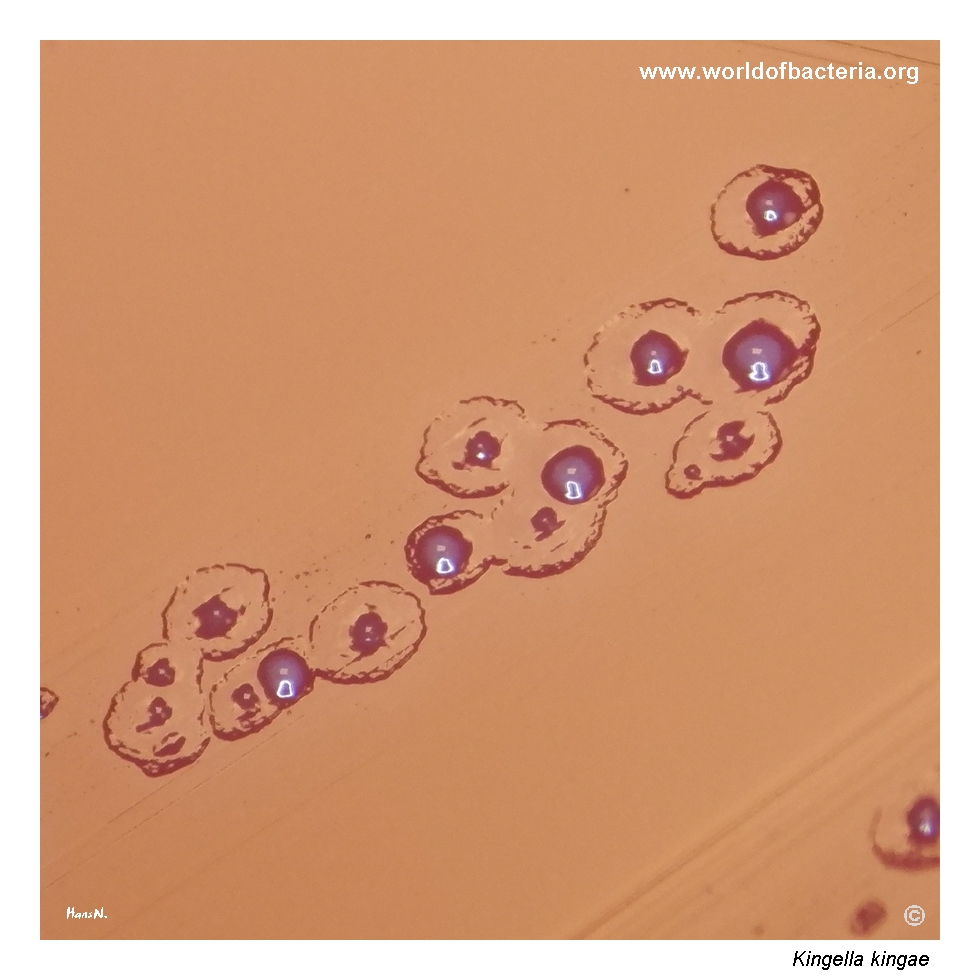
Colonies of Kingella kingae on blood agar after 48 hours of incubation at 36 °C in 5% CO2. Closer examination reveals two distinct morphological variants within the same bacterial culture. Such variation in colony size and appearance may complicate recognition of the organism, particularly because the colonies remain relatively small and inconspicuous on primary culture media.
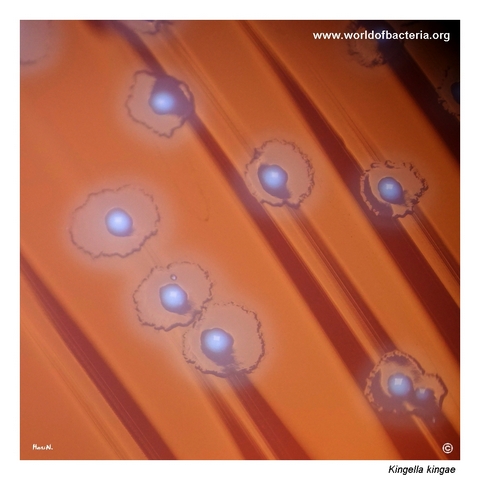
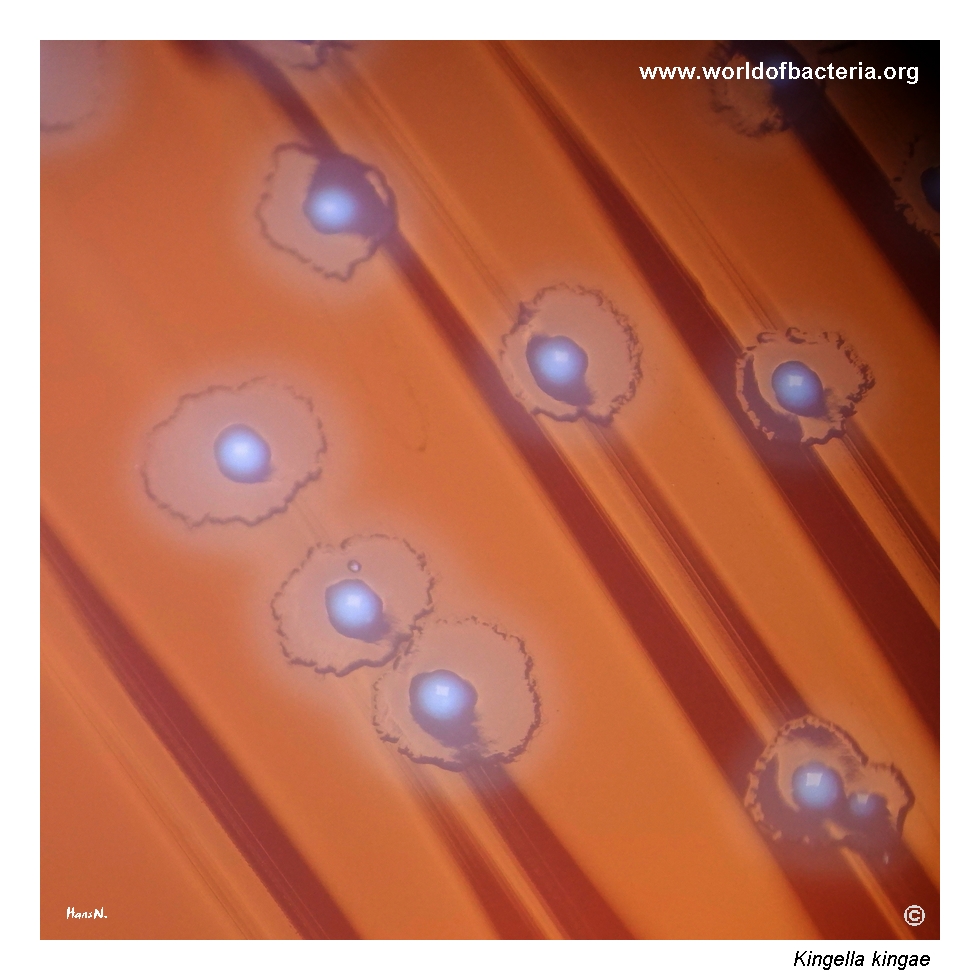
The larger colonies produced by this Kingella kingae isolate show a distinctive morphology sometimes described as a fried-egg appearance, with a raised central area surrounded by a flatter peripheral zone. Interestingly, morphologically similar colony forms may also occur in older cultures of Yersinia species. Culture conditions: 48 hours at 36 °C in 5% CO2.
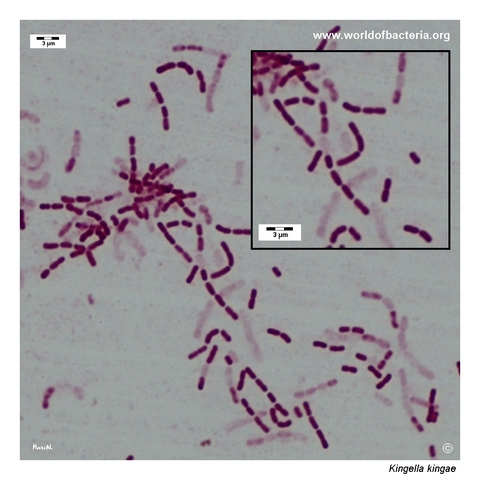
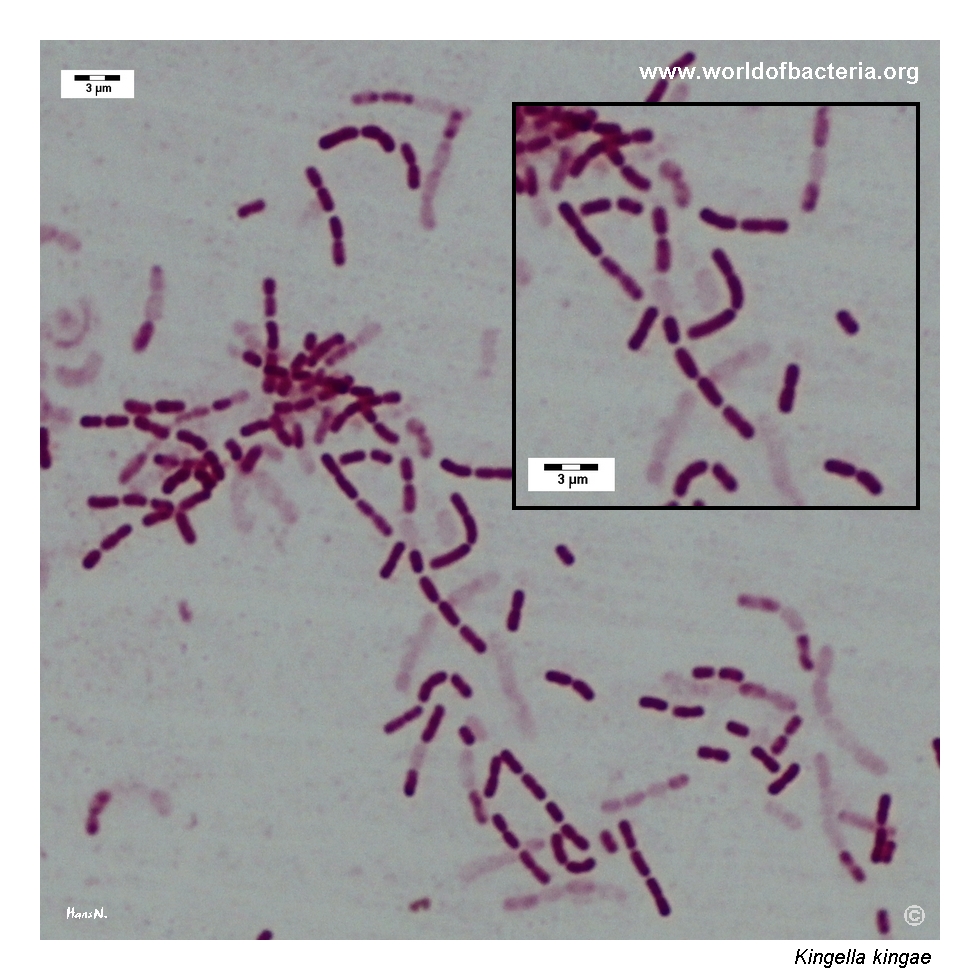
Gram-stained smear prepared from Kingella kingae colonies grown on blood agar. The organism appears as short Gram-negative rods, sometimes showing an almost coccobacillary form, arranged mainly in pairs and short chains. This relatively delicate microscopic appearance should be interpreted together with the small beta-haemolytic colonies and the clinical source of the isolate.
Diagnostic and Clinical Notes
Kingella kingae is an oropharyngeal colonizer of young children and has become recognized as one of the leading causes of septic arthritis and osteomyelitis in infants and toddlers. Improved culture methods and molecular testing explain why many infections once classified as culture-negative are now attributed to this organism.
The species belongs to the HACEK group of fastidious Gram-negative organisms associated with infective endocarditis. Endocarditis is much less common than paediatric osteoarticular disease but is clinically serious and may be detected through blood culture, as in the illustrated isolate.
Colonies are often very small, grey, and beta-haemolytic. Some isolates pit the agar surface or develop a central papilla with a flatter surrounding zone, producing a fried-egg-like appearance. More than one colony form may occur within the same culture, so morphology should be treated as supportive rather than definitive.
Invasive disease in young children may be clinically subtle, with low-grade fever and only modest inflammatory-marker elevation. The organism should therefore remain in the differential diagnosis of osteoarticular infection even when the systemic inflammatory response is mild.
Culture sensitivity can be limited. Direct inoculation of joint fluid into blood culture bottles and species-specific nucleic acid amplification tests substantially improve detection, particularly when routine solid-media cultures remain negative.
Laboratory Identification
Colony Morphology
After 24–48 hours on blood or chocolate agar at 35–37 °C in a CO2-enriched atmosphere, Kingella kingae typically forms small grey colonies with beta-haemolysis. Colonies may be smooth, spread across or pit the agar, or develop a raised central papilla surrounded by a flatter peripheral zone. Growth on MacConkey agar is generally absent.
Microscopy
Gram staining shows short, plump Gram-negative rods or coccobacilli, often with tapered ends, occurring mainly in pairs and short chains. The morphology may resemble delicate Neisseria-like organisms and is not species-specific.
Key Identification Clues
Fastidious Gram-negative coccobacillus in pairs or short chains
Small beta-haemolytic colonies on blood agar
Facultatively anaerobic and capnophilic
Oxidase positive
Catalase, urease, and indole negative
Nonmotile
No routine growth on MacConkey agar
May pit the agar or form fried-egg-like colonies with a central papilla
Modern Identification Methods
MALDI-TOF mass spectrometry can provide reliable identification when the reference database contains well-characterized Kingella spectra. Species-specific real-time PCR, including assays targeting the rtxA or rtxB toxin genes, is especially valuable in culture-negative osteoarticular specimens. Sequencing or whole-genome methods may be used for difficult isolates, outbreak investigations, or detailed strain characterization.
Antibiotic Characteristics
Kingella kingae isolates are generally susceptible to many beta-lactam agents, including penicillins and cephalosporins, but susceptibility should not be assumed without laboratory support.
Beta-lactamase-producing strains carrying TEM-type enzymes have been documented and may show resistance to unprotected penicillins. Beta-lactamase production can be clonally distributed and varies geographically.
Because the organism is fastidious, standardized susceptibility testing may be technically more demanding than for rapidly growing Gram-negative rods. Interpretation should follow a validated method and current laboratory guidance.
Note: Antimicrobial management depends on the infection site and clinical severity. Osteoarticular infection, bacteraemia, and infective endocarditis require clinical correlation, appropriate susceptibility data, and specialist management where indicated.