Vibrio parahaemolyticus is an oxidase-positive, motile, halophilic Gram-negative rod found in marine and estuarine environments. It is an important cause of seafood-associated gastroenteritis and may also cause wound or invasive infections after exposure to coastal waters or raw seafood.
Basic Characteristics
Taxonomy
Domain: Bacteria
Phylum: Pseudomonadota (Proteobacteria)
Class: Gammaproteobacteria
Order: Vibrionales
Family: Vibrionaceae
Genus:Vibrio
Species:Vibrio parahaemolyticus
Microscopy & Gram Stain
Gram-negative rods, often slightly curved
Cells usually occur singly; many may appear short or almost coccobacillary
Curvature may be subtle in smears prepared from solid-media cultures
Oxygen Relationship
Facultatively anaerobic
Grows readily under routine aerobic conditions when sufficient sodium chloride is available
Rapid Identification Tests
Oxidase: positive
Motility: positive, usually with a polar flagellum
Salt relationship: halophilic; added sodium chloride supports characteristic growth
Sucrose fermentation: usually negative, producing green to blue-green colonies on TCBS agar
Haemolysis on sheep blood agar: variable and not a reliable indicator of pathogenicity
Ecology and Clinical Relevance
Natural Habitat
Marine and brackish coastal waters
Estuaries, marine sediments, plankton, fish, and shellfish
Numbers typically increase in warmer water and during warmer seasons
Common Clinical Specimens
Stool or rectal swabs from patients with acute gastroenteritis
Wound and soft-tissue specimens after exposure to seawater or raw seafood
Blood cultures in uncommon invasive infection
Seafood and environmental samples during surveillance or outbreak investigations
Clinical Significance
Important cause of acute gastroenteritis after consumption of raw or undercooked seafood, particularly shellfish
Typical illness includes watery diarrhoea, abdominal cramps, nausea, vomiting, and sometimes fever
May cause wound, ear, or soft-tissue infection after marine exposure
Bacteraemia and other invasive infections are uncommon but may occur in vulnerable patients
Differential Considerations
Vibrio cholerae, which usually ferments sucrose and does not require the same degree of salt supplementation
Vibrio vulnificus and Vibrio alginolyticus
Aeromonas species, which are also oxidase-positive aquatic Gram-negative rods
Helpful clues include halophilic growth, oxidase positivity, green colonies on TCBS agar, and molecular detection of species and virulence markers
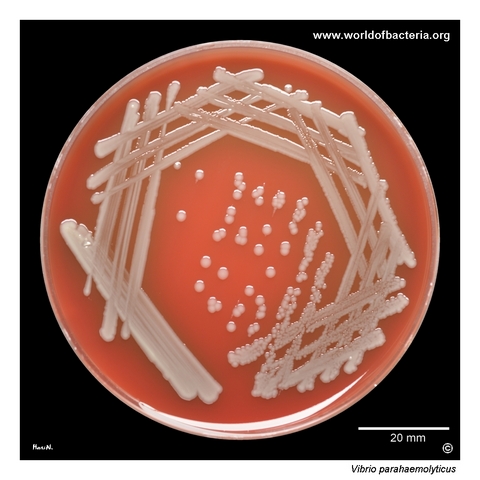
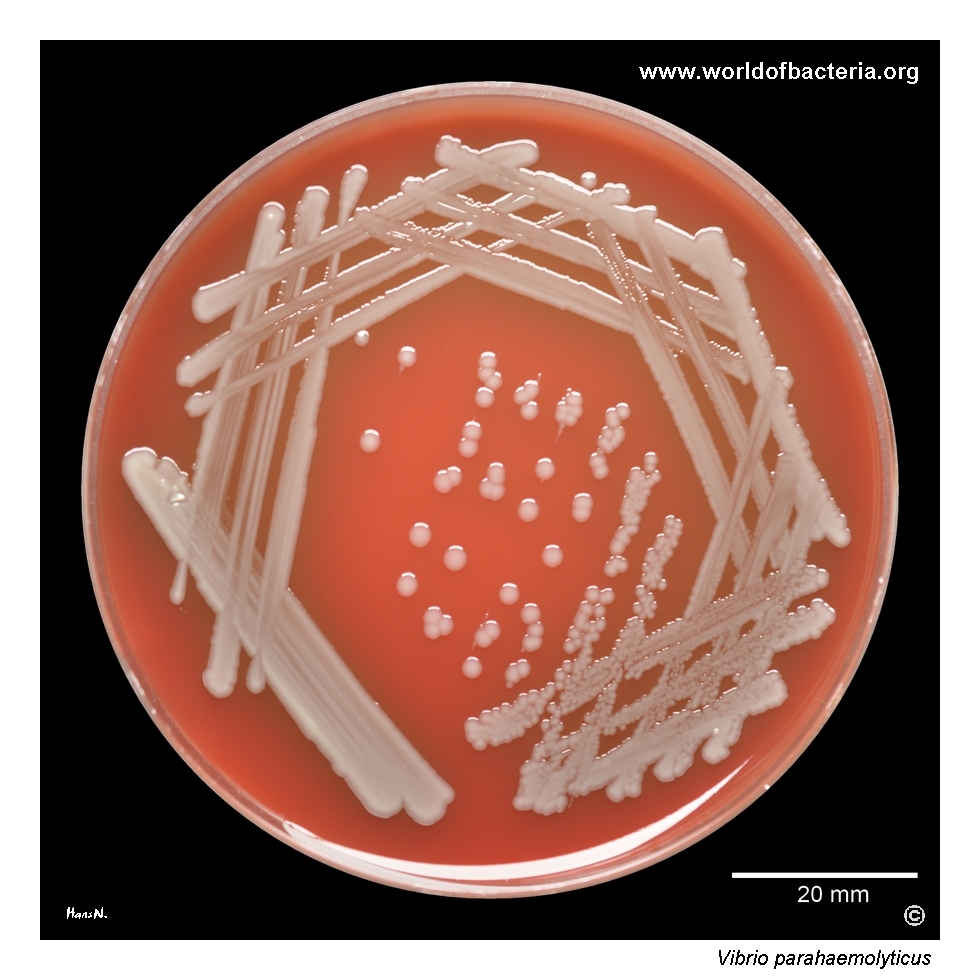
Vibrio parahaemolyticus on sheep blood agar after 24 hours of incubation at 36 °C in ambient air. Strains may grow without visible haemolysis or produce only partial haemolysis under these conditions. The appearance on conventional blood agar is variable and does not by itself indicate the pathogenic potential of the isolate. V. parahaemolyticus is an important cause of gastroenteritis associated particularly with raw or undercooked seafood.
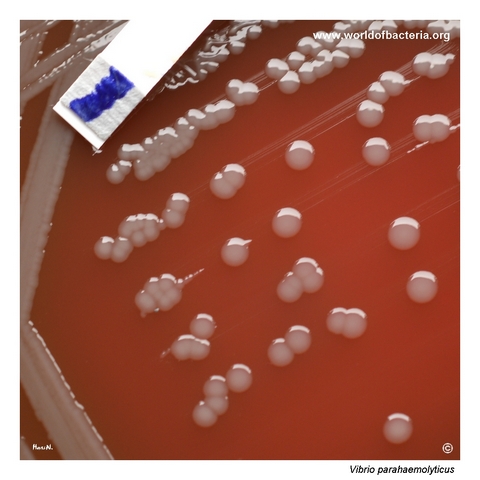
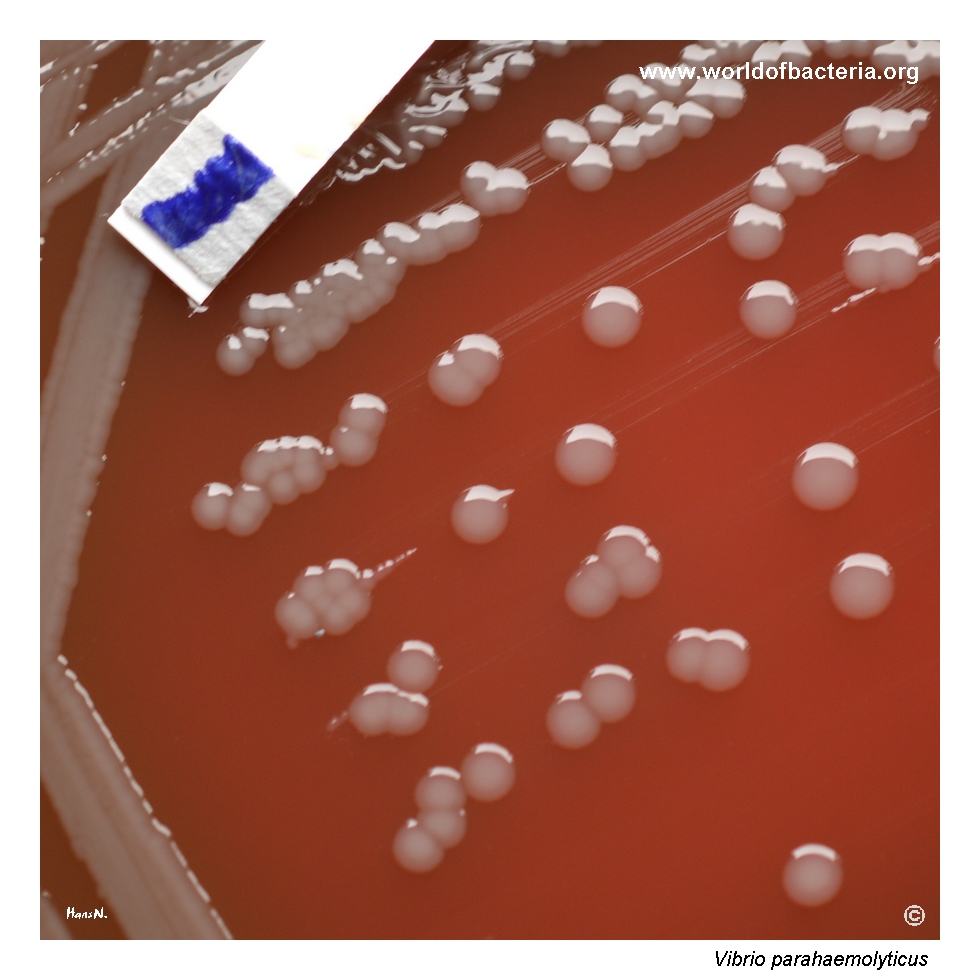
Colonies of Vibrio parahaemolyticus on blood agar after 24 hours at 36 °C in ambient air. The species is oxidase-positive, as are most other vibrios and members of the genus Aeromonas. In this culture, the colonies show a slight yellowish tinge. Oxidase activity provides a useful preliminary clue, but additional biochemical or molecular methods are required for reliable species identification.
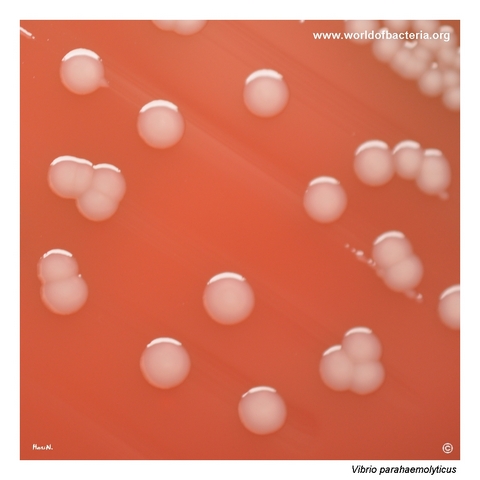
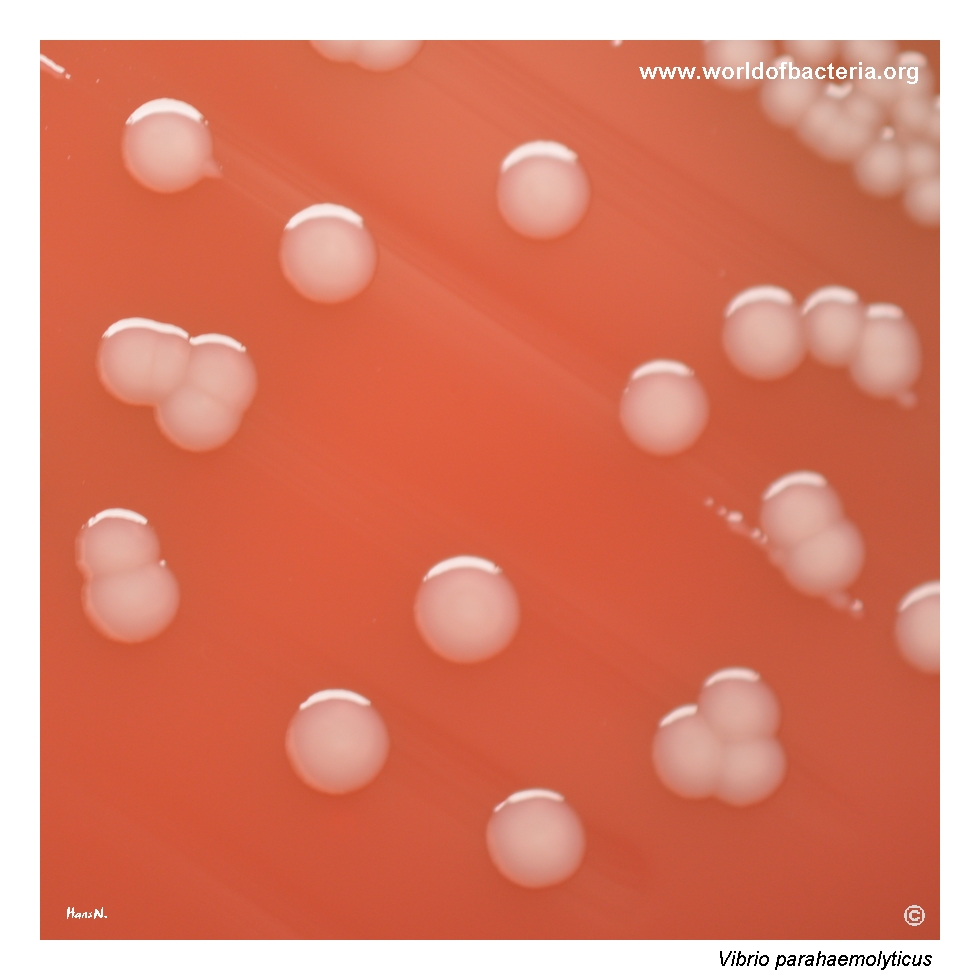
Close-up view of Vibrio parahaemolyticus colonies on blood agar after 24 hours of incubation at 36 °C in ambient air. The colonies are smooth, convex, and round with entire margins and show a faint yellowish coloration. No visible haemolysis surrounds the colonies in this culture. This relatively inconspicuous appearance demonstrates that the species cannot be recognized reliably from colony morphology on blood agar alone.
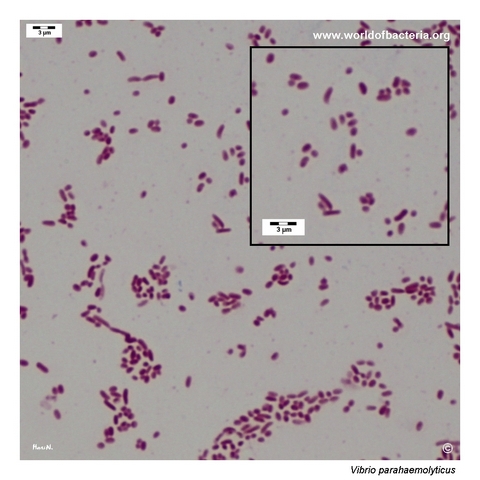
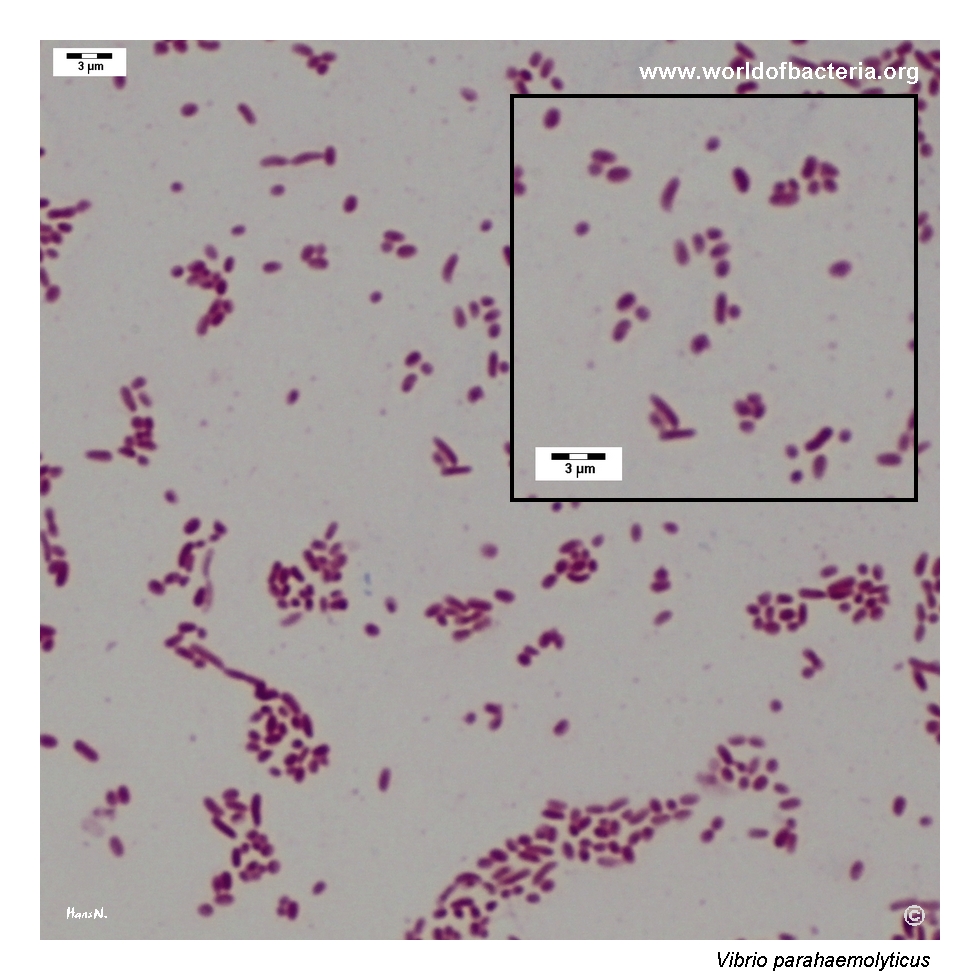
Gram-stained smear prepared from a colony of Vibrio parahaemolyticus grown on blood agar. The organism appears as Gram-negative rods, some of which show slight curvature. Many cells are short and may have an almost coccobacillary appearance. The characteristic curved morphology of vibrios is therefore not equally apparent in every cell or preparation and may be subtle in cultures grown on solid media.
Diagnostic and Clinical Notes
Vibrio parahaemolyticus is a halophilic marine and estuarine organism and an important bacterial cause of seafood-associated gastroenteritis. Exposure is especially linked to raw or undercooked shellfish, although other seafood may also serve as a vehicle.
The illustrated isolate shows no visible haemolysis on conventional sheep blood agar. This finding does not exclude clinical relevance, because haemolysis on routine blood agar is variable and is not equivalent to the Kanagawa phenomenon demonstrated under specific test conditions.
Pathogenic strains are commonly characterized by thermostable direct haemolysin or a related haemolysin encoded by tdh and trh. Molecular detection of these genes provides more useful information about pathogenic potential than ordinary colony haemolysis alone.
On TCBS agar, typical isolates form green to blue-green colonies because they usually do not ferment sucrose. The organism is oxidase-positive and halophilic, but these findings are only presumptive because other marine vibrios may show similar reactions.
Clinical interpretation depends on specimen type and exposure history. Recovery from stool during compatible gastroenteritis or from a wound after marine exposure is more meaningful than detection in food or environmental samples without evidence of disease.
Laboratory Identification
Colony Morphology
On blood agar, Vibrio parahaemolyticus usually forms smooth, moist, convex, grey-white to slightly yellowish colonies. Haemolysis may be absent, partial, or more evident depending on the isolate and medium. On TCBS agar, typical sucrose-negative isolates produce green to blue-green colonies.
Microscopy
Gram staining reveals Gram-negative rods that may be slightly curved. Cells from solid media are often short and may appear nearly straight or coccobacillary, so the classic comma-shaped morphology is not always conspicuous.
Key Identification Clues
Oxidase-positive, motile Gram-negative rod
Halophilic growth with a requirement for added sodium chloride
Usually sucrose negative, producing green colonies on TCBS agar
Curved morphology may be subtle or absent in some cells
Routine sheep-blood-agar haemolysis is variable and does not define pathogenicity
Detection of tdh and trh supports assessment of pathogenic potential
Modern Identification Methods
Species identification can be achieved using MALDI-TOF mass spectrometry, validated biochemical systems, or molecular assays. PCR targeting species-associated markers can confirm the organism, while detection of tdh and trh helps characterize strains associated with human disease. Serotyping and whole-genome sequencing may be used in outbreak investigations and epidemiological surveillance.
Antibiotic Characteristics
Most uncomplicated gastroenteritis caused by Vibrio parahaemolyticus is self-limited, and oral fluid and electrolyte replacement is the principal treatment.
Antimicrobial therapy may be considered in severe, prolonged, wound-associated, or invasive infection according to the clinical situation and current guidance.
Susceptibility varies among isolates and geographic regions. Clinically significant wound or bloodstream isolates should therefore undergo antimicrobial susceptibility testing using an appropriate validated method.
Note: Colony colour, haemolysis, seafood association, and the presence or absence of visible curved rods do not predict antimicrobial susceptibility.
For broader information about Vibrio parahaemolyticus, seafood-associated infection, laboratory detection, pathogenicity markers, and current taxonomy, see: