Aeromonas hydrophila is an oxidase-positive, facultatively anaerobic Gram-negative rod widely associated with aquatic environments. It may be recovered from gastrointestinal material and can cause wound, soft-tissue, bloodstream, and other opportunistic infections, particularly after exposure to contaminated water.
Basic Characteristics
Taxonomy
Domain: Bacteria
Phylum: Pseudomonadota (Proteobacteria)
Class: Gammaproteobacteria
Order: Aeromonadales
Family: Aeromonadaceae
Genus:Aeromonas
Species:Aeromonas hydrophila
Microscopy & Gram Stain
Gram-negative rods
Cells usually occur singly or in pairs
Motile by means of polar flagella; microscopic morphology is not species-specific
Oxygen Relationship
Facultatively anaerobic
Grows readily under routine aerobic culture conditions
Rapid Identification Tests
Oxidase: positive
Catalase: positive
Motility: usually positive
Glucose metabolism: fermentative
Haemolysis on blood agar: often beta-haemolytic, but variable between isolates
Ecology and Clinical Relevance
Natural Habitat
Freshwater, brackish water, and aquatic sediments
Fish, amphibians, reptiles, and other aquatic animals
Sewage, soil, and water-associated environmental niches
Common Clinical Specimens
Stool and other gastrointestinal specimens
Wound and soft-tissue specimens after water exposure
Blood cultures in invasive infection
Ear canal and other localized infection specimens
Respiratory material after aspiration or near-drowning
Clinical Significance
Associated with acute gastroenteritis, although stool isolation must be interpreted with the clinical findings and exclusion of other enteric pathogens
May cause cellulitis, wound infection, abscesses, and rapidly progressive soft-tissue infection after exposure to freshwater or contaminated environments
Can cause bacteraemia and other invasive infections, particularly in patients with serious underlying disease or impaired host defences
May occasionally be recovered from ear infections and other localized clinical specimens
Differential Considerations
Aeromonas veronii, A. caviae, and A. dhakensis
Vibrio species and Plesiomonas shigelloides
Pseudomonas aeruginosa and other oxidase-positive Gram-negative rods
Enterobacterales, which are usually oxidase-negative
Helpful preliminary clues include oxidase positivity, glucose fermentation, motility, aquatic exposure, and frequently visible beta-haemolysis
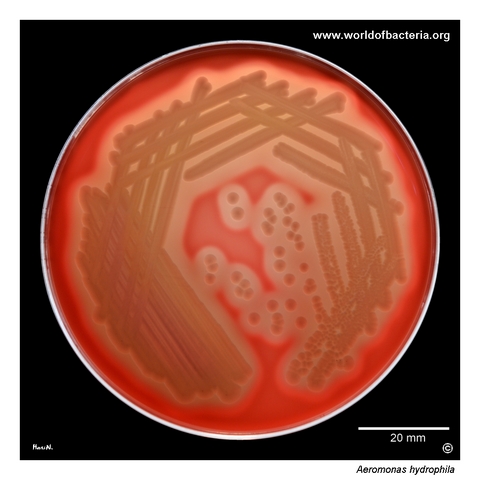
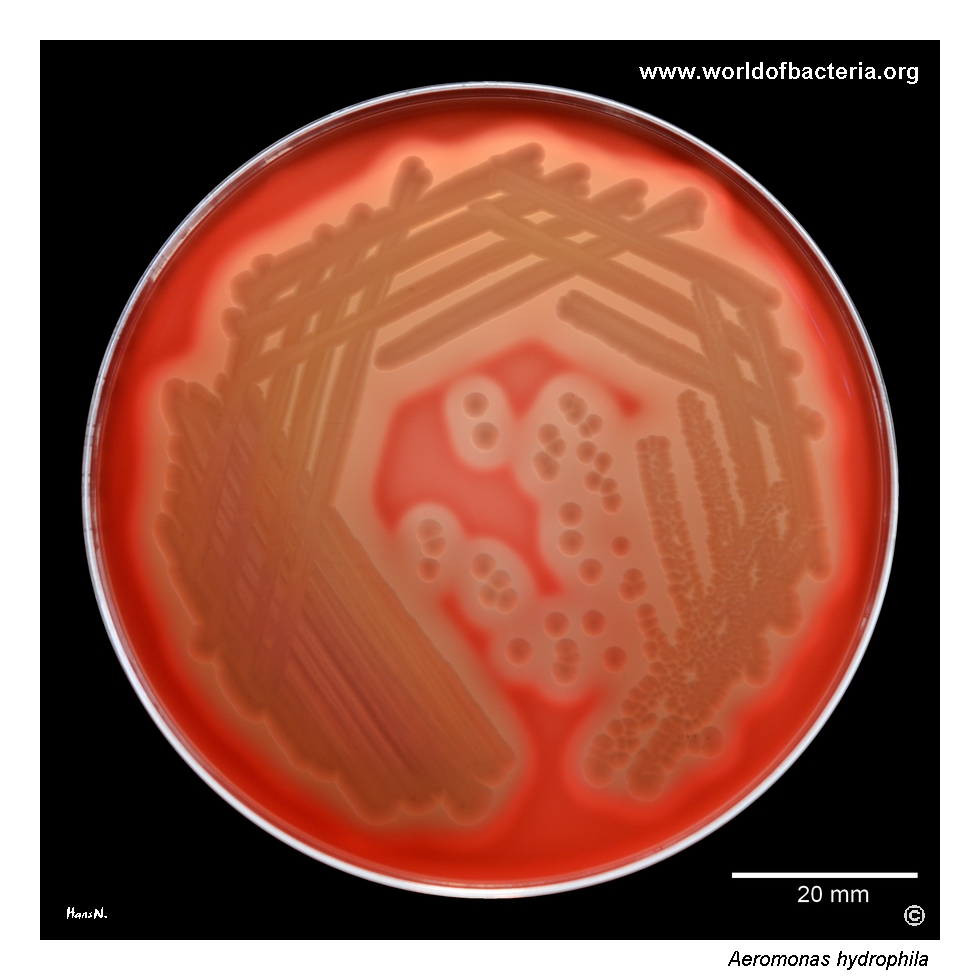
Aeromonas hydrophila on blood agar after 24 hours of incubation at 36 °C in ambient air. Aeromonas species are frequently recovered from gastrointestinal specimens, but they may also be associated with wound, soft-tissue, and ear infections. This isolate originated from an ear canal swab from a 20-year-old patient with the diagnosis H60.9, otitis externa, unspecified.
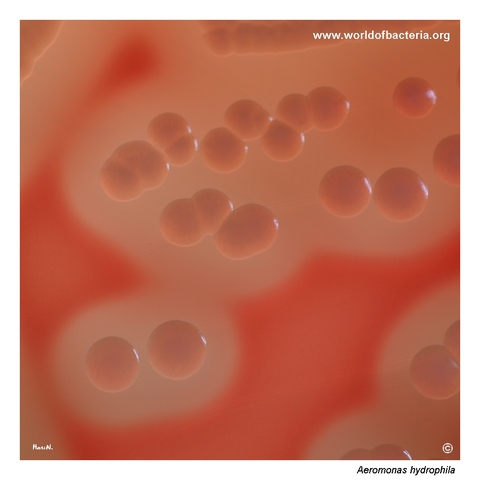
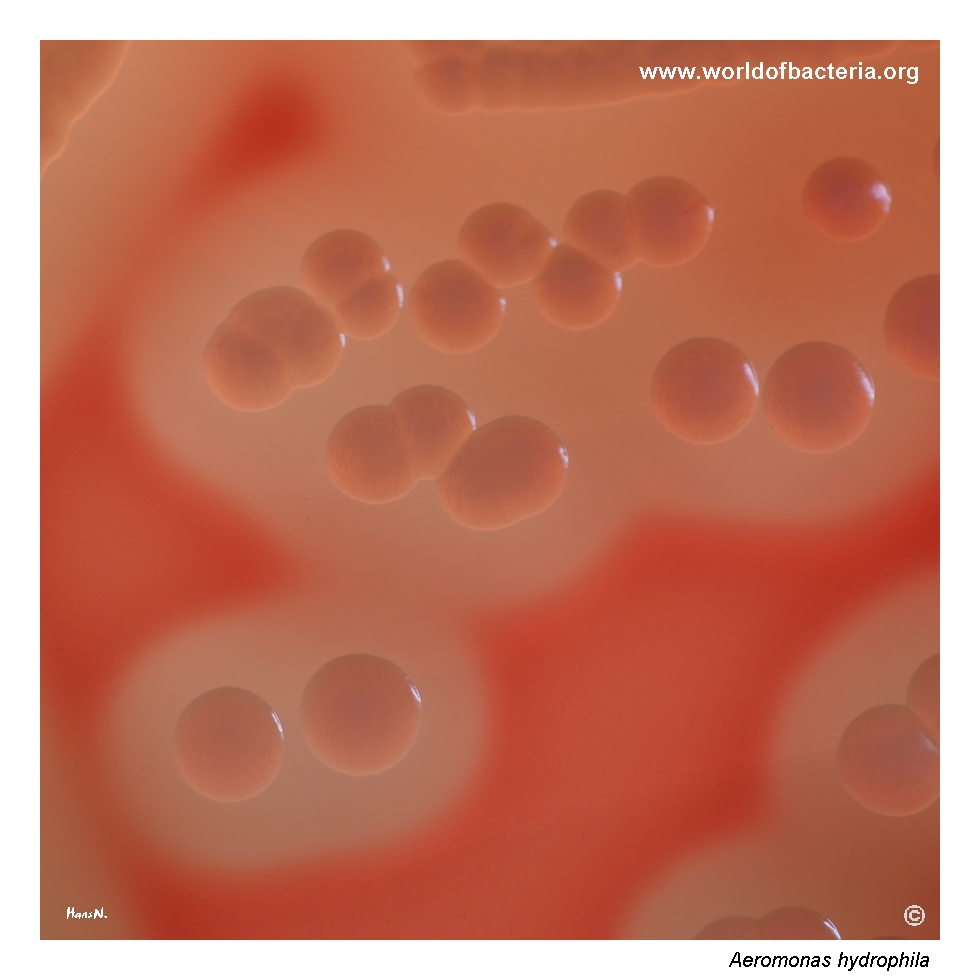
Colonies of Aeromonas hydrophila on blood agar after 24 hours at 36 °C in ambient air. The colonies are convex, slightly yellowish, and surrounded by prominent beta-haemolysis. Some isolates may also develop brownish pigmentation. Colony colour and haemolytic activity vary between strains and provide useful descriptive features, but they are not sufficiently specific for reliable species identification.
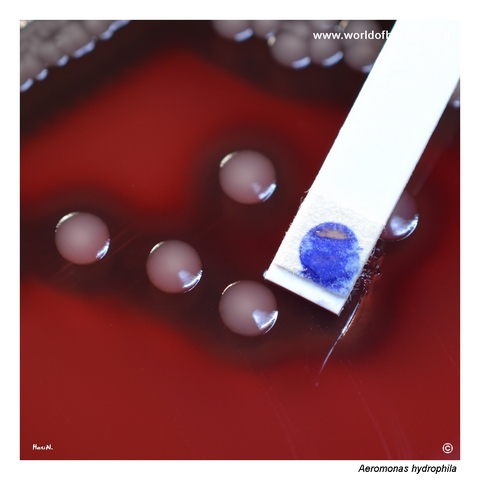
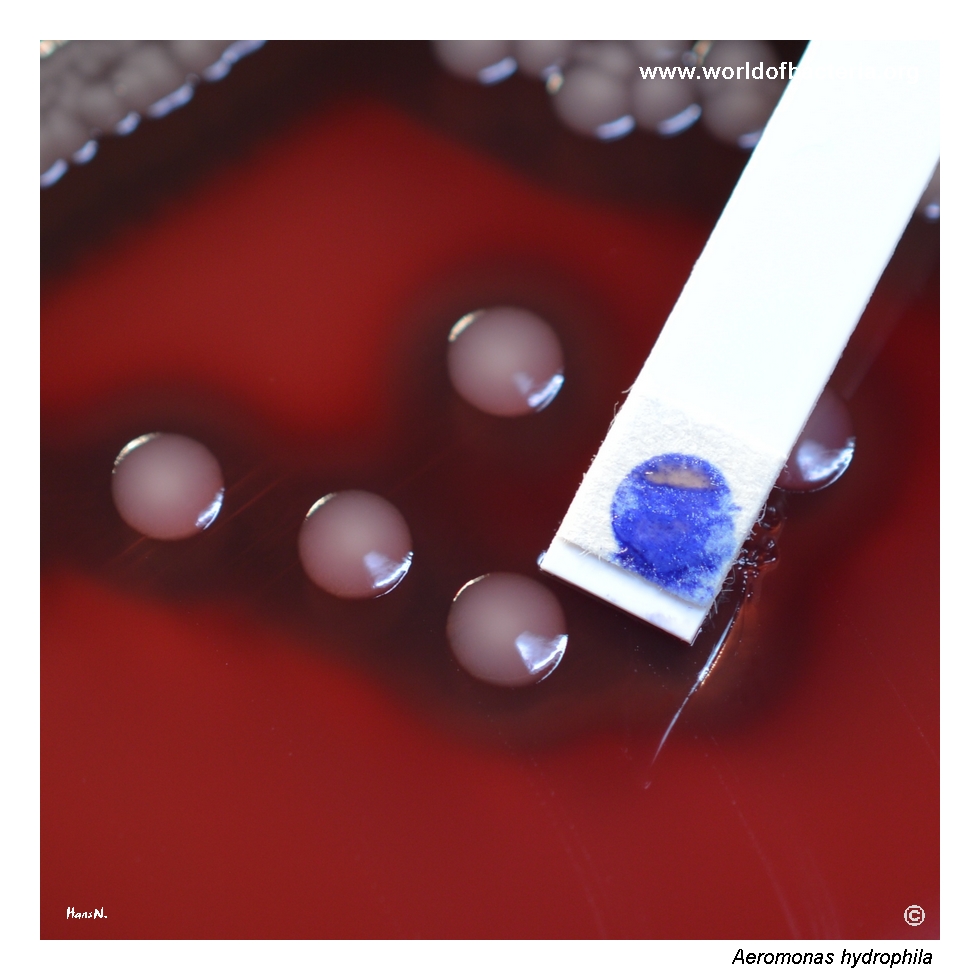
Close-up view of Aeromonas hydrophila colonies on blood agar after 24 hours of incubation at 36 °C in ambient air. The colonies are smooth, convex, and round with entire margins, surrounded by a clear zone of beta-haemolysis. Aeromonas species are characteristically oxidase-positive because they possess cytochrome c oxidase, a feature that helps distinguish them from members of the Enterobacterales.
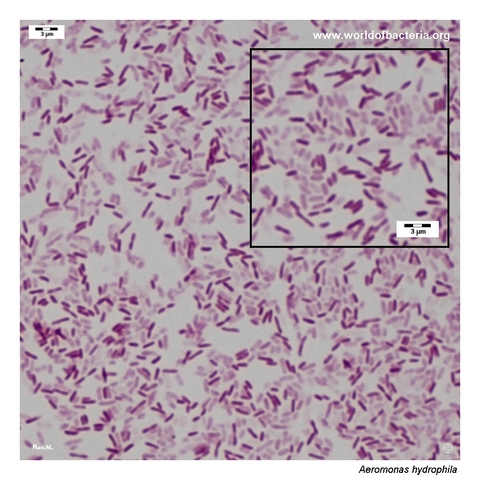
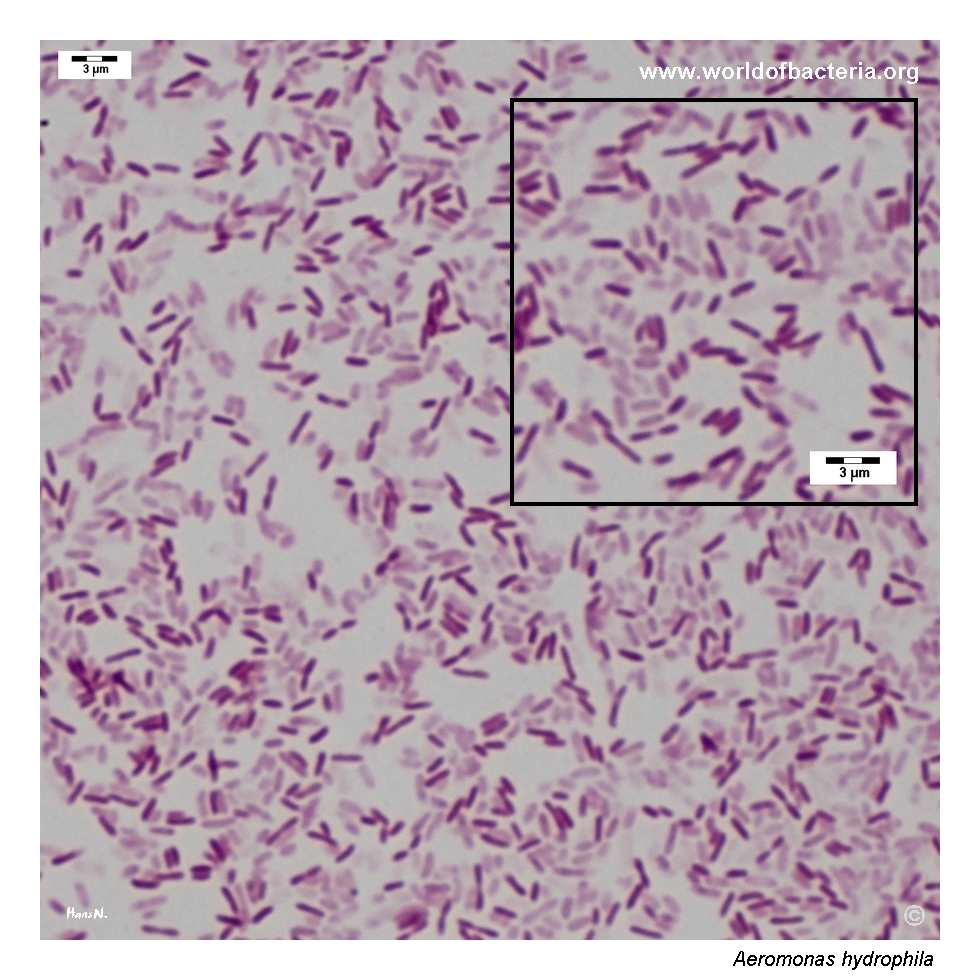
Gram-stained smear prepared from a colony of Aeromonas hydrophila grown on blood agar. The organism appears as Gram-negative rods. This microscopic morphology is relatively non-specific and may resemble that of many other Gram-negative bacteria. Reliable identification therefore depends on the combination of culture characteristics, oxidase activity, and additional biochemical or instrumental methods.
Diagnostic and Clinical Notes
Aeromonas hydrophila is an aquatic Gram-negative organism associated with freshwater and brackish-water environments. Human infection may follow ingestion of contaminated food or water, direct inoculation of wounds, or exposure of damaged skin to contaminated water.
The illustrated isolate was recovered from an ear canal swab from a patient with otitis externa. Although gastrointestinal and water-exposed wound infections are more widely recognized, Aeromonas species may also be recovered from ear and other localized clinical specimens.
Prominent beta-haemolysis and slight yellow or brown pigmentation may make an isolate visually distinctive, but neither feature is species-specific. Colony morphology must therefore be combined with oxidase testing and a validated identification method.
Species-level identification within the genus can be difficult. In particular, some isolates historically reported as A. hydrophila have subsequently been shown to represent related species such as A. dhakensis. Results from older biochemical or mass-spectrometry databases should therefore be interpreted cautiously when precise species determination is clinically or epidemiologically important.
Recovery from stool does not by itself establish causation of diarrhoea. Interpretation should consider the clinical syndrome, quantity and purity of growth, exclusion of other enteric pathogens, and, where appropriate, characterization of virulence-associated properties.
Laboratory Identification
Colony Morphology
On blood agar after 18–24 hours at approximately 35–37 °C, Aeromonas hydrophila commonly forms smooth, convex, grey-white to slightly yellowish colonies. Many isolates show clear beta-haemolysis, while pigmentation and the intensity of haemolysis vary. These features are useful descriptively but are not sufficient for species identification.
Microscopy
Gram staining shows Gram-negative rods that usually occur singly or in pairs. The appearance overlaps extensively with other Gram-negative rods and does not distinguish Aeromonas from related aquatic organisms or Enterobacterales.
Key Identification Clues
Gram-negative, facultatively anaerobic rod
Oxidase positive, unlike Enterobacterales
Usually motile and catalase positive
Ferments glucose
Frequently beta-haemolytic on blood agar
Aquatic exposure or recovery from gastrointestinal, wound, ear, or bloodstream specimens
Modern Identification Methods
MALDI-TOF mass spectrometry with an up-to-date reference database and validated automated biochemical systems are commonly used for routine identification. Difficult or clinically important isolates may require sequencing of discriminatory housekeeping genes such as rpoB or gyrB, or whole-genome analysis, because 16S rRNA sequencing and older phenotypic systems may not reliably separate closely related Aeromonas species.
Antibiotic Characteristics
Aeromonas hydrophila commonly possesses chromosomal beta-lactamases and is generally resistant to ampicillin and several older beta-lactam agents.
Susceptibility to extended-spectrum cephalosporins, fluoroquinolones, trimethoprim-sulfamethoxazole, aminoglycosides, and other potentially active agents varies between isolates and should not be inferred from species identification alone.
Inducible or multiple beta-lactamase mechanisms may complicate interpretation and, in some isolates, may permit resistance to emerge during therapy with particular beta-lactam agents.
Note: Clinically significant wound, bloodstream, and other invasive isolates should undergo antimicrobial susceptibility testing using an appropriate validated method, and treatment should be selected according to the individual result and clinical context.