Streptococcus dysgalactiae is a beta-haemolytic streptococcus most often reacting with Lancefield group C or G antisera; in human clinical microbiology, invasive isolates usually belong to S. dysgalactiae subsp. equisimilis and may closely resemble group A streptococci on blood agar.
Basic Characteristics
Taxonomy
Domain: Bacteria
Phylum: Bacillota
Class: Bacilli
Order: Lactobacillales
Family: Streptococcaceae
Genus:Streptococcus
Species:Streptococcus dysgalactiae
Microscopy & Gram Stain
Gram-positive cocci arranged predominantly in chains, especially in blood culture material and invasive infection
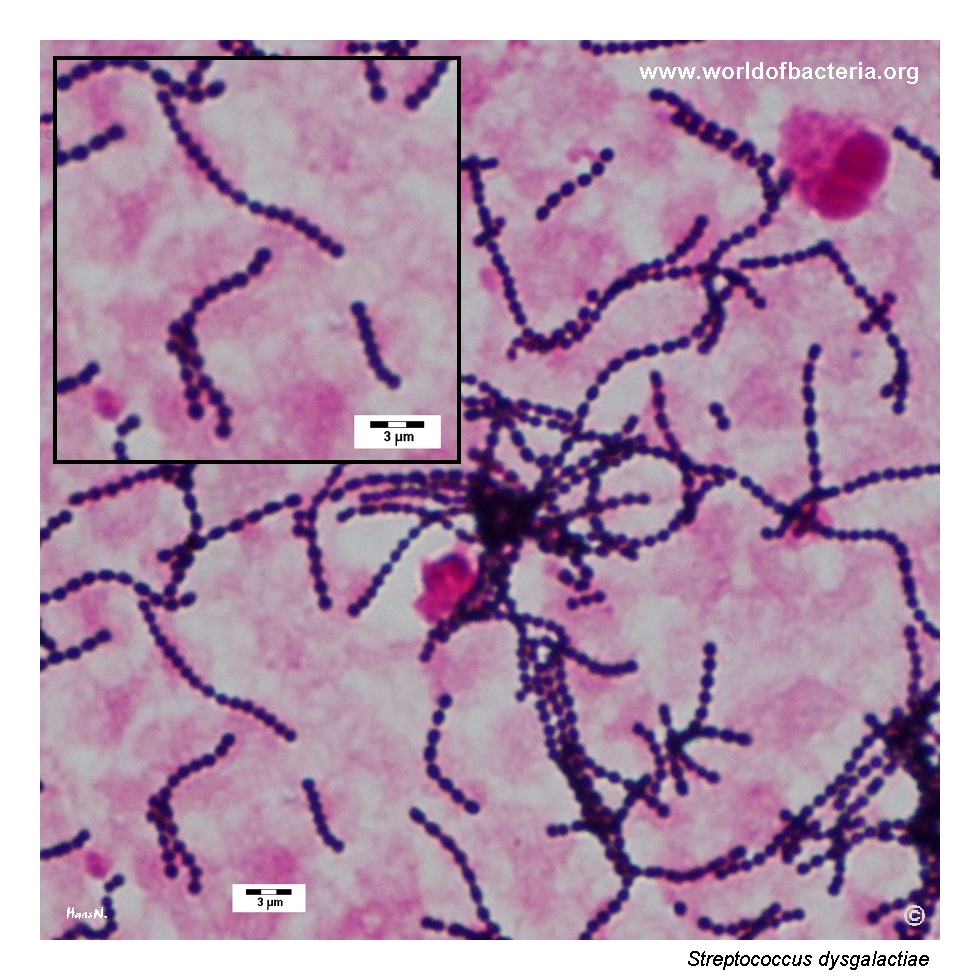
In this page set, the positive blood culture smear shows long chains, creating a classic streptococcal picture
Microscopic morphology helps separate the organism from staphylococci, which usually form clusters rather than chains
Gram stain is highly informative at the generic level but does not reliably distinguish S. dysgalactiae from other beta-haemolytic streptococci
Oxygen Relationship
Facultatively anaerobic streptococcus that grows well on routine blood agar
In this page set, visible growth with broad beta-haemolysis was documented after 48 hours at 36 °C in 5% CO2
The species is not fastidious in routine clinical culture, but colony appearance may become more fully developed after prolonged incubation
Rapid Identification Tests
Catalase: negative
Haemolysis: usually beta-haemolytic on blood agar
Lancefield grouping: most human isolates agglutinate with group C or G antisera
PYR: usually negative, which helps separate it from Streptococcus pyogenes
Bacitracin: not a reliable primary discriminator for species identification
Ecology and Clinical Relevance
Natural Habitat
In human microbiology, clinically relevant isolates usually correspond to Streptococcus dysgalactiae subsp. equisimilis, which can colonize skin, pharyngeal mucosa, and the gastrointestinal or genitourinary tract
The species as a whole also includes animal-associated lineages, which is one reason the taxon has both medical and veterinary importance
Colonization may be asymptomatic, but the organism is fully capable of invasive disease in the appropriate host setting
Common Clinical Specimens
Blood cultures in invasive disease
Wound and skin or soft-tissue specimens
Throat swabs and other upper respiratory material
Genital, perianal, or other mucosal samples in colonization or localized infection
Clinical Significance
Streptococcus dysgalactiae is an important human pathogen that can cause pharyngitis, cellulitis, erysipelas, abscesses, bone and joint infection, endocarditis, and bacteremia
Isolation from blood culture is always clinically significant and strongly supports invasive infection
Compared with the more familiar group A streptococcus, this species is often less emphasized in teaching, but in adult medicine it is a well-established invasive pathogen
In human clinical practice, invasive isolates are most often discussed under the name S. dysgalactiae subsp. equisimilis (SDSE)
Differential Considerations
Streptococcus pyogenes because of similar beta-haemolysis and clinical overlap in invasive infection
Streptococcus agalactiae and other beta-haemolytic streptococci when only colony haemolysis is considered
Other Lancefield group C or G streptococci in laboratories that use serogrouping as an early orienting step
Staphylococci in direct blood culture microscopy, where the chain-forming arrangement provides an important distinction
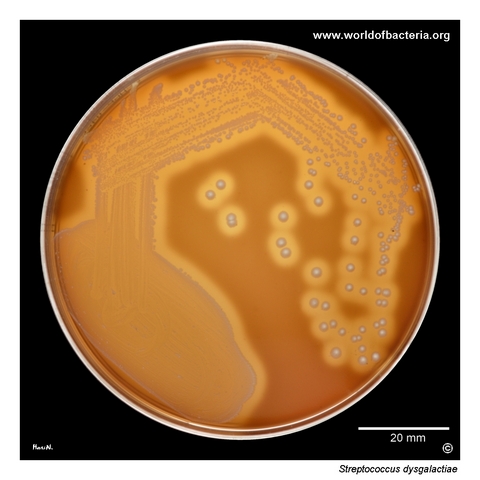
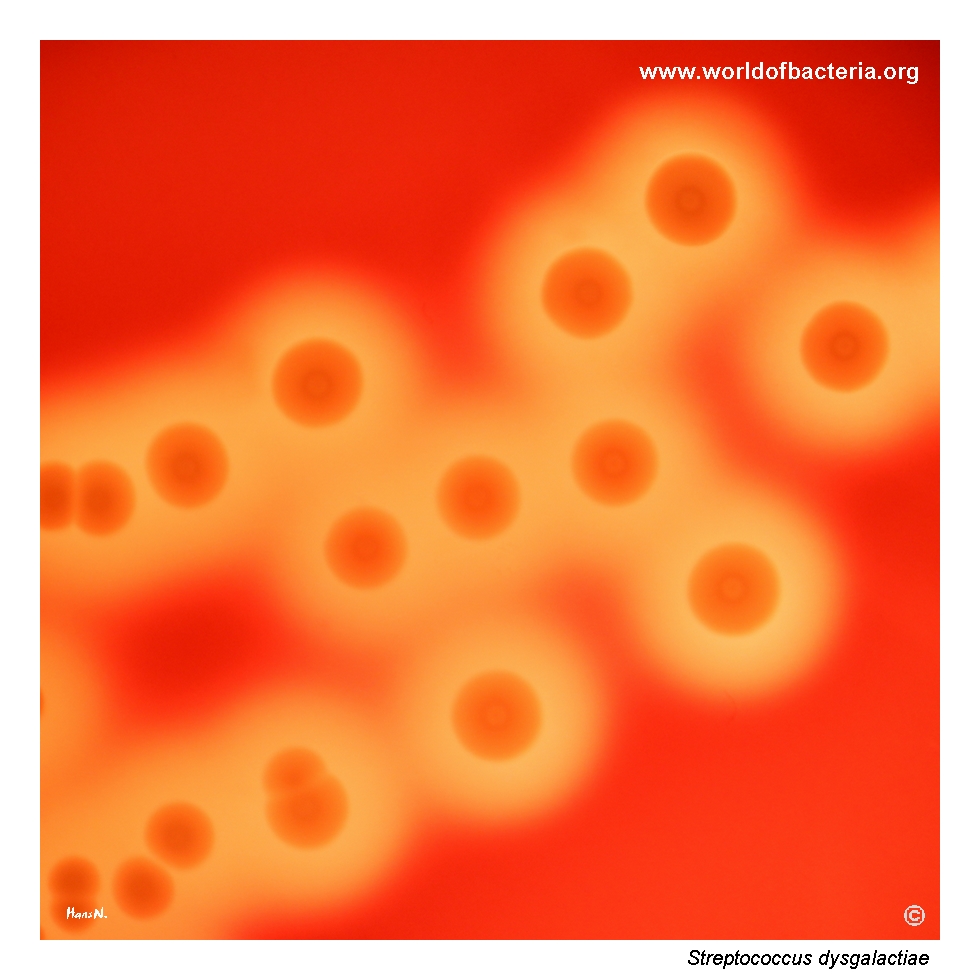
Streptococcus dysgalactiae on blood agar after 48 hours of incubation at 36 °C in 5% CO2. This beta-haemolytic streptococcus most often agglutinates with Lancefield group C or G antisera. The isolate was recovered from a patient’s blood culture. In this clinical setting, the finding is clearly significant, because recovery of beta-haemolytic streptococci from blood culture is consistent with invasive infection and requires prompt clinical attention.
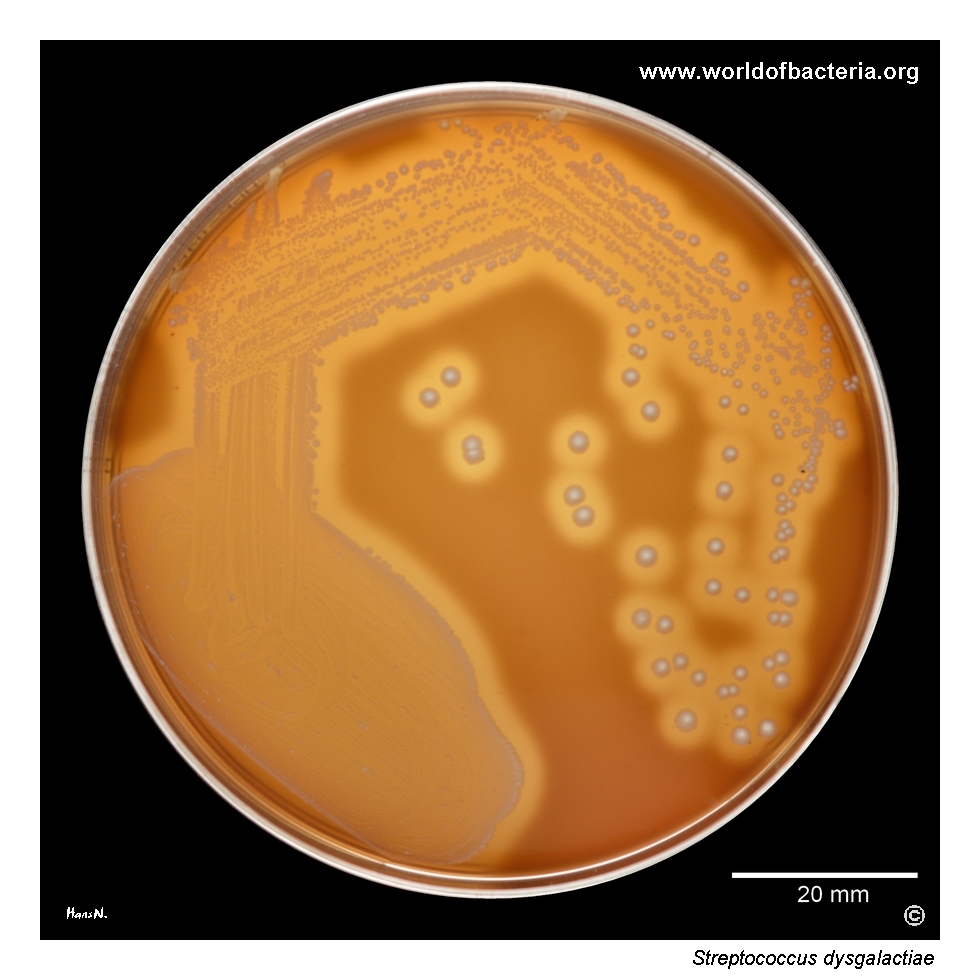
Colonies of Streptococcus dysgalactiae on blood agar surrounded by a broad zone of beta-haemolysis. Culture conditions: 48 hours at 36 °C in 5% CO2. This pronounced haemolytic effect is one of the most striking visual features of the species on routine medium and makes the colonies easy to recognize among less haemolytic or non-haemolytic accompanying flora.
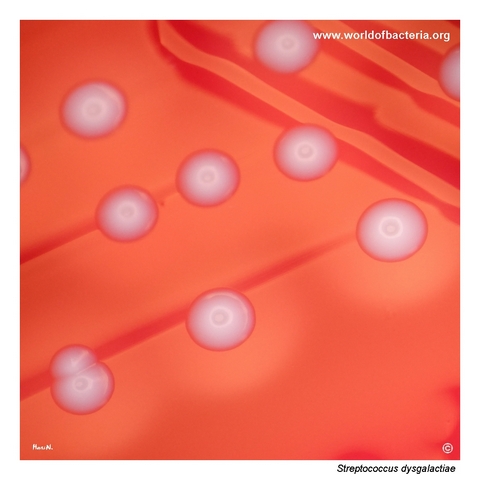
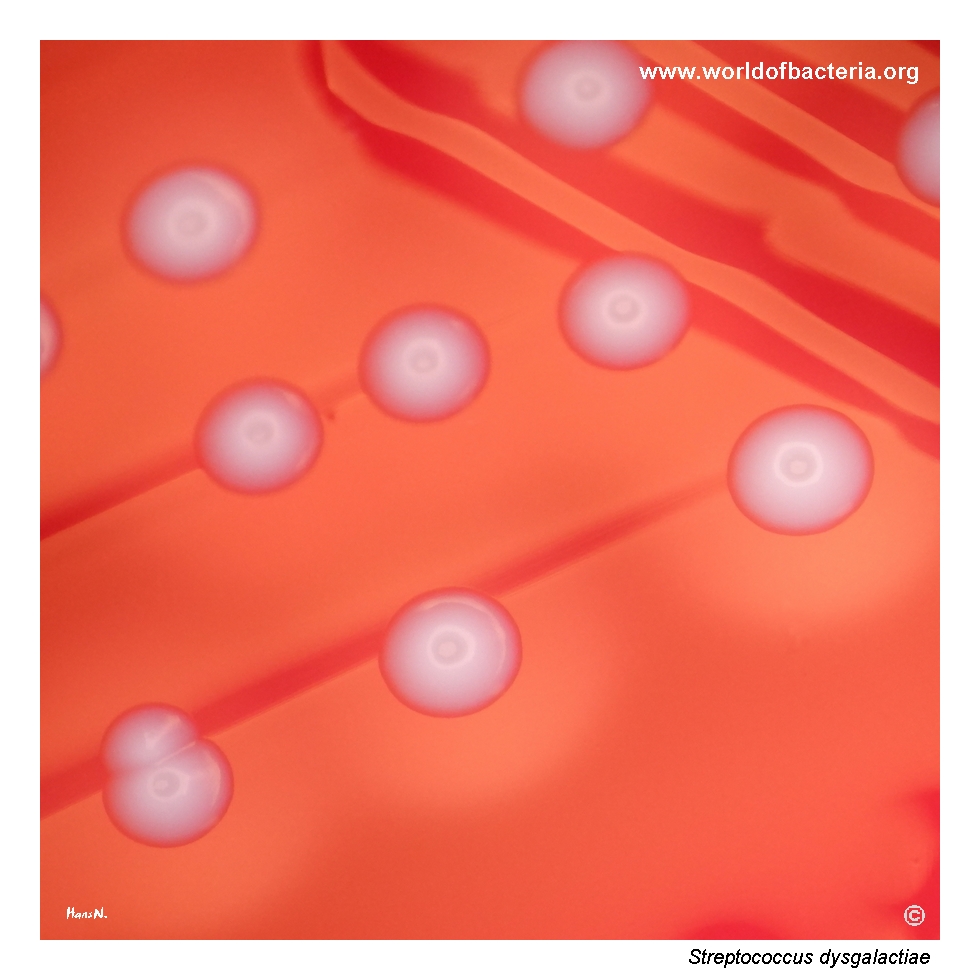
Close-up view of Streptococcus dysgalactiae colonies after 48 hours of incubation at 36 °C in 5% CO2. A distinctive feature of this strain was the overall convex colony shape with a dish-like central depression. Such an appearance is not the most typical colony pattern for the species, which makes this image especially useful as an atlas example of morphological variability among beta-haemolytic streptococci.
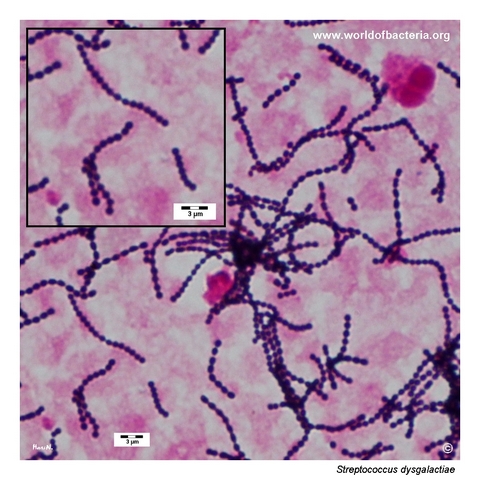
Streptococcus dysgalactiae in a positive blood culture. The Gram-stained smear shows long chains of Gram-positive cocci, a classic microscopic appearance for invasive streptococcal infection. In combination with the strong beta-haemolysis seen on blood agar, this morphology provides a very characteristic laboratory picture and helps distinguish the organism from staphylococci, which typically form clusters rather than chains.
Diagnostic and Clinical Notes
This page is particularly useful because it shows the species in the most clinically meaningful context possible: a positive blood culture with long chains of Gram-positive cocci and a matching beta-haemolytic plate phenotype.
The combination of broad beta-haemolysis and Lancefield group C or G reactivity can make S. dysgalactiae look superficially similar to other familiar beta-haemolytic streptococci. For this reason, species-level identification should not rely on haemolysis alone.
The close-up colony image is instructive because the dish-like central depression is not the most stereotypical morphology for the species. It illustrates that even among strongly beta-haemolytic streptococci, colony shape can vary enough to mislead anyone expecting a single fixed appearance.
From a clinical standpoint, the invasive significance is straightforward. Beta-haemolytic streptococci in blood culture should always be taken seriously, and S. dysgalactiae is fully capable of causing severe bacteremia and other deep-seated infection.
In teaching, this organism deserves attention because adult invasive disease caused by S. dysgalactiae subsp. equisimilis is probably underrecognized compared with the far more famous group A streptococcus, despite considerable clinical overlap.
Laboratory Identification
Colony Morphology
On blood agar, Streptococcus dysgalactiae typically forms beta-haemolytic colonies that may resemble other pyogenic streptococci. In this page set, the haemolysis is broad and conspicuous after 48 hours of incubation, while one image also shows a less usual colony profile with a dish-like central depression, underscoring that colony shape can be variable even when haemolysis is striking.
Microscopy
Gram staining shows Gram-positive cocci in chains. In the blood culture smear, the long chains create a classic image of invasive streptococcal infection and provide an immediate distinction from staphylococci, which more typically appear in clusters.
Key Identification Clues
Catalase-negative streptococcal morphology
Broad beta-haemolysis on blood agar
Typical Lancefield group C or G reactivity in most human isolates
Chain-forming Gram-positive cocci in direct smear or colony Gram stain
Need for species-level identification because haemolysis alone does not separate it from other beta-haemolytic streptococci
Modern Identification Methods
Modern species identification is usually best achieved by MALDI-TOF MS or other validated laboratory methods. In many clinical settings, the most important interpretive step is recognizing that the isolate belongs to the clinically significant human branch usually referred to as S. dysgalactiae subsp. equisimilis, rather than stopping at the more generic label of a Lancefield group C or G streptococcus.
Antibiotic Characteristics
Treatment decisions should never be inferred from colony appearance alone. For Streptococcus dysgalactiae, susceptibility testing and clinical syndrome remain the key guides to management.
From a laboratory perspective, the main value of the plate phenotype is rapid recognition of a beta-haemolytic streptococcus that may represent serious invasive disease, especially when recovered from blood culture.
Note: Because invasive human isolates are often discussed as SDSE, it is useful for the laboratory report and the clinical team to align the organism name with the current taxonomic and diagnostic framework being used locally.