Streptococcus agalactiae is the classical group B streptococcus, a beta-haemolytic human colonizer and pathogen of major importance in pregnancy, neonatal infection, urinary microbiology, and invasive disease in adults.
Basic Characteristics
Taxonomy
Domain: Bacteria
Phylum: Bacillota
Class: Bacilli
Order: Lactobacillales
Family: Streptococcaceae
Genus:Streptococcus
Species:Streptococcus agalactiae
Microscopy & Gram Stain
Gram-positive cocci typically arranged in pairs and especially in chains, which is the usual microscopic pattern of group B streptococci
In direct urinary material, chains of cocci provide a strong clue to a streptococcal organism when interpreted together with colony morphology
Cell shape is usually more rounded than the lanceolate diplococci classically associated with pneumococci
Microscopy helps place the isolate among streptococci but does not replace species-level identification
Oxygen Relationship
Facultatively anaerobic streptococcus that grows well on routine blood agar
In this page set, visible growth was documented after 24 hours at 36 °C in ambient air
Although capnophilic incubation may also be used in diagnostic practice, the organism is not demanding under standard culture conditions
Rapid Identification Tests
Catalase: negative
Haemolysis: usually beta-haemolytic on blood agar, although intensity can vary
Lancefield grouping: group B streptococcus (GBS)
CAMP test: classically positive and historically useful in routine identification
Hippurate hydrolysis: typically positive
Pigment: some strains produce a yellow to orange carotenoid-like pigment, but this is a supporting clue rather than a constant feature
Ecology and Clinical Relevance
Natural Habitat
Streptococcus agalactiae is a human-associated organism commonly carried in the gastrointestinal and genitourinary tract
Its ecological importance in clinical microbiology is especially clear in pregnancy screening and in interpretation of urinary and genital specimens
The species may also cause invasive disease in newborns, pregnant women, and older adults with underlying disease
Common Clinical Specimens
Rectovaginal screening samples in pregnancy
Urine specimens
Blood cultures and cerebrospinal fluid in invasive disease
Neonatal material and other samples from obstetric or adult invasive infection
Clinical Significance
Streptococcus agalactiae is a major pathogen in neonatal medicine and obstetric microbiology, but it is also clinically relevant in adult urinary and invasive infections
In urine culture, recovery may represent either colonization or true infection depending on colony count, accompanying flora, and patient context
The species is particularly important because colonization of pregnant patients has direct implications for prevention of early-onset neonatal disease
In adults outside pregnancy, invasive GBS disease is increasingly recognized in elderly patients and in those with chronic comorbidity
Differential Considerations
Streptococcus pyogenes and other beta-haemolytic streptococci when only haemolysis is considered
Enterococci and other chain-forming Gram-positive cocci in direct microscopy from urine
Mixed urine cultures dominated by Gram-negative uropathogens such as Escherichia coli
Other beta-haemolytic streptococci that may produce less typical colony pigmentation
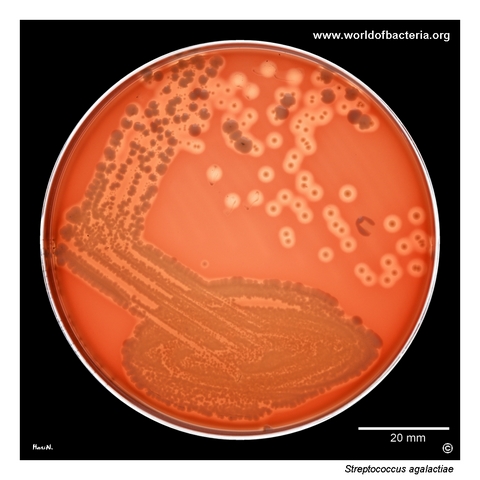
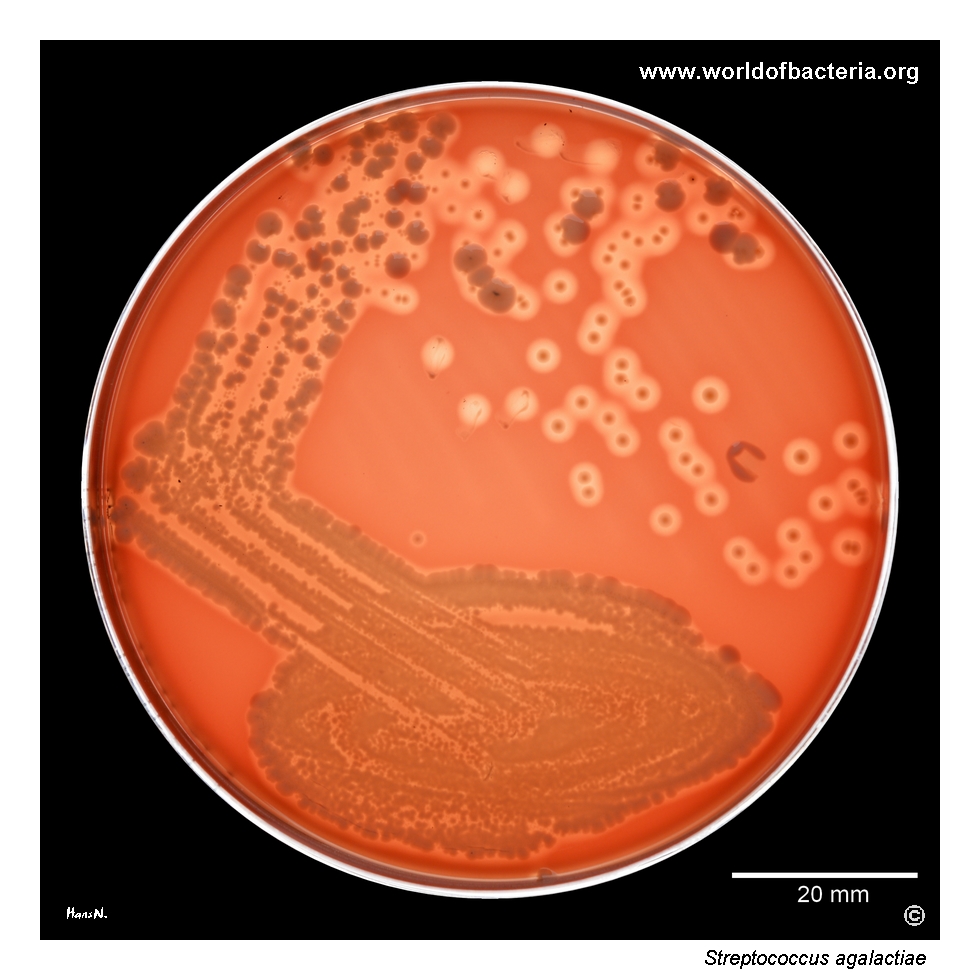
Urine specimen cultured on blood agar. Ten microlitres of urine were inoculated with a calibrated loop and spread across the agar surface. Beta-haemolytic colonies of Streptococcus agalactiae are visible together with non-haemolytic colonies of Escherichia coli. Culture conditions: 24 hours at 36 °C in ambient air. This mixed growth is a useful reminder that group B streptococci may appear in urine culture together with more typical Gram-negative uropathogens.
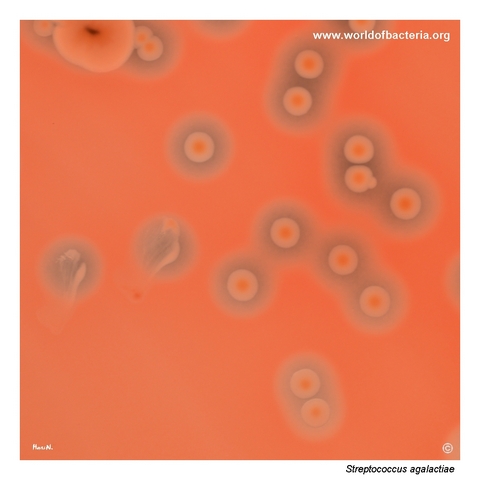
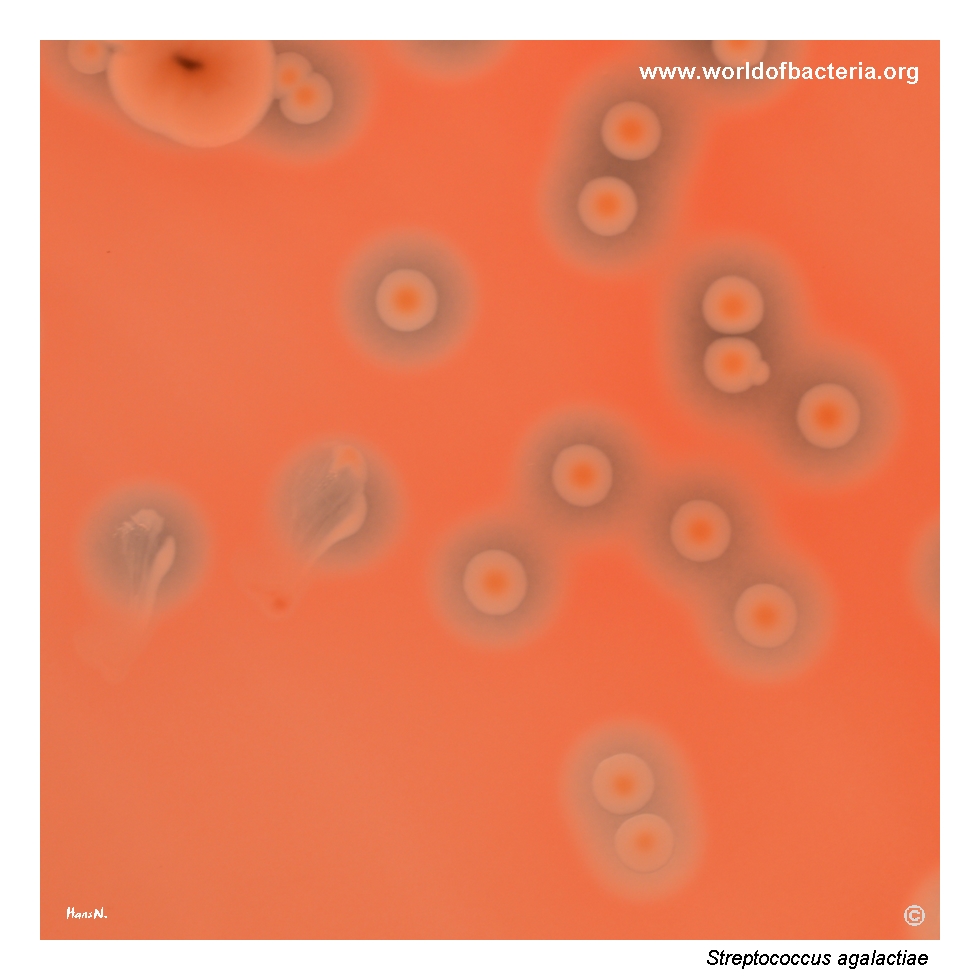
Colonies of group B streptococci, Streptococcus agalactiae, may occasionally produce a yellow to orange carotenoid pigment. In this image, the coloration is most evident in the centre of the colonies, which are surrounded by a zone of haemolysis. Although beta-haemolysis is the more familiar visual clue, pigment production may provide an additional hint during plate reading when present.
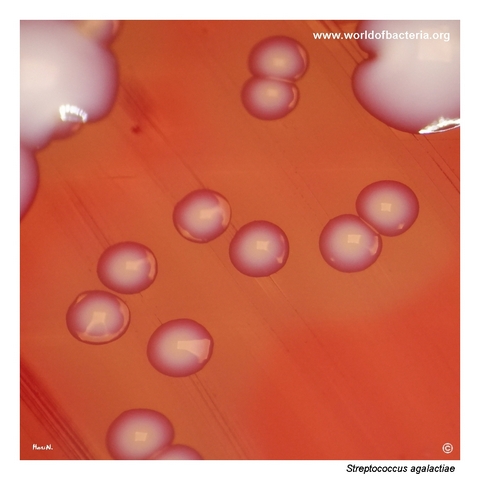
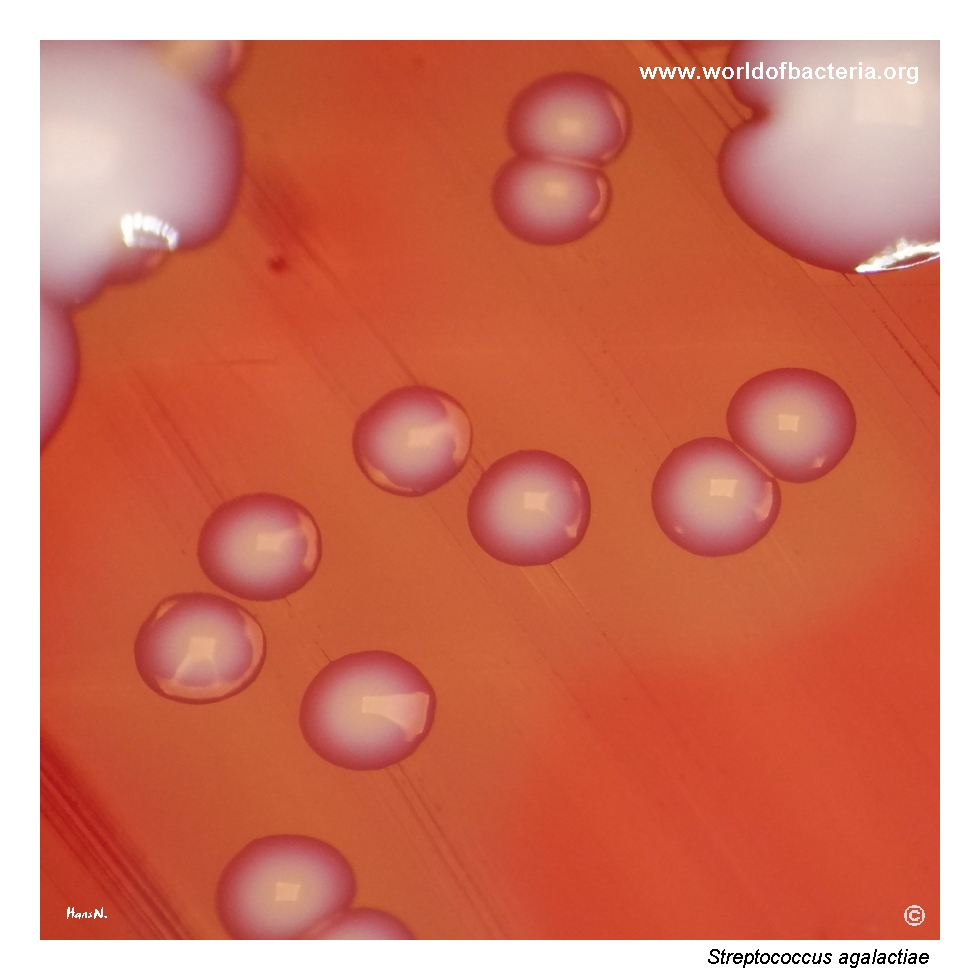
Close-up view of Streptococcus agalactiae colonies on blood agar after 24 hours of incubation at 36 °C in ambient air. The colony centres are yellow-orange, while the colonies themselves are smooth, convex, and round with entire margins, surrounded by haemolysis. Pigment production is a helpful supporting identification feature, but in S. agalactiae it is better regarded as an exception than as a regular finding.
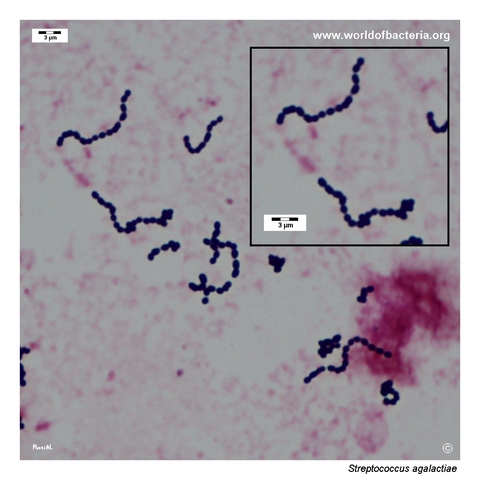
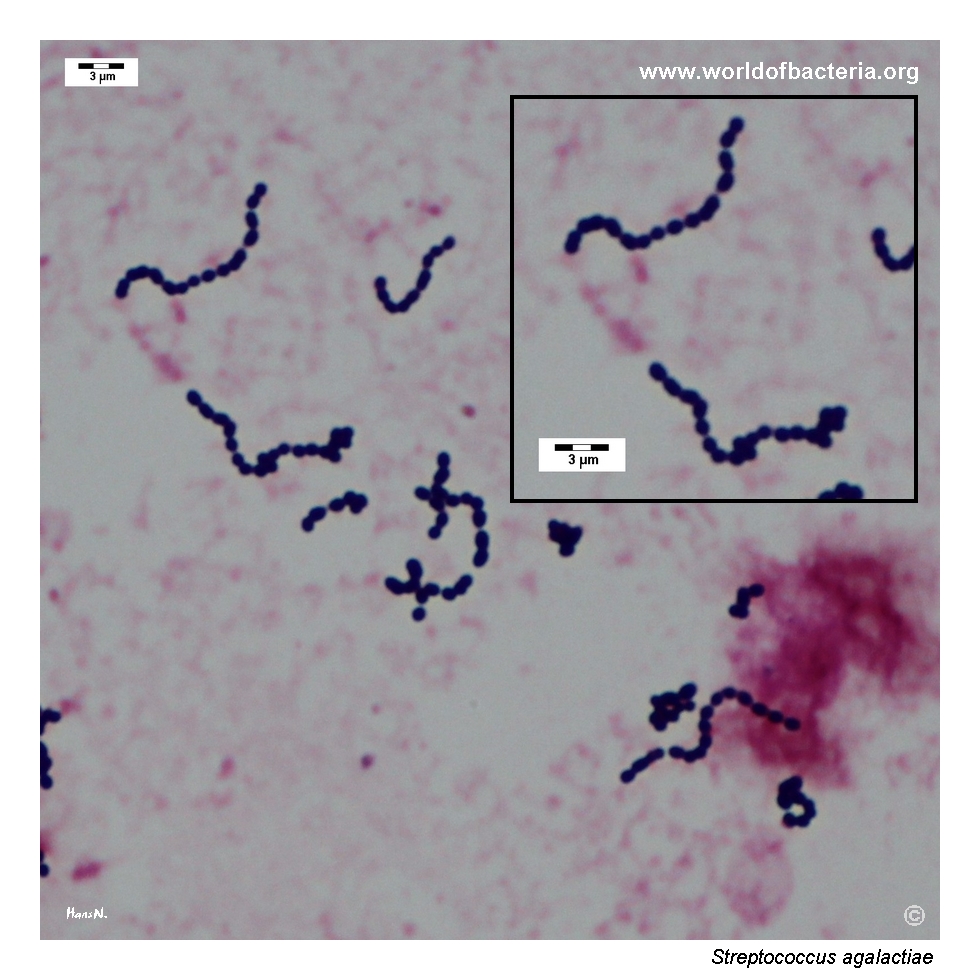
Gram-stained smear prepared from a patient’s urine specimen. The microscopic field shows chains of Gram-positive cocci, a morphology fully consistent with streptococci. In urinary material, this appearance should always be interpreted together with culture findings, because the simultaneous presence of characteristic beta-haemolytic colonies helps support identification of Streptococcus agalactiae rather than another chain-forming Gram-positive coccus.
Diagnostic and Clinical Notes
This page set is didactically useful because it combines several classic but not always simultaneously visible clues for group B streptococci: beta-haemolysis, chain-forming Gram-positive cocci, and occasional yellow-orange pigment within the colonies.
The mixed urine culture with Escherichia coli is particularly relevant for routine work, because it shows that GBS may coexist with more familiar Gram-negative uropathogens rather than appearing as a pure isolate.
The pigmented colonies are especially instructive. In Streptococcus agalactiae, colony pigmentation is real and microbiologically meaningful, but it should be treated as a supporting clue rather than an obligatory characteristic of every strain.
The direct urine Gram stain is also useful because it reinforces the link between culture morphology and microscopic appearance. Chains of Gram-positive cocci gain much stronger interpretive value when the plate simultaneously shows characteristic beta-haemolytic colonies.
Overall, this page illustrates why the species remains important well beyond neonatal microbiology: in routine urine culture, GBS can be a clinically relevant finding whose meaning depends on quantity, mixed flora, and patient context.
Laboratory Identification
Colony Morphology
On blood agar, Streptococcus agalactiae typically forms smooth, convex, round colonies with entire margins and surrounding beta-haemolysis. In this page set, some colonies also show yellow-orange pigment concentrated toward the centre, which makes them visually more distinctive than the non-pigmented appearance often expected for streptococci.
Microscopy
Gram staining shows Gram-positive cocci in pairs and especially in chains. In urinary material, this pattern is fully compatible with streptococci and gains diagnostic weight when correlated with the simultaneous growth of beta-haemolytic colonies on blood agar.
Key Identification Clues
Catalase-negative streptococcal morphology
Group B Lancefield identity in the appropriate laboratory context
Usually beta-haemolytic colonies on blood agar
Occasional yellow-orange colony pigment as a supporting clue
Need to interpret urine isolates in relation to colony count and mixed flora
Modern Identification Methods
Modern species identification is usually straightforward with MALDI-TOF MS or other validated laboratory methods. In practice, however, the larger challenge is often correct interpretation of the isolate, especially in urine or genital material, where S. agalactiae may represent either colonization or clinically relevant infection depending on the setting.
Antibiotic Characteristics
Colony appearance alone should never be used to infer treatment. For Streptococcus agalactiae, management depends on specimen type, patient group, pregnancy status, and the clinical syndrome being addressed.
In routine microbiology, the principal value of the beta-haemolytic and sometimes pigmented phenotype is rapid presumptive recognition of group B streptococci rather than prediction of susceptibility from morphology alone.
Note: In obstetric microbiology, species identification carries preventive implications because maternal colonization is relevant to strategies designed to reduce early-onset neonatal GBS disease.