A recently described coagulase-negative staphylococcal species closely related to Staphylococcus haemolyticus, occasionally recovered from human clinical material and capable of producing yellow pigment and visible haemolysis on blood agar.
Basic Characteristics
Taxonomy
Domain: Bacteria
Phylum: Bacillota
Class: Bacilli
Order: Bacillales
Family: Staphylococcaceae
Genus:Staphylococcus
Species:Staphylococcus borealis
Microscopy & Gram Stain
Gram-positive cocci
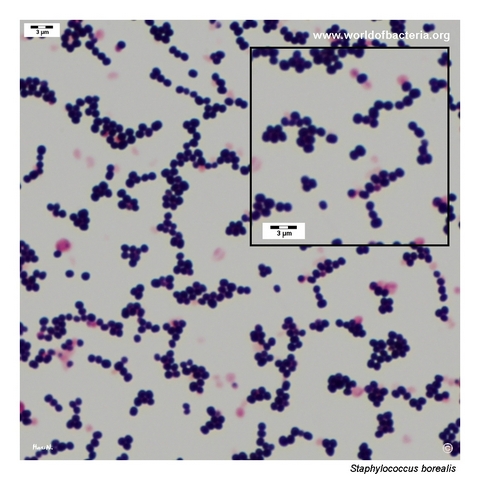
Cells occur mainly in clusters, but pairs and short chains may also be present
Gram-stained preparations show the typical irregular staphylococcal arrangement
Oxygen Relationship
Facultatively anaerobic
Grows under routine aerobic culture conditions on blood agar
Rapid Identification Tests
Catalase: positive
Coagulase: negative
Oxidase: negative
Urease: reported as positive in the original species description
Ecology and Clinical Relevance
Natural Habitat
Human skin-associated microbiota
Occasional opportunistic human isolate
Originally described from human skin and blood isolates
Common Clinical Specimens
Skin-associated clinical material
Blood culture isolates
Urogenital specimens such as urethral swabs
Clinical Significance
Recently described coagulase-negative staphylococcus
Probably underrecognized rather than truly absent from routine clinical practice
May be confused with Staphylococcus haemolyticus and other haemolytic staphylococci
Differential Considerations
Staphylococcus haemolyticus is the most important differential species
Staphylococcus aureus may be considered because of yellow pigment and haemolysis
Other pigmented or haemolytic coagulase-negative staphylococci
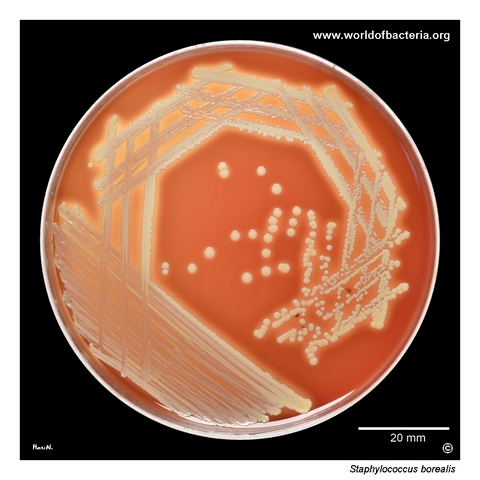
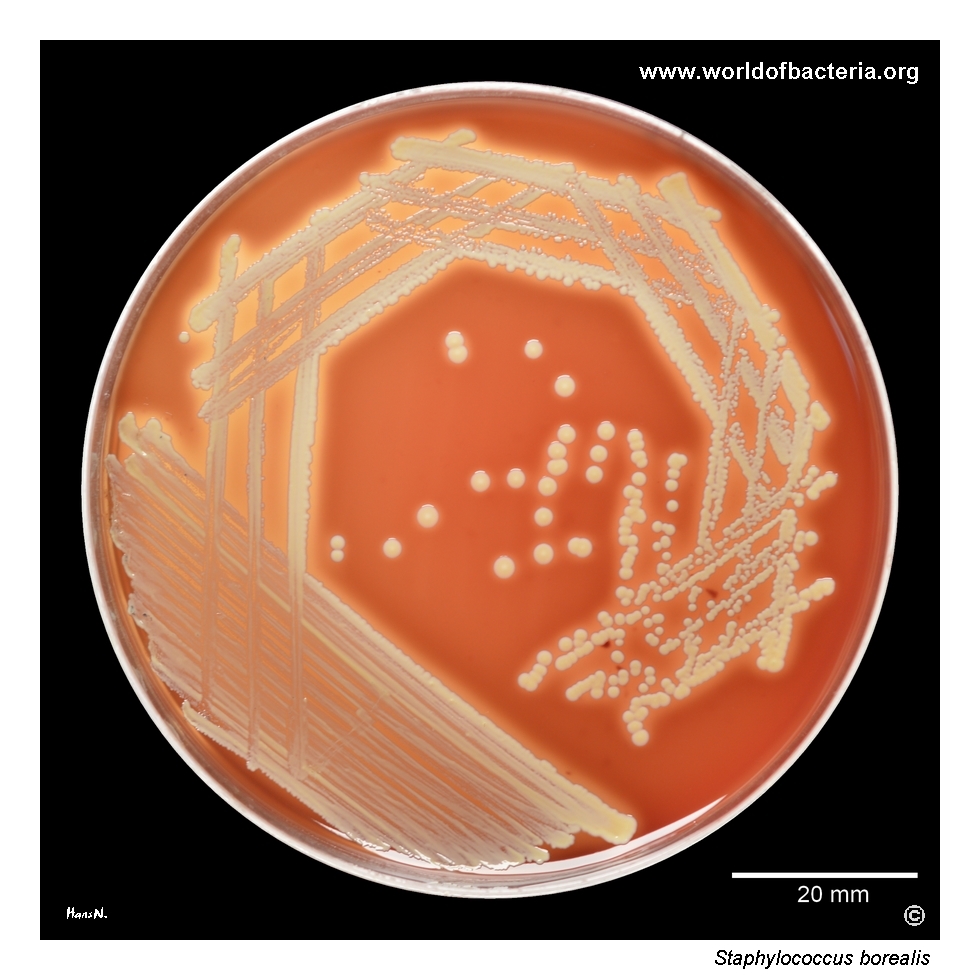
Staphylococcus borealis on blood agar after 24 hours of incubation at 37 °C in ambient air. The strain was isolated from a urethral swab from a 47-year-old man, originally together with Enterococcus faecalis, both present in significant quantity. On blood agar, beta-haemolysis is already visible, although the haemolytic zone around individual colonies becomes much more pronounced after prolonged incubation for 48 hours.
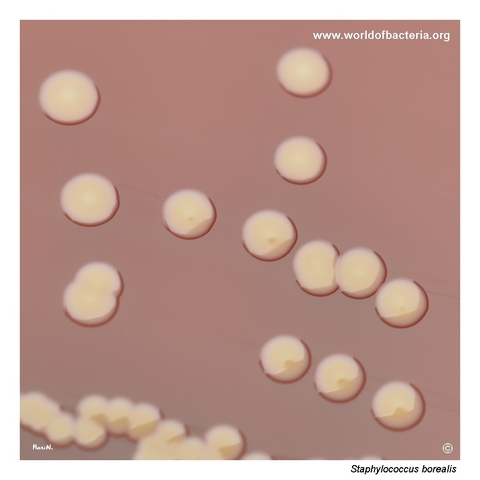
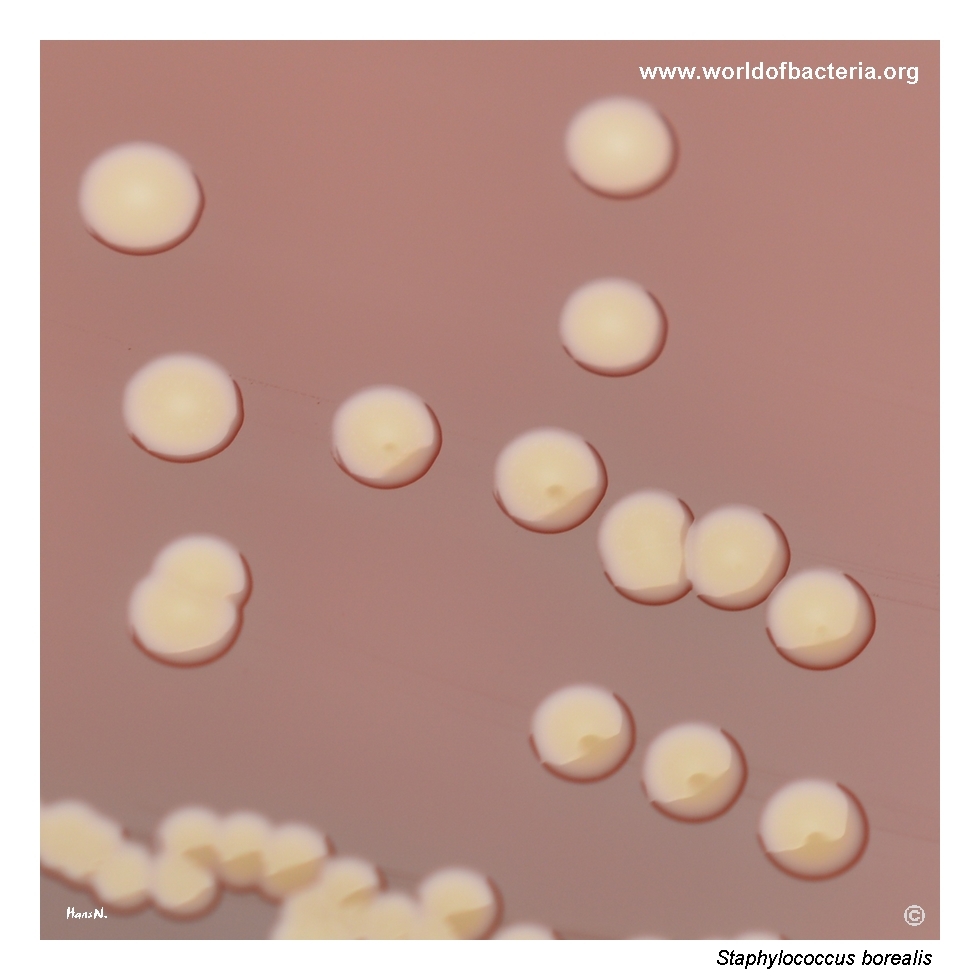
Colonies of Staphylococcus borealis on blood agar after 24 hours at 37 °C. Some isolates of this species show conspicuous yellow pigmentation, resembling certain strains of Staphylococcus aureus. For this reason, colony colour alone should be interpreted with caution during routine culture reading, especially when working with mixed clinical material or with isolates that also display visible haemolysis.
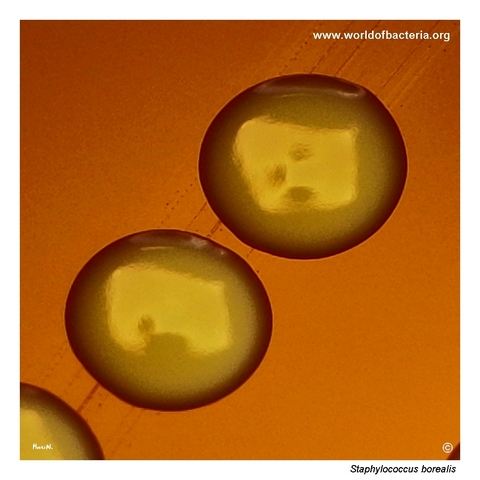
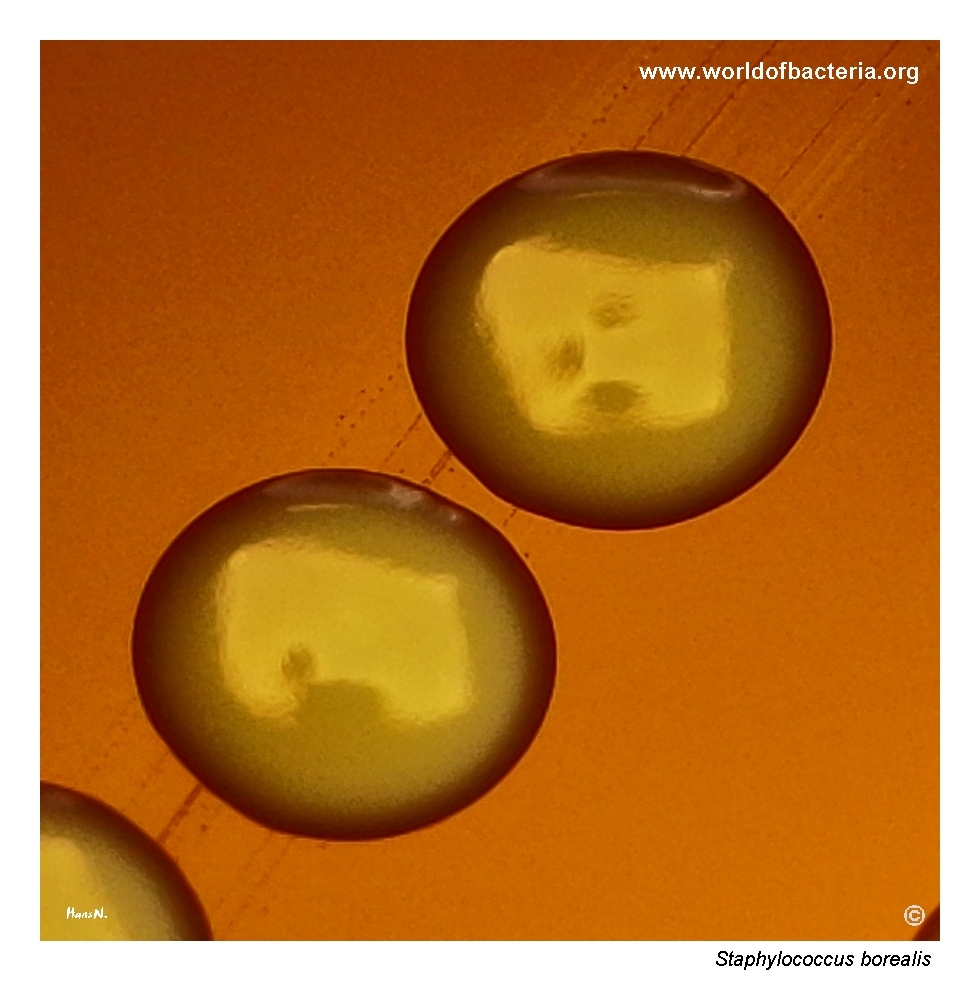
Close-up view of Staphylococcus borealis colonies after 24 hours of incubation at 37 °C in ambient air, followed by a further 24 hours at room temperature. The colonies are smooth, convex, and round with entire margins. With prolonged incubation, pigment production often becomes more intense, making the colonies more visually distinctive and easier to appreciate during detailed examination of the culture plate.
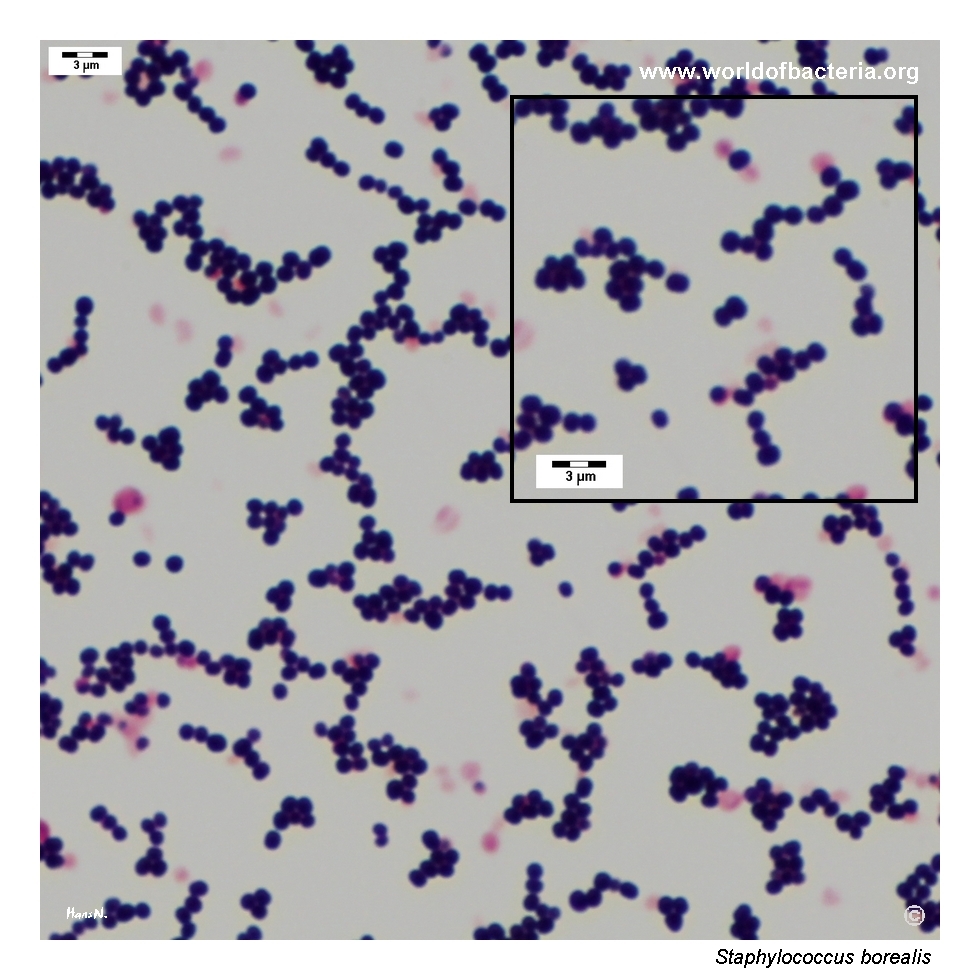
Gram-stained smear prepared from a colony of Staphylococcus borealis grown on blood agar. The organism appears as Gram-positive cocci occurring singly, in pairs, short chains, and most notably in clusters of variable size and shape. This microscopic arrangement is typical of staphylococci, although species identification requires correlation with colony morphology, haemolysis, and additional laboratory methods.
Diagnostic and Clinical Notes
This isolate is visually instructive because it combines two features that strongly influence first impressions on blood agar: yellow pigmentation and beta-haemolysis.
In this page set, the haemolytic effect was already visible after 24 hours and became more pronounced after prolonged incubation, which increases the risk of overcalling the isolate as a more familiar haemolytic staphylococcal species.
Staphylococcus borealis is still a relatively unfamiliar name in routine clinical microbiology and may therefore remain hidden among isolates reported more broadly as S. haemolyticus or as haemolytic coagulase-negative staphylococci.
In your material, the strain originated from a urethral swab from a 47-year-old man together with significant growth of Enterococcus faecalis, which illustrates that clinical interpretation should always consider specimen context and accompanying flora.
Because the species is recently described, its overall clinical significance is still being clarified. Current practical value lies mainly in recognizing that unusual yellow-pigmented and haemolytic coagulase-negative staphylococci may represent taxa that are not yet widely familiar in routine diagnostics.
Laboratory Identification
Colony Morphology
On blood agar, this isolate formed smooth, convex colonies with entire margins. Yellow pigment was present and became more intense with prolonged incubation, while beta-haemolysis around the colonies became clearer after 48 hours.
Microscopy
The Gram-stained colony smear shows Gram-positive cocci occurring singly, in pairs, short chains, and especially in clusters of variable size and shape. This appearance is fully compatible with the genus Staphylococcus but does not by itself secure species identification.
Key Identification Clues
Gram-positive cocci in clusters
Catalase positive and coagulase negative
Yellow pigment visible on blood agar
Beta-haemolysis that becomes more obvious with incubation time
Potential confusion with Staphylococcus haemolyticus and haemolytic S. aureus
Modern Identification Methods
Reliable identification is best achieved with MALDI-TOF MS only if the reference database is up to date; otherwise, sequencing or genome-based methods may be needed for difficult isolates. This is especially relevant for Staphylococcus borealis because the species was only formally described recently and may still be underrepresented in older identification systems.
Antibiotic Characteristics
No simple species-level susceptibility rule should be assumed for Staphylococcus borealis. Because it is newly described and still being clinically characterized, antimicrobial susceptibility testing should be performed on the individual isolate rather than inferred from appearance or from a preliminary resemblance to other coagulase-negative staphylococci.
In practical laboratory work, resemblance to Staphylococcus haemolyticus should not be taken to imply identical resistance behaviour. Even when a newly recognized species is phenotypically similar to a familiar taxon, susceptibility interpretation must remain isolate-specific.
Note: Treatment decisions should always be guided by laboratory susceptibility testing and clinical context.