Finegoldia magna is an anaerobic Gram-positive coccus and one of the clinically important GPAC species, usually forming small inconspicuous colonies that can be overlooked easily in mixed anaerobic culture despite its real pathogenic potential.
Basic Characteristics
Taxonomy
Domain: Bacteria
Phylum: Bacillota
Class: Tissierellia
Order: Tissierellales
Family: Peptoniphilaceae
Genus:Finegoldia
Species:Finegoldia magna
Microscopy & Gram Stain
Gram-positive cocci occurring singly, in pairs, and in clusters
The Gram stain is consistent with anaerobic Gram-positive cocci rather than with rods or filamentous anaerobes
Microscopy alone does not distinguish Finegoldia magna from other GPAC species and must be interpreted with the culture phenotype
On this page, the smear fits well with a clinically relevant anaerobic coccus recovered from anaerobic solid medium
Oxygen Relationship
Obligate anaerobe
Primary isolation and routine laboratory recognition depend on anaerobic culture conditions
The first two atlas images show the species on Schaedler agar after anaerobic incubation
In mixed specimens, the need for anaerobic cultivation is one reason why the organism may remain underrecognized
Rapid Identification Tests
Growth atmosphere: recovery under anaerobic conditions is the key practical clue
Gram stain: anaerobic Gram-positive cocci support placement within the GPAC group
Colony morphology: small smooth grey-white colonies are typical but not species-specific
Modern identification: MALDI-TOF MS or other validated anaerobe workflows are usually needed for reliable species confirmation
Ecology and Clinical Relevance
Natural Habitat
Finegoldia magna is part of the normal human microbiota of skin and mucous membranes
Despite this commensal background, it is also a well-established opportunistic pathogen in clinically significant anaerobic infection
Its ability to persist in chronic wounds and mixed infections is one reason why it deserves attention in diagnostic microbiology
Common Clinical Specimens
Purulent soft-tissue material and deep abscesses
Chronic wound and diabetic foot specimens
Mixed anaerobic material from skin, mucosal, or implant-associated infections
Anaerobic culture plates where small grey-white colonies might otherwise be dismissed as minor accompanying flora
Clinical Significance
Finegoldia magna is one of the most clinically relevant Gram-positive anaerobic cocci
It may take part in polymicrobial anaerobic infection, but it can also contribute directly to soft-tissue, chronic wound, and implant-associated disease
Its apparently ordinary colony morphology should not lead to underestimation of its pathogenic role
Differential Considerations
Other Gram-positive anaerobic cocci recovered on Schaedler agar or similar media
Facultative Gram-positive cocci when only colony appearance is considered
Minor accompanying anaerobes in polymicrobial specimens
Situations in which a small colony is dismissed too quickly despite its possible clinical significance
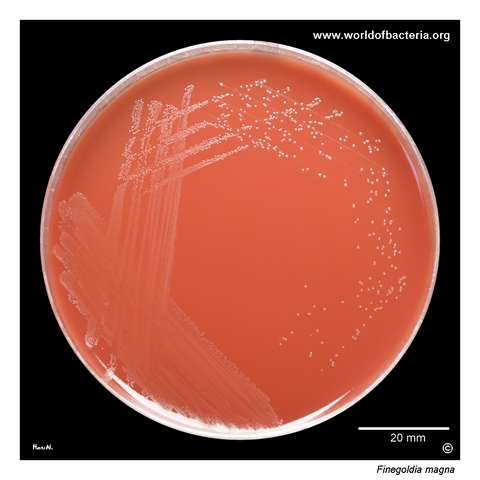
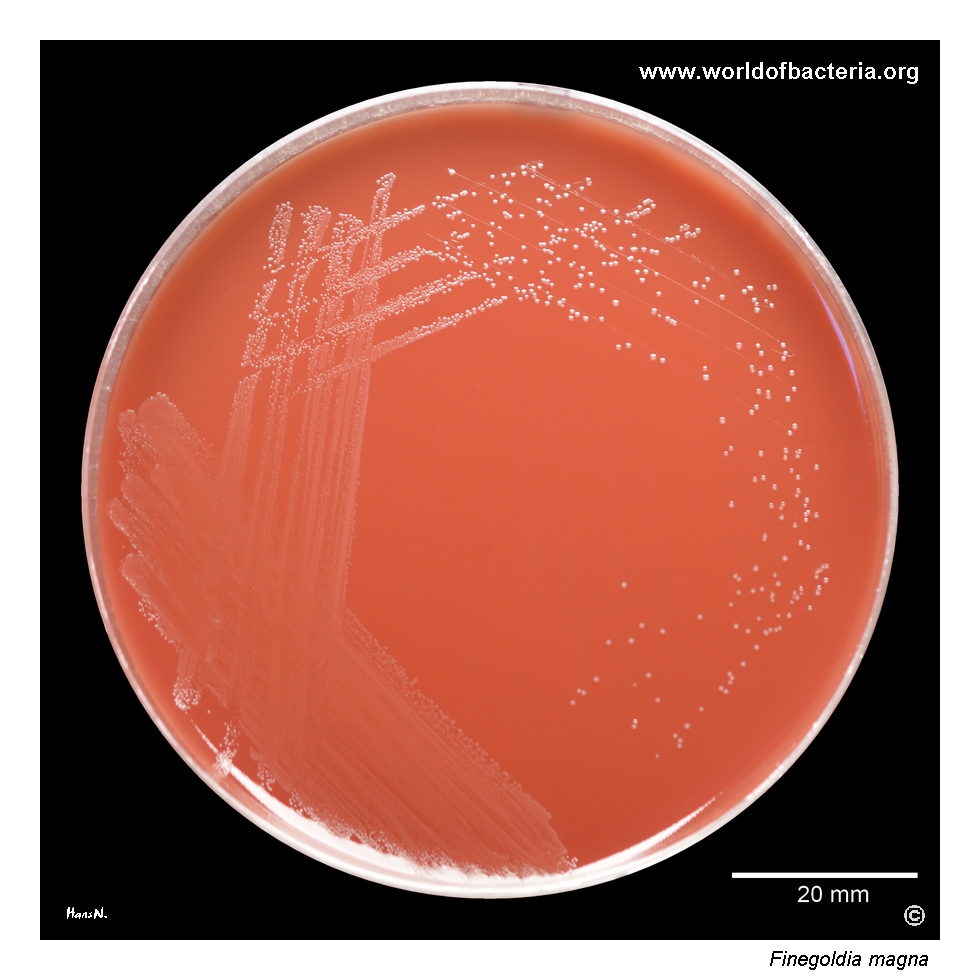
Finegoldia magna on Schaedler agar after 48 hours of incubation at 36 °C under anaerobic conditions (80% N2, 10% CO2, 10% H2). This species is one of the clinically relevant anaerobic Gram-positive cocci and may appear in a wide range of purulent and mixed anaerobic infections. On solid medium, its colonies are usually rather inconspicuous, which makes careful examination of anaerobic culture plates especially important.
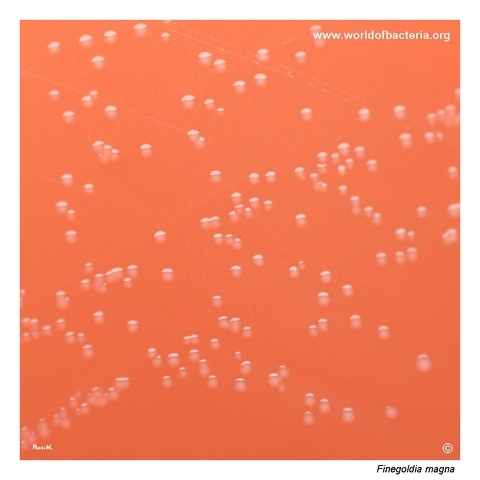
Colonies of Finegoldia magna on Schaedler agar. The colonies are small, smooth, convex, and grey-white, measuring approximately 1 mm in diameter. Their modest size and simple morphology mean that they can easily be overlooked in mixed anaerobic culture, especially when more rapidly growing accompanying organisms are present.
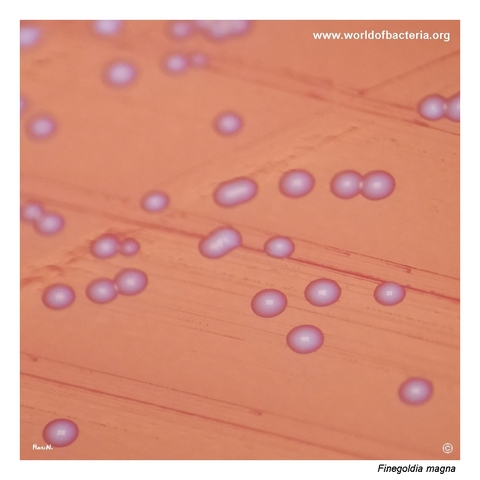
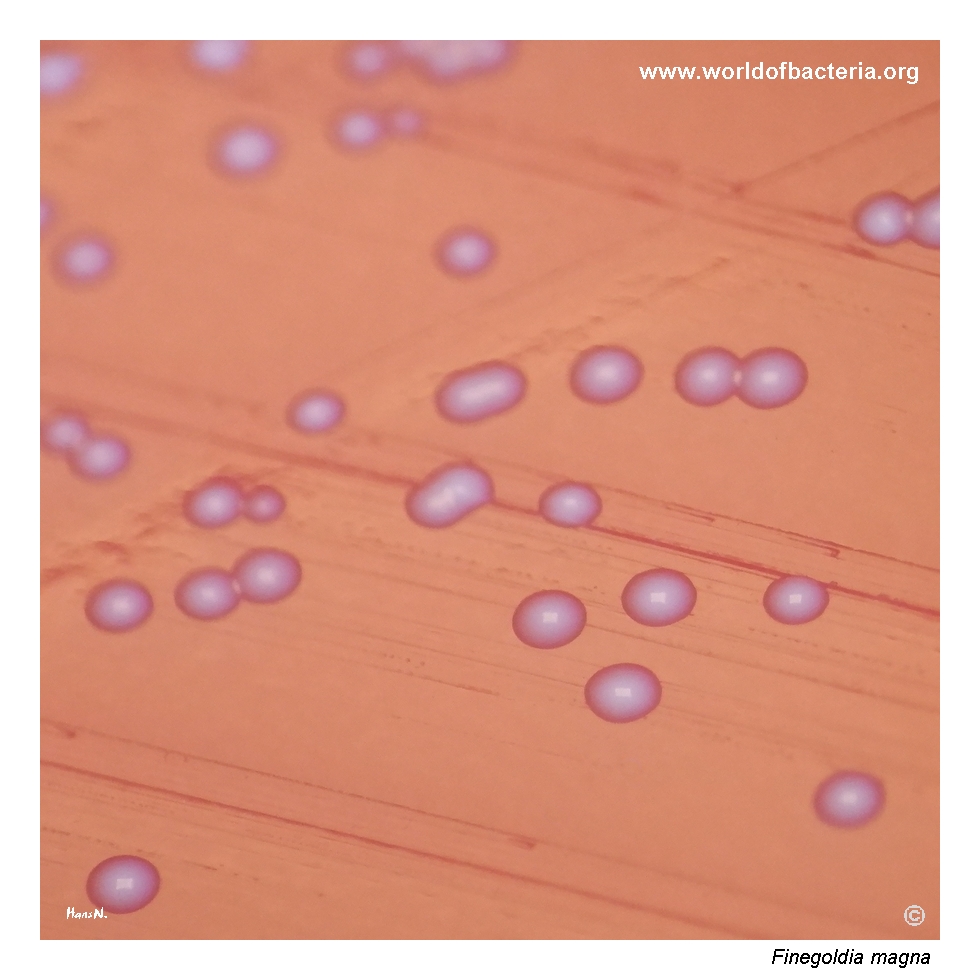
Close-up view of Finegoldia magna colonies. The colonies are grey-white, smooth, convex, and round with entire margins. Culture conditions: 24 hours at 37 °C in ambient air. In this image, the species shows a neat, relatively uniform colony morphology, but such visually ordinary colonies should not lead to underestimation of its possible role in clinically significant anaerobic infection.
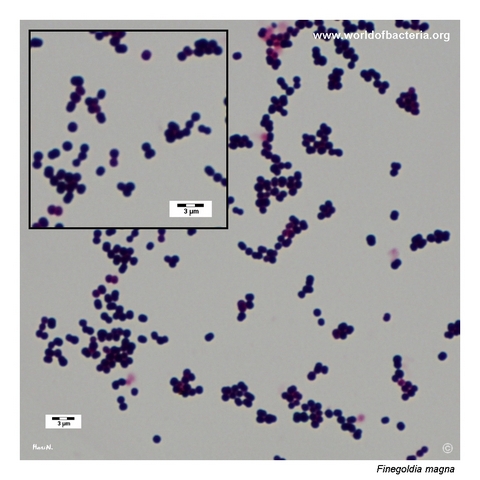
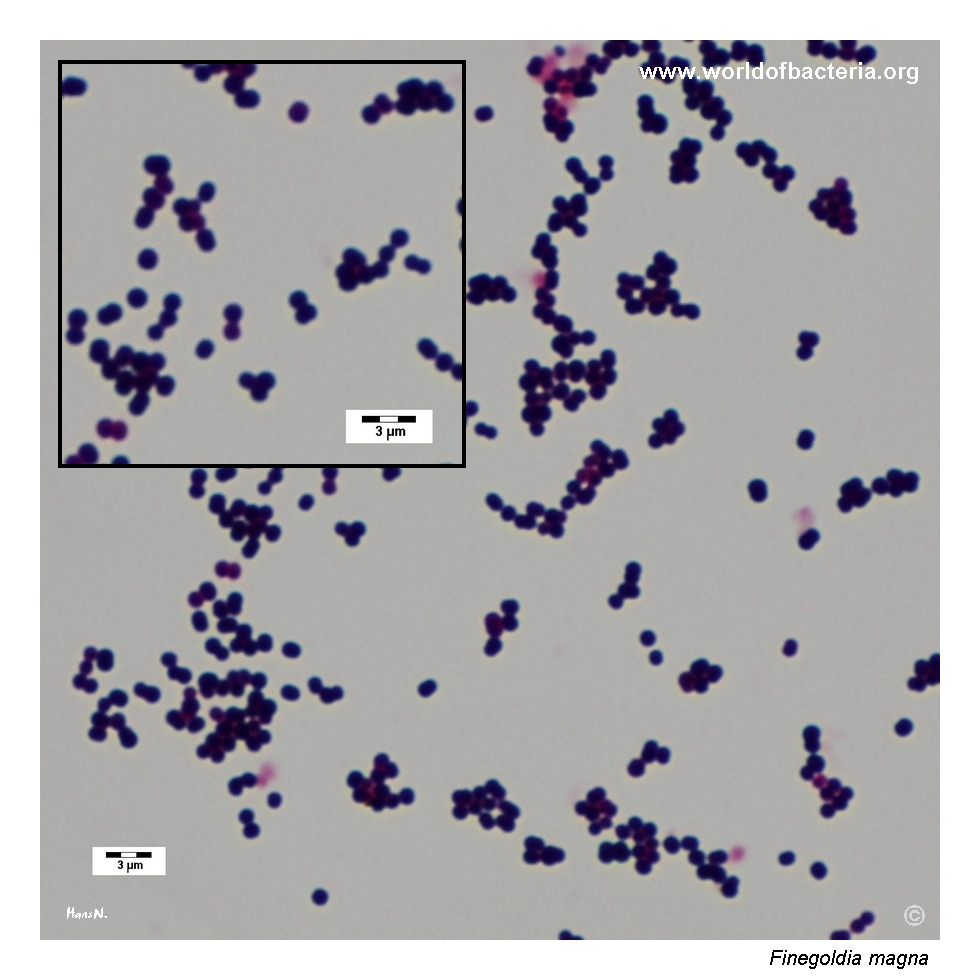
Gram-stained smear prepared from a colony of Finegoldia magna grown on Schaedler agar. The organism appears as Gram-positive cocci occurring singly, in pairs, and in clusters. This microscopic appearance is consistent with anaerobic Gram-positive cocci and should always be interpreted together with the growth conditions and colony morphology, especially in polymicrobial anaerobic specimens.
Diagnostic and Clinical Notes
This page is didactically useful because it shows how unimpressive Finegoldia magna may look on solid medium despite its real clinical relevance. Small smooth grey-white colonies on anaerobic agar are easy to underestimate, especially in a polymicrobial setting.
The first two images emphasize that careful plate reading matters in anaerobic bacteriology. A species such as F. magna can be present in clinically important material without producing any striking pigment, spreading growth, or dramatic haemolysis.
The third image reinforces the same point at higher magnification: the colony morphology is neat and uniform rather than distinctive. In routine practice, this can make the organism seem less important than it really is.
The Gram stain completes the picture by placing the isolate among the anaerobic Gram-positive cocci. This is diagnostically helpful, but not sufficient for species-level identification, which usually depends on modern instrumental methods.
Overall, the page works well as an atlas example of a pathogen that is microbiologically subtle rather than visually dramatic.
Laboratory Identification
Colony Morphology
On Schaedler agar and similar anaerobic media, Finegoldia magna usually forms small, smooth, convex, grey-white colonies with entire margins. The colonies are often only about 1 mm in diameter after 48 hours, which makes them easy to overlook in mixed anaerobic culture.
Microscopy
The Gram-stained smear shows Gram-positive cocci occurring singly, in pairs, and in clusters. This is compatible with anaerobic Gram-positive cocci in general, but does not on its own establish the species. Correlation with anaerobic growth and reliable identification methods is therefore essential.
Key Identification Clues
Strictly anaerobic recovery on suitable media
Small smooth grey-white colonies that may be overlooked in mixed culture
Gram-positive cocci rather than rods on smear
Clinical context of purulent, chronic wound, or mixed anaerobic infection
Need for MALDI-TOF MS or validated anaerobe identification workflows for confident species determination
Modern Identification Methods
Because the colony morphology is not distinctive enough for reliable visual identification, modern instrumental methods are usually needed. MALDI-TOF MS is well suited to this task when the anaerobic database is up to date and the isolate has been recovered under appropriate culture conditions.
Antibiotic Characteristics
No treatment inference should be made from colony appearance alone. Finegoldia magna is a clinically relevant anaerobe, but susceptibility testing and therapeutic interpretation should be based on the individual isolate and the overall anaerobic infection context.
Many isolates remain susceptible to commonly used anti-anaerobic agents, but reduced susceptibility and clinically important resistance patterns do occur, especially in settings where therapy must cover mixed flora.
Note: The main educational message of this page is phenotypic recognition: a small visually ordinary anaerobic colony may still represent a pathogen with real importance in purulent and chronic infection.