Corynebacterium resistens is a rare lipophilic nondiphtherial corynebacterium of human clinical origin that is diagnostically important because of its small non-haemolytic colonies and its marked tendency toward multidrug resistance.
Basic Characteristics
Taxonomy
Domain: Bacteria
Phylum: Actinomycetota
Class: Actinomycetes
Order: Corynebacteriales
Family: Corynebacteriaceae
Genus:Corynebacterium
Species:Corynebacterium resistens
Microscopy & Gram Stain
Short Gram-positive coryneform rods
Pleomorphic diphtheroid bacilli with irregular clubbed ends
Cells may occur singly, in pairs, or in angular V-shaped arrangements
Microscopy supports recognition of a coryneform isolate but does not by itself resolve the species
Oxygen Relationship
Aerobic coryneform organism that grows on routine blood agar under standard incubation conditions
Growth is usually clearer after prolonged incubation, with colonies remaining small and visually inconspicuous
As a lipophilic species it may be less striking on primary culture than more robust routine pathogens
Rapid Identification Tests
Catalase: positive
Microscopy: Gram-positive coryneform rod
Practical clue: small grey-white non-haemolytic colonies after 48 hours, especially from blood-culture or other clinically significant material
Species note: originally described as a multidrug-resistant, lipophilic, nonsaccharolytic corynebacterium
Important caveat: definitive identification usually requires MALDI-TOF MS or another reliable species-level method
Ecology and Clinical Relevance
Natural Habitat
A rare human-associated corynebacterial species described from clinical isolates rather than from a well-defined environmental reservoir
The available evidence suggests human clinical relevance rather than simple routine colonization alone
In practical microbiology it should be viewed as an uncommon clinical isolate that deserves cautious interpretation, especially when recovered from invasive specimens
Common Clinical Specimens
Blood cultures
Abscess material
Respiratory specimens such as bronchial aspirates
Occasionally other invasive or clinically significant samples
Clinical Significance
Rare but established human pathogen among nondiphtherial corynebacteria
Particularly important because of its association with multidrug resistance
Should not be dismissed automatically when recovered from a clinically relevant specimen, especially in elderly, immunocompromised, or otherwise vulnerable patients
Differential Considerations
Corynebacterium jeikeium and other small-colony lipophilic nondiphtherial corynebacteria
Corynebacterium amycolatum and Corynebacterium striatum when only a generic “diphtheroid” impression is available
Enterococci or non-haemolytic coagulase-negative staphylococci if the plate is read quickly and the coryneform morphology is not yet appreciated
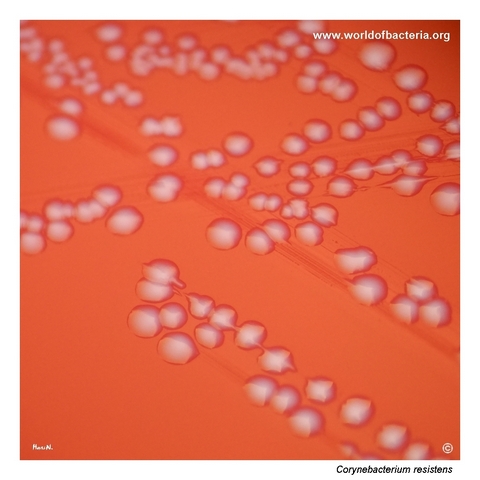
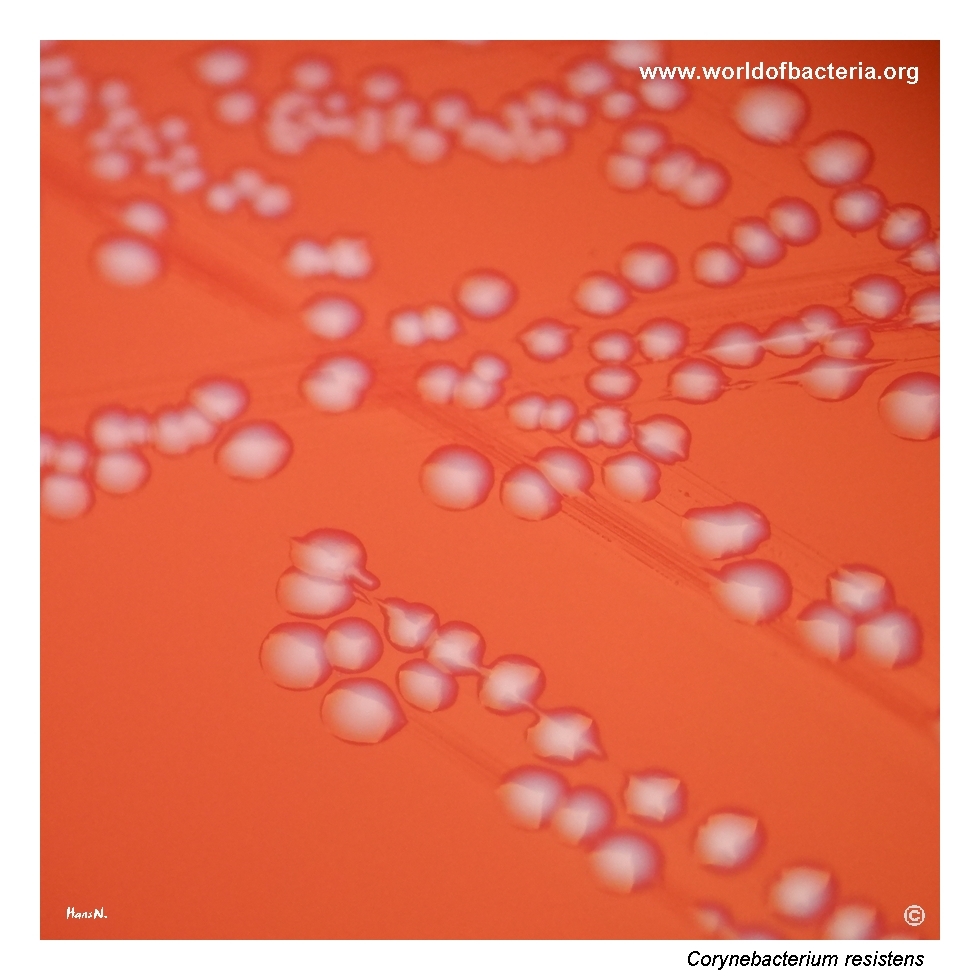
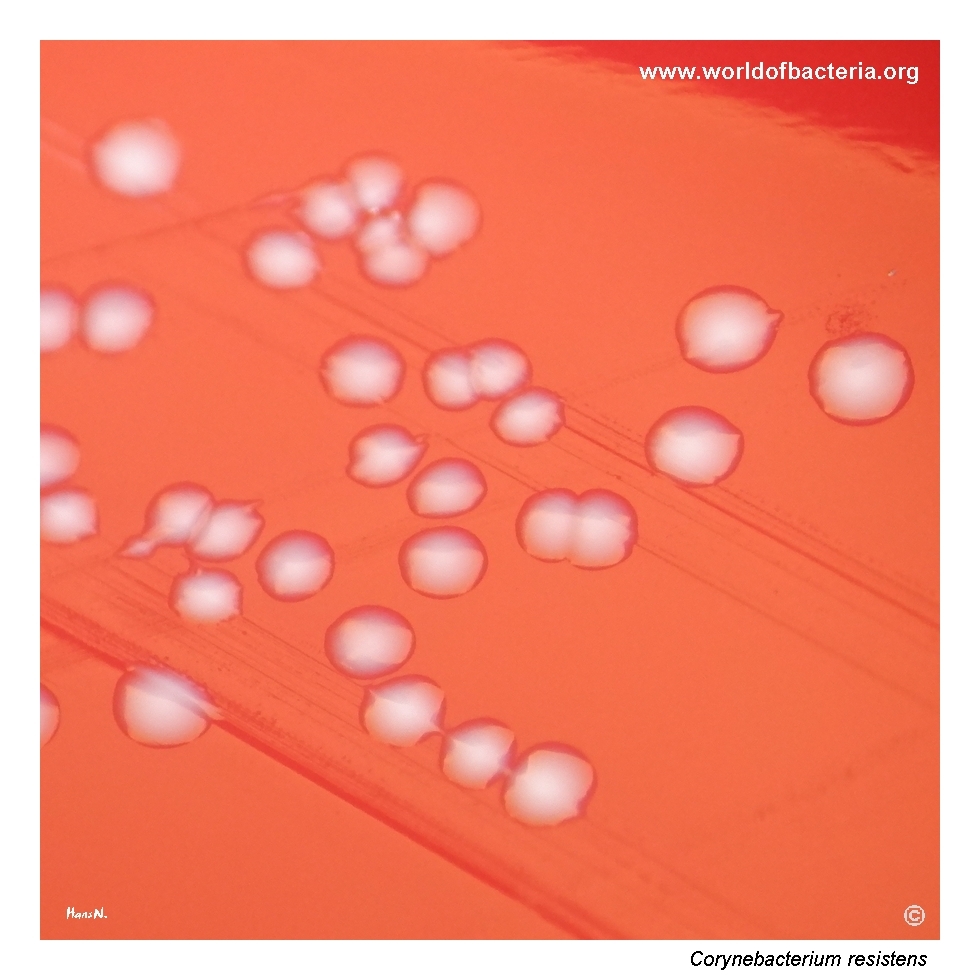
Corynebacterium resistens on blood agar. The isolate originated from an aerobic blood-culture bottle from an 85-year-old patient with the diagnosis R06.0, dyspnoea. Incubation: 48 hours at 36 °C in 5% CO2.
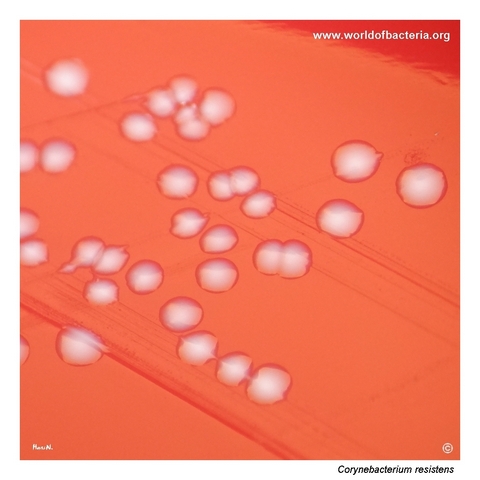
Close-up view of C. resistens colonies. Small smooth convex non-haemolytic colonies with entire margins are visible on blood agar. Incubation: 48 hours at 36 °C in 5% CO2.
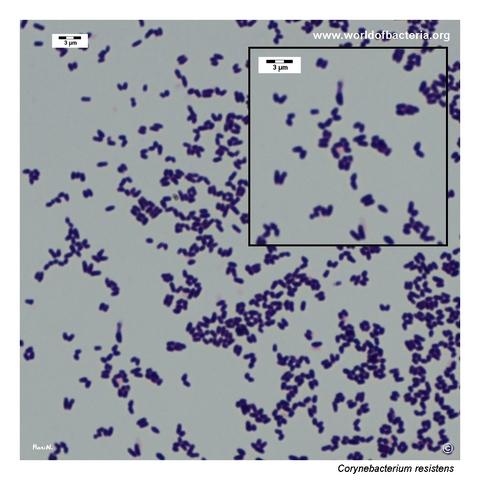
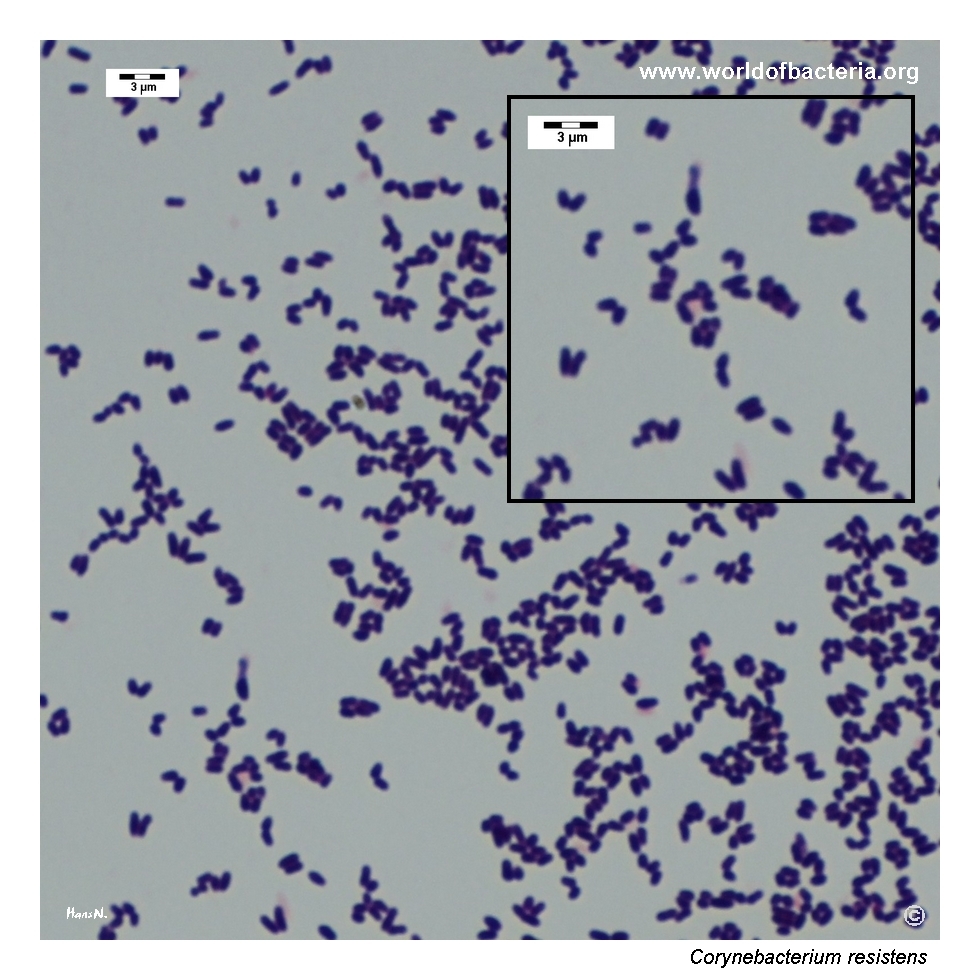
Smear prepared from colonies of C. resistens grown on blood agar and stained by the Gram method. Short Gram-positive coryneform rods are visible, often arranged in pairs with a V-shaped configuration.
Diagnostic and Clinical Notes
This isolate is visually unobtrusive: the colonies are small, smooth, grey-white, and non-haemolytic, so there is little in the primary culture appearance that would immediately suggest an organism of special interest. The main diagnostic value of this page therefore lies in contrasting a modest colony phenotype with a species name that carries important antimicrobial implications.
When a nondiphtherial corynebacterium is recovered from blood-culture material, the laboratory must balance two possibilities: contamination by skin-associated flora and true clinical relevance. For Corynebacterium resistens, that distinction matters because the species has been associated with human infection and with a markedly resistant antimicrobial profile.
The species was originally described from human infections and its very name points to multidrug resistance. This makes correct identification more important than the benign appearance of the colonies might suggest.
Microscopy confirms the coryneform nature of the isolate but does not answer the decisive question. The practical challenge is to recognize that even a small non-haemolytic “diphtheroid” from a significant specimen may represent an uncommon but clinically meaningful multidrug-resistant organism.
Laboratory Identification
Colony Morphology
On blood agar, Corynebacterium resistens forms small, smooth, convex, grey-white non-haemolytic colonies with entire margins. Even after 48 hours the colonies remain visually modest and can resemble other ordinary nondiphtherial corynebacteria or even small colonies of unrelated bacteria if the plate is read only superficially.
Microscopy
Gram staining shows short Gram-positive coryneform rods, often seen singly, in pairs, or in angular V-shaped arrangements. This appearance is fully compatible with the genus Corynebacterium but is not sufficiently specific for definitive species determination.
Key Identification Clues
Small non-haemolytic colonies on blood agar after 48 hours
Short Gram-positive coryneform rods with V-shaped pairs
Recovery from clinically significant material such as blood cultures
Lipophilic and nonsaccharolytic profile in the original species description
Potential confusion with other lipophilic nondiphtherial corynebacteria
Species name strongly associated with multidrug resistance
Modern Identification Methods
Reliable species identification is best achieved by MALDI-TOF mass spectrometry when the reference database is current and sufficiently complete. In difficult or unusual isolates, sequencing-based methods may still be required. This is especially relevant for C. resistens because the organism is uncommon, visually unremarkable, and clinically important precisely because of its resistance phenotype.
Antibiotic Characteristics
Corynebacterium resistens was originally described as a multidrug-resistant species, and that antimicrobial theme remains central to its diagnostic significance. The species name itself reflects this feature.
For the clinical laboratory, this means that small non-haemolytic colonies should not lead to therapeutic assumptions based on appearance alone. Isolate-specific susceptibility testing is essential.
Because resistance may involve multiple major drug classes, correct identification has practical value beyond taxonomy. Even when the clinical role of the isolate is uncertain, the resistance profile argues for careful interpretation rather than dismissal.
Note: Antimicrobial therapy should always follow the clinical setting and actual susceptibility testing of the isolate.