Corynebacterium jeikeium is a small-colony lipophilic coryneform species of the human skin flora and an important opportunistic nosocomial pathogen, especially in immunocompromised patients and in association with vascular devices or prosthetic material.
Basic Characteristics
Taxonomy
Domain: Bacteria
Phylum: Actinomycetota
Class: Actinomycetes
Order: Corynebacteriales
Family: Corynebacteriaceae
Genus:Corynebacterium
Species:Corynebacterium jeikeium
Microscopy & Gram Stain
Gram-positive coryneform rods
Pleomorphic diphtheroid bacilli with clubbed or irregular ends
Cells may occur singly, in pairs, or in short angular groupings
Microscopy supports recognition of a coryneform isolate but does not by itself determine the species
Oxygen Relationship
Aerobic coryneform organism that grows under routine culture conditions
Often grows slowly and forms small colonies on blood agar, with growth usually clearer after prolonged incubation
In practical diagnostics it is not highly fastidious, but its lipophilic tendency can make the colonies appear less conspicuous than those of many other routine pathogens
Rapid Identification Tests
Catalase: positive
Microscopy: Gram-positive coryneform rod
Practical clue: tiny grey-white non-haemolytic colonies after prolonged incubation, often in tissue, blood-culture, or device-associated material
Historical note: previously known as CDC coryneform group JK
Important caveat: reliable species identification usually requires MALDI-TOF MS or another robust species-level method
Ecology and Clinical Relevance
Natural Habitat
Part of the human skin flora, especially in hospitalized patients and those exposed to repeated antimicrobial pressure
Can colonize skin without causing disease, which complicates interpretation when recovered from superficial material
Its skin association helps explain why bloodstream and device-related infection may follow transcutaneous procedures or colonization of indwelling hardware
Common Clinical Specimens
Blood cultures
Catheter- or device-associated specimens
Wound or tissue material
Occasionally prosthetic joint, endocardial, or other invasive clinical samples
Clinical Significance
One of the most clinically important nondiphtherial corynebacteria
Acts mainly as an opportunistic nosocomial pathogen rather than as a routine community isolate
Particularly associated with immunocompromised patients, intravascular devices, prosthetic material, and multidrug-resistant healthcare-associated infection
Differential Considerations
Corynebacterium amycolatum and Corynebacterium striatum among clinically relevant nondiphtherial corynebacteria
Corynebacterium pseudodiphtheriticum and other small grey coryneform rods when only colony appearance is considered
Enterococci or non-haemolytic coagulase-negative staphylococci when the plate is read superficially and the coryneform morphology is not yet appreciated
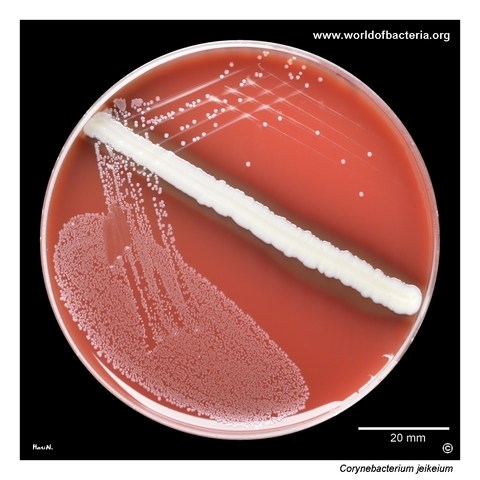
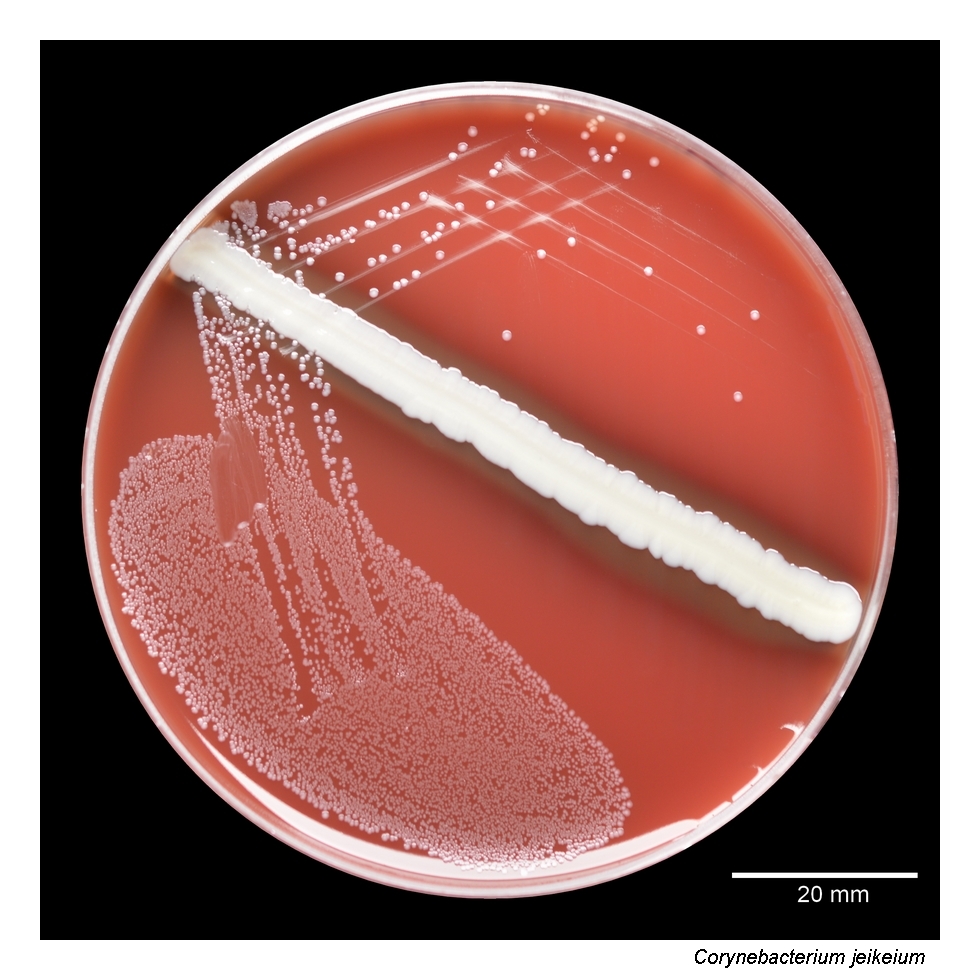
Microbiological examination of a tissue fragment from the plantar surface of the foot. Patient: 73-year-old woman, diagnosis I7021, atherosclerosis of arteries of the extremities. The isolate was subcultured onto blood agar after enrichment in broth. Incubation: 48 hours at 36 °C in 5% CO2. A streak of Staphylococcus aureus ATCC 25923 was also inoculated on the plate.
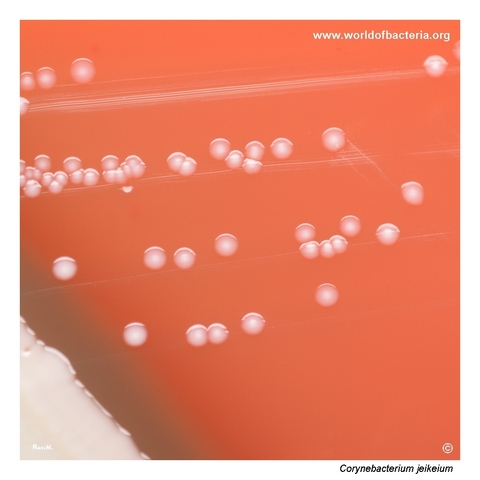
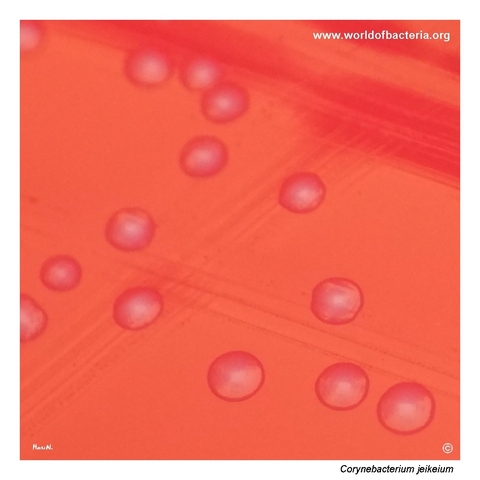
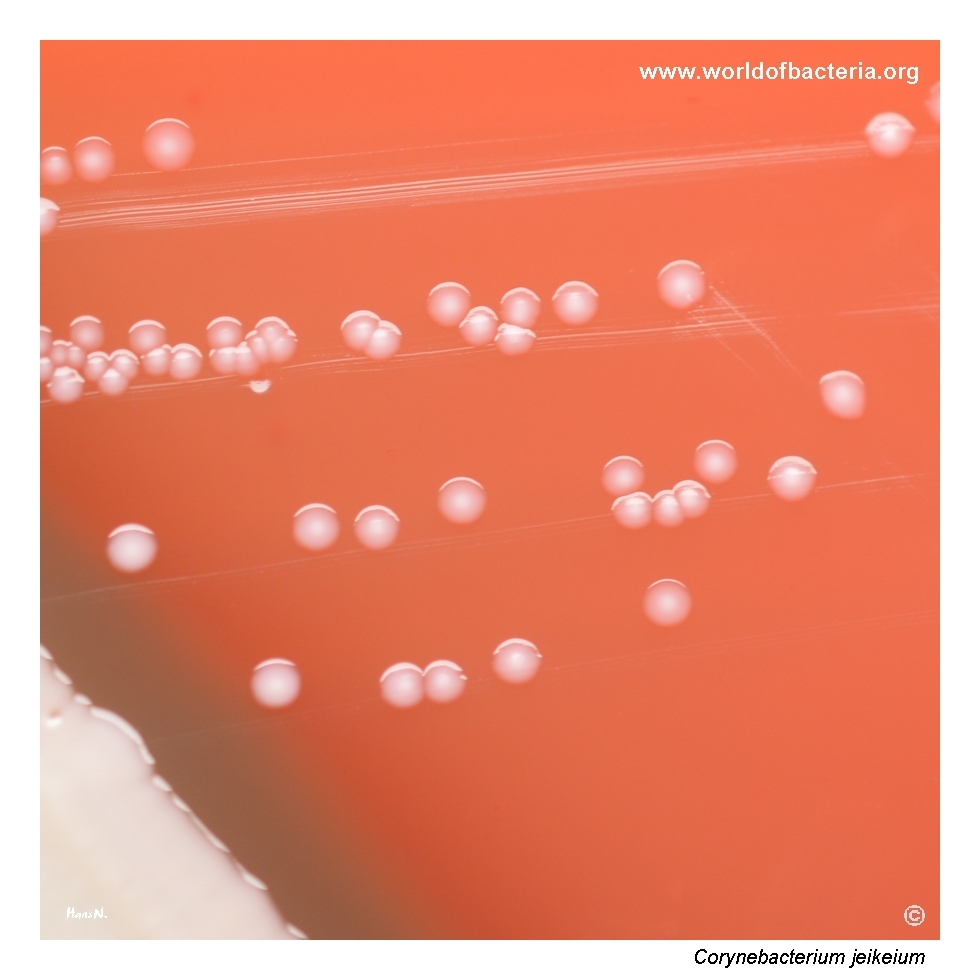
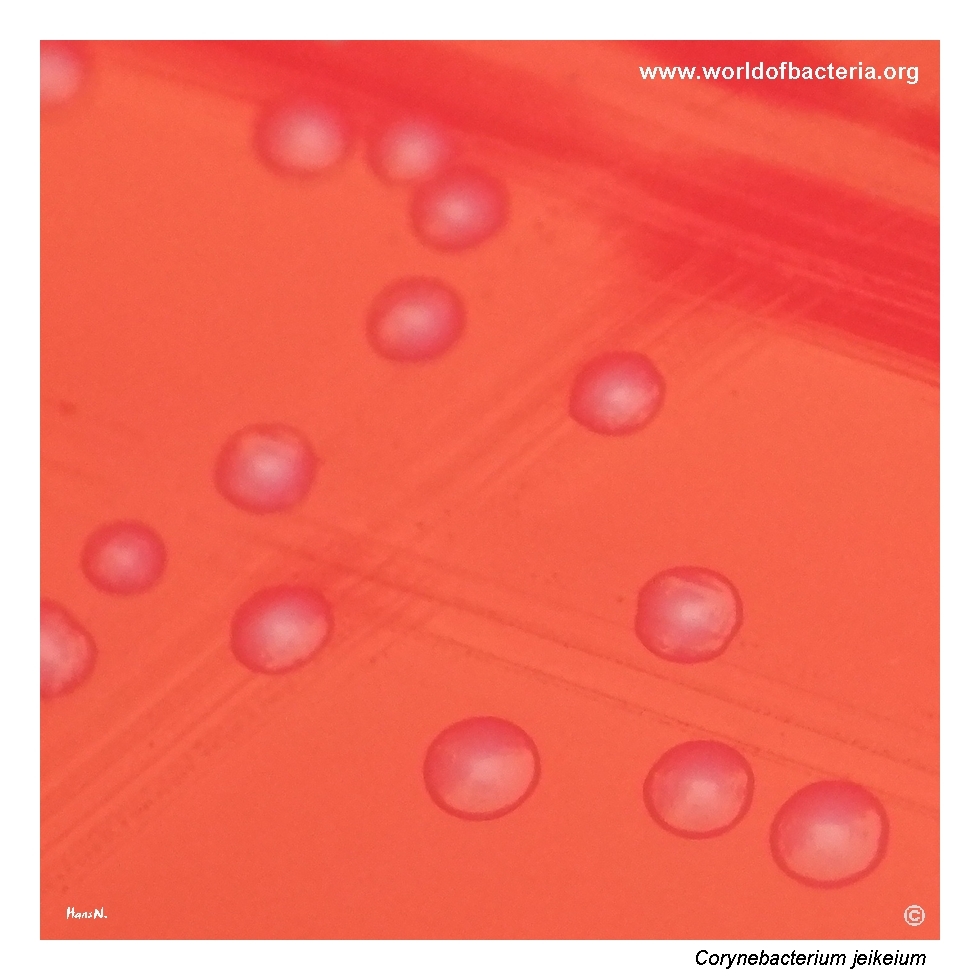
Close-up view of Corynebacterium jeikeium colonies on blood agar. The colonies are small, convex, and non-haemolytic and after 48 hours may resemble colonies of enterococci or other visually unremarkable bacteria. Incubation: 48 hours at 36 °C in 5% CO2.
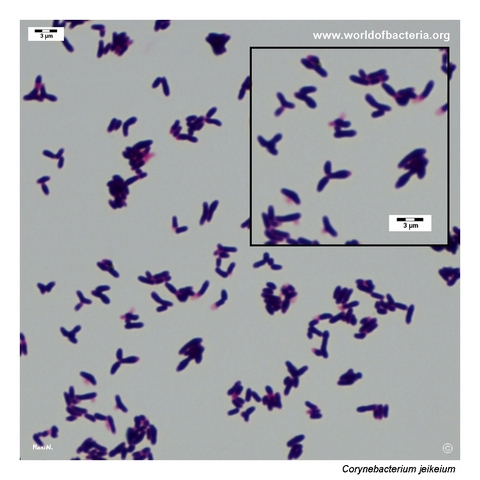
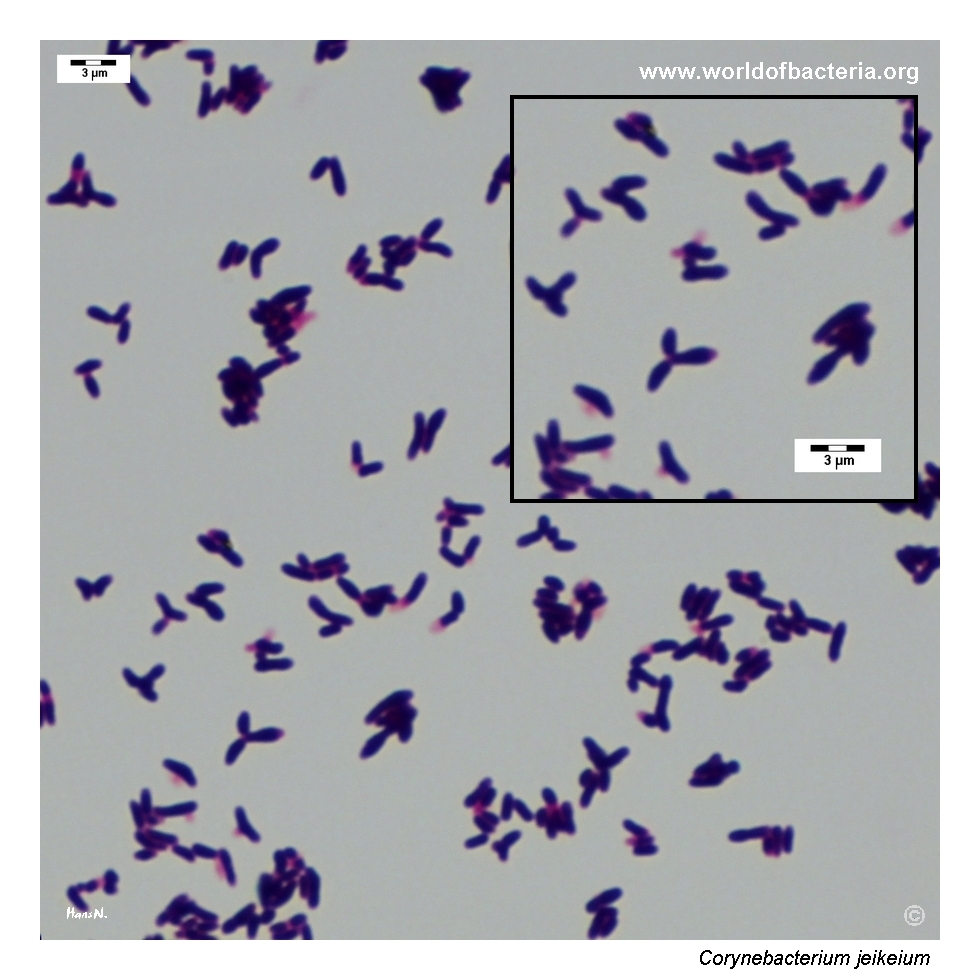
Smear prepared from colonies of Corynebacterium jeikeium grown on blood agar and stained by the Gram method. Gram-positive coryneform rods are visible.
Diagnostic and Clinical Notes
This page is diagnostically useful because Corynebacterium jeikeium can look much less impressive on blood agar than its clinical importance would suggest. The colonies are tiny, grey-white to grey, and non-haemolytic, so the organism may be underestimated if attention is focused only on more conspicuous bacteria on the plate.
The tissue specimen shown here also illustrates a broader practical point: nondiphtherial corynebacteria are not automatically irrelevant. When recovered from deep tissue, blood cultures, or material related to prosthetic devices, C. jeikeium deserves more careful interpretation than an ordinary skin diphtheroid.
Historically known as CDC group JK, this species is especially important because it is strongly associated with healthcare settings and with multidrug resistance. For the clinical microbiology laboratory, correct species identification therefore has much greater consequence than it does for many other visually similar coryneform isolates.
Microscopy confirms a coryneform organism but does not resolve the species-level question. The decisive practical step is to recognize that a small nondiphtherial corynebacterium from an appropriate specimen may represent a clinically meaningful isolate and should be worked up accordingly.
Laboratory Identification
Colony Morphology
On blood agar, Corynebacterium jeikeium forms small, smooth to slightly convex, grey-white non-haemolytic colonies that are usually more evident after 48 hours than after 24 hours. In routine laboratory work the colonies may appear rather ordinary and can resemble enterococci or other nondistinctive flora if the coryneform nature of the isolate is not considered.
Microscopy
Gram staining shows Gram-positive coryneform rods with the usual diphtheroid appearance. Cells may occur singly, in pairs, or in short irregular and angular arrangements. This morphology supports assignment to the coryneform group but is not sufficiently specific for definitive species identification.
Key Identification Clues
Tiny non-haemolytic colonies on blood agar, often more obvious after 48 hours
Gram-positive coryneform rods
Association with hospitalized or otherwise predisposed patients
Recovery from blood cultures, tissue, or device-related material rather than only from superficial colonization
Historical relationship to CDC coryneform group JK
Frequent need for instrumental identification because the colony phenotype is not distinctive enough on its own
Modern Identification Methods
Reliable species identification is best achieved by MALDI-TOF mass spectrometry when the database is sufficiently complete and current. In problematic isolates, sequencing-based methods may still be useful. This is especially relevant for C. jeikeium because the organism is clinically important yet visually easy to underestimate and may otherwise be reported only generically as a “diphtheroid”.
Antibiotic Characteristics
Corynebacterium jeikeium has long been regarded as one of the more antimicrobial-resistant nondiphtherial corynebacteria. Species-level identification should therefore immediately raise the possibility of multidrug resistance rather than reassurance based on the small and non-haemolytic colony appearance.
In practical terms, antimicrobial susceptibility should never be inferred from colony morphology or from the assumption that all skin-associated corynebacteria behave similarly. Isolate-specific susceptibility testing is especially important for this species.
The central lesson is diagnostic as much as therapeutic: once C. jeikeium is recognized, it should be treated as a potentially significant healthcare-associated organism until the clinical context and susceptibility profile show otherwise.
Note: Antimicrobial therapy should always follow the clinical setting and actual susceptibility testing of the isolate.