Corynebacterium propinquum is a respiratory-associated nondiphtherial coryneform species that may be abundant in sputum, forms small non-haemolytic colonies on blood agar, and can resemble enterococci or other visually inconspicuous Gram-positive isolates.
Basic Characteristics
Taxonomy
Domain: Bacteria
Phylum: Actinomycetota
Class: Actinomycetes
Order: Corynebacteriales
Family: Corynebacteriaceae
Genus:Corynebacterium
Species:Corynebacterium propinquum
Microscopy & Gram Stain
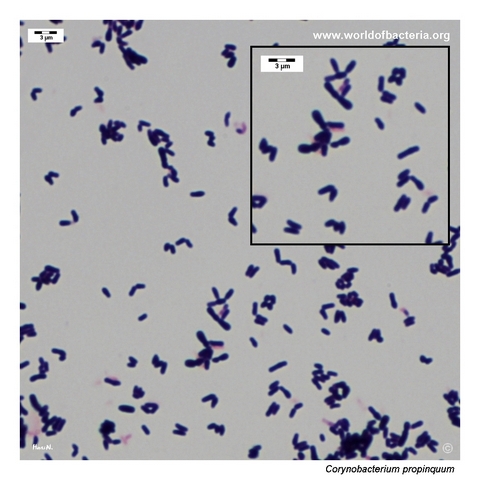
Gram-positive coryneform rods with the typical morphology of nondiphtherial corynebacteria
Microscopy helps separate the isolate from enterococci or other Gram-positive cocci when colony appearance is misleading
The smear places the organism within the corynebacterial group but does not by itself determine the species
As on other pages in this atlas, the Gram stain is most valuable when it corrects the first visual impression from the culture plate
Oxygen Relationship
Aerobic coryneform organism that grows under routine laboratory conditions on blood and chocolate agar
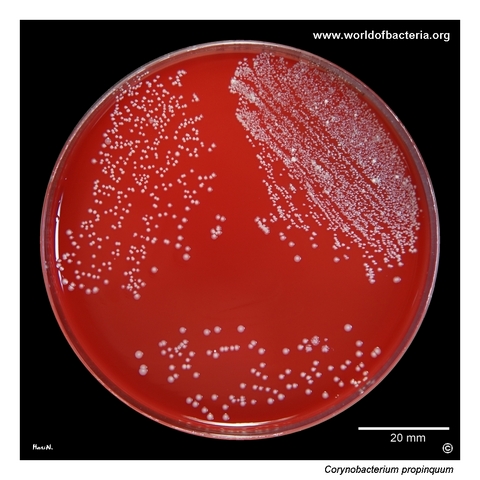
In this image set, colonies are shown after 48 hours of incubation at 36 °C in 5% CO2
The species behaves as a conventional nondiphtherial corynebacterial isolate rather than as a highly fastidious organism
Rapid Identification Tests
Morphology: Gram-positive coryneform rod
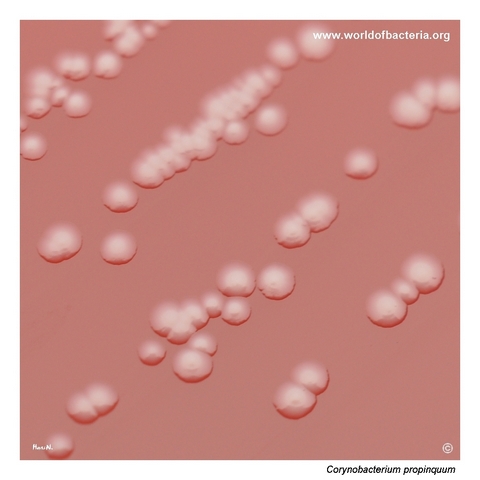
Colony phenotype: small non-haemolytic colonies on blood agar that may resemble enterococci
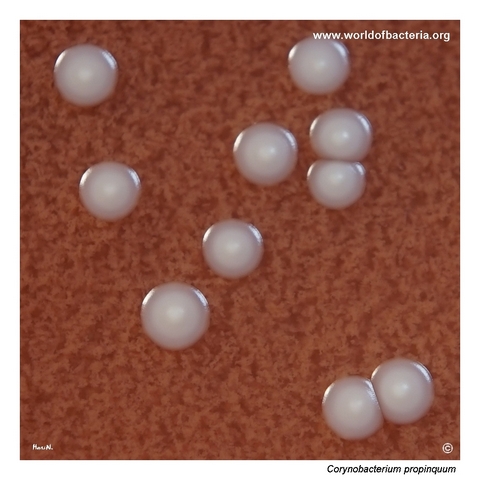
Additional visual clue: a raised or umbonate centre may be appreciated on chocolate agar in detailed colony examination
Differential point: this species is closely related to Corynebacterium pseudodiphtheriticum and may overlap with it in routine culture appearance
Important limitation: reliable species-level identification usually requires MALDI-TOF MS or another modern method rather than morphology alone
Ecology and Clinical Relevance
Natural Habitat
Corynebacterium propinquum is primarily associated with the human upper respiratory tract and is best regarded as part of the respiratory-associated microbiota
Because of this ecological niche, its recovery from sputum always requires interpretation in relation to specimen quality, quantity, and the full microbiological picture
When present in heavy growth, however, it may represent more than an incidental accompanying organism
Common Clinical Specimens
Sputum and other lower respiratory tract specimens
Upper respiratory tract material including throat or nasopharyngeal samples
Occasionally blood culture or other invasive material in rare opportunistic infections
Clinical Significance
Corynebacterium propinquum is usually interpreted as a respiratory commensal or low-virulence opportunist, but published reports show that it can be clinically relevant under suitable circumstances
In this page set, the very high colony counts across multiple sputum dilutions support the view that the species was abundant in the original specimen rather than being only a trace contaminant
The organism is therefore best understood as a species whose importance depends strongly on quantitative culture, specimen type, host factors, and correlation with microscopy
Differential Considerations
Enterococci, because the colonies on blood agar may look deceptively similar
Corynebacterium pseudodiphtheriticum, the closest practical comparison because of the shared respiratory niche and close taxonomic relationship
Other nondiphtherial corynebacteria recovered from respiratory material, especially when the plate shows small non-haemolytic colonies
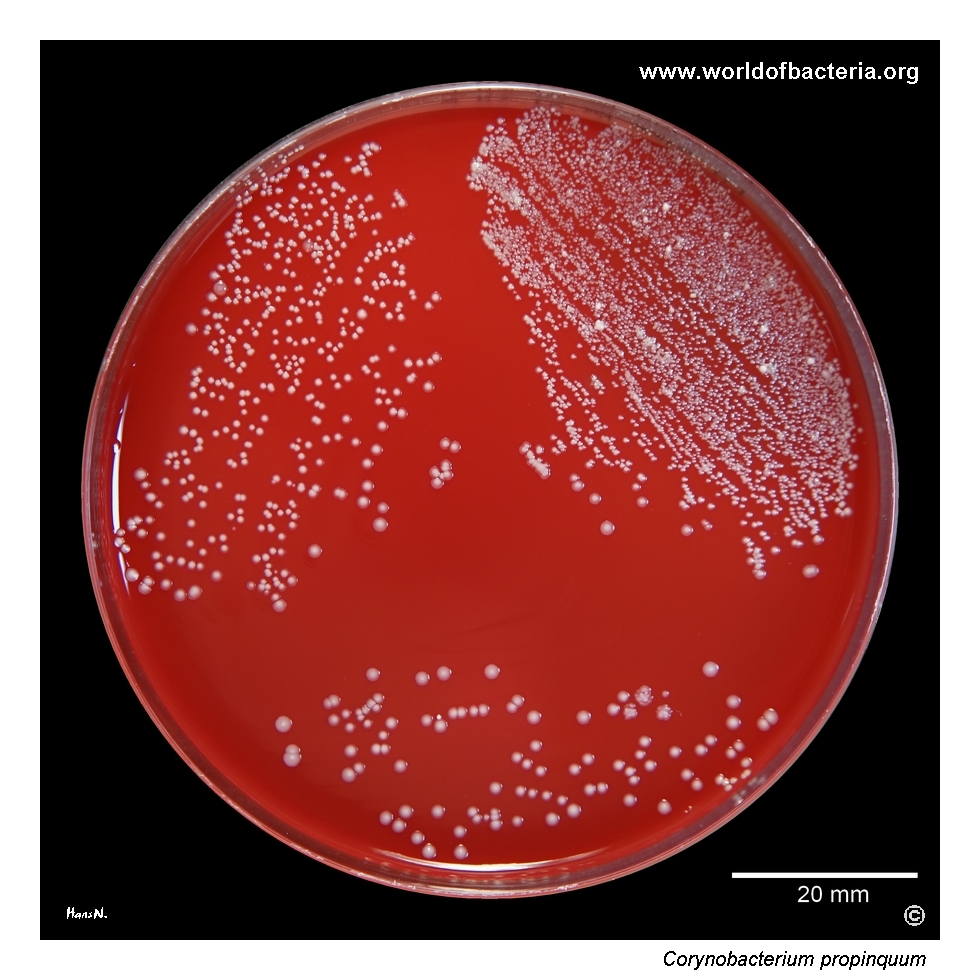
Corynebacterium propinquum on blood agar after 48 hours of incubation at 36 °C in 5% CO2. The sputum specimen was diluted to 10-3, 10-5, and 10-7, and each dilution was inoculated with a calibrated 10 µl loop onto separate sectors of blood agar. High colony counts were present in all three dilutions. This heavy growth supports the view that the organism was abundant in the original sample rather than being only a minor accompanying contaminant.
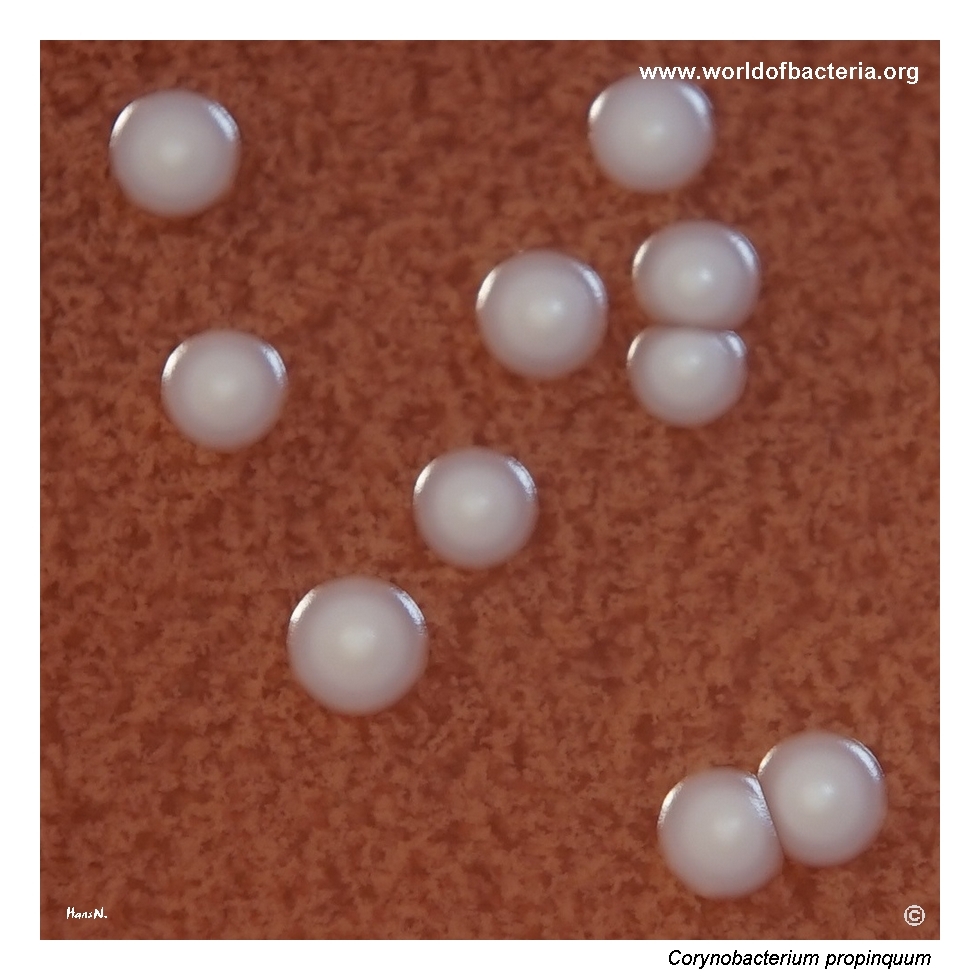
Colonies of Corynebacterium propinquum on blood agar after 48 hours at 36 °C in 5% CO2. In this case, the colonies resemble enterococci in appearance. Such visual similarity is important in routine microbiology, because corynebacteria may be underestimated or misclassified when only gross colony morphology is considered without correlation with Gram stain findings and definitive identification methods.
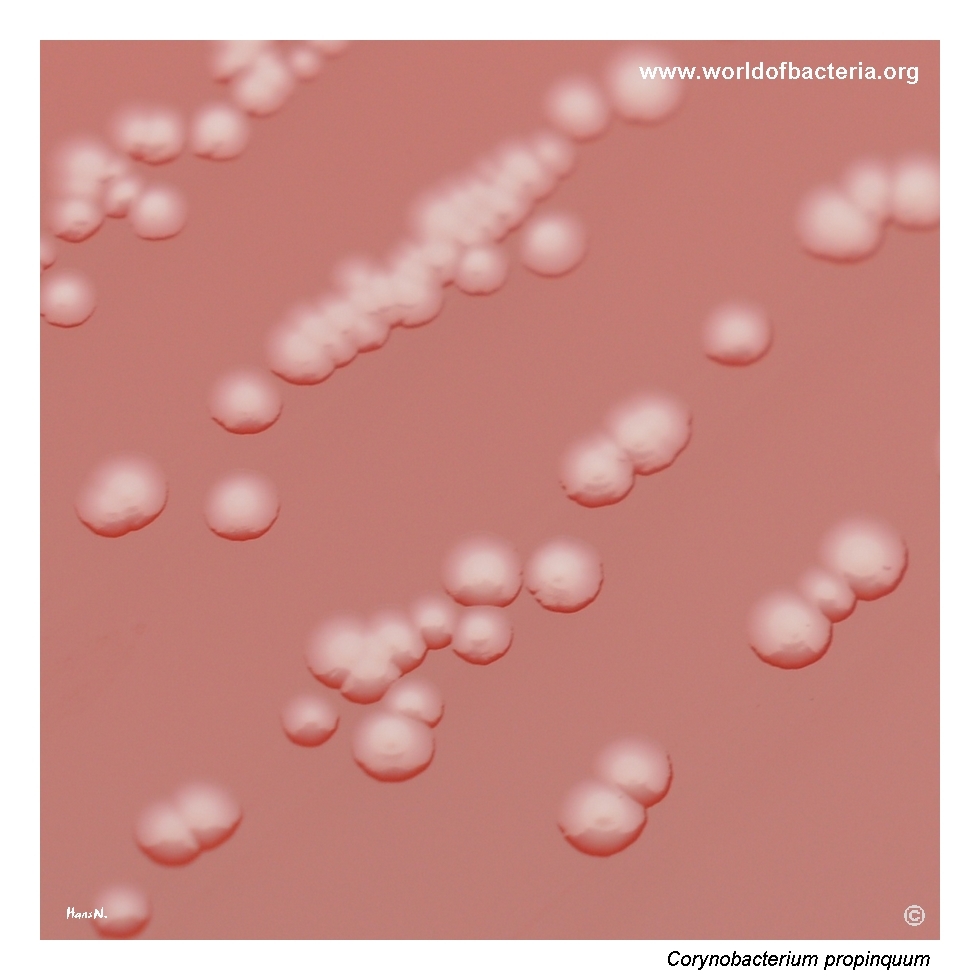
Close-up view of Corynebacterium propinquum colonies on chocolate agar after 48 hours of incubation at 36 °C in 5% CO2. The colonies show a raised central area, described in English colony morphology as umbonate. This feature can be useful in detailed colony description, although it is not specific enough on its own for species identification and must be interpreted together with the overall culture pattern.
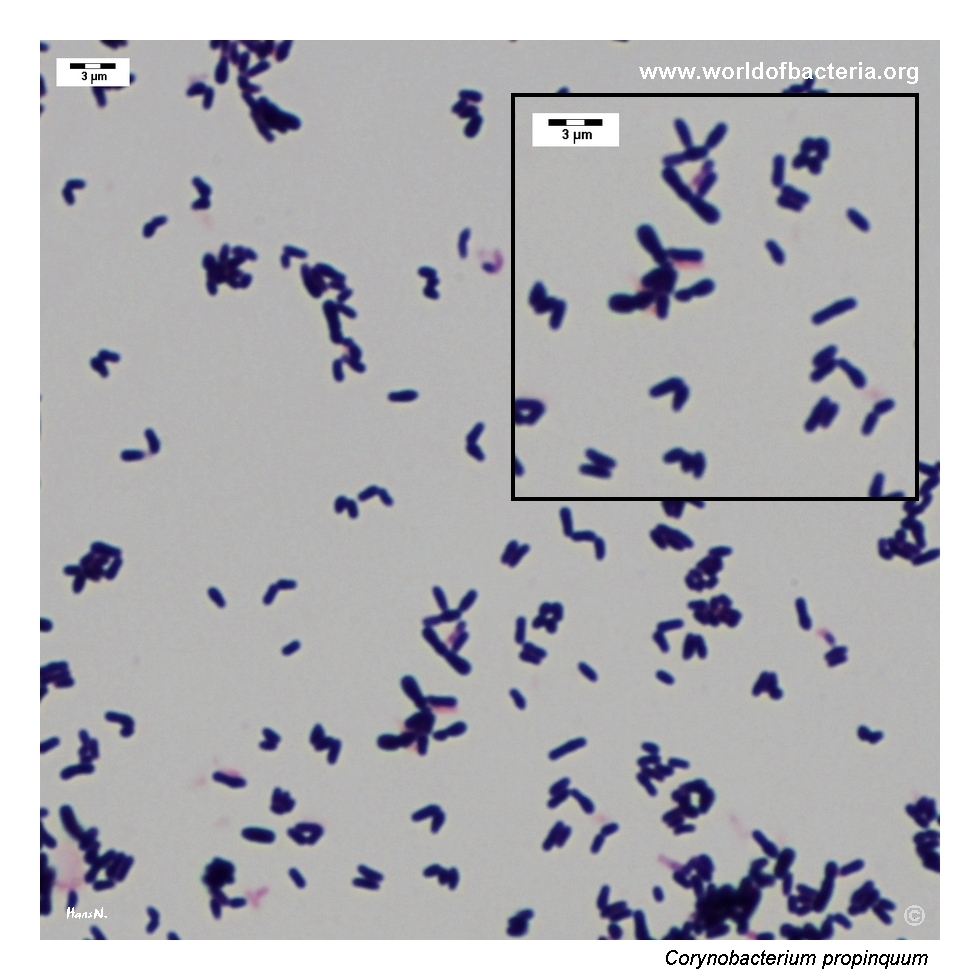
Gram-stained smear prepared from a colony of Corynebacterium propinquum grown on blood agar. The organism appears as Gram-positive coryneform rods. As in other corynebacteria, the microscopic appearance helps place the isolate within the correct morphological group, but reliable species determination requires correlation with culture characteristics and laboratory identification methods.
Diagnostic and Clinical Notes
This page is didactically useful because it shows a respiratory-associated corynebacterium in heavy quantitative growth rather than as a trivial background isolate. The very high colony counts across all sputum dilutions argue that the organism was abundant in the original sample, which immediately makes the interpretation more interesting than that of a sparse accompanying colony type.
At the same time, the colony phenotype remains deceptively modest. On blood agar the colonies are small, smooth, non-haemolytic, and can resemble enterococci. This makes Corynebacterium propinquum a good example of how easily nondiphtherial corynebacteria can be underestimated when the culture plate is judged only by overall appearance.
The close-up image on chocolate agar adds another useful descriptive detail: a raised central area, or umbonate morphology. Although this is not species-specific, it helps sharpen the descriptive vocabulary used during routine plate reading and reinforces the value of detailed colony observation when dealing with less familiar taxa.
The main diagnostic lesson is that specimen type and quantity matter. In sputum, corynebacteria may be dismissed as colonizers; however, when growth is heavy and reproducible and when the organism fits the microscopic picture, species-level identification becomes worthwhile. The page therefore illustrates both the limitations of colony appearance and the importance of correlating morphology with quantitative culture.
Laboratory Identification
Colony Morphology
On blood agar, Corynebacterium propinquum forms small, non-haemolytic colonies that may resemble enterococci or other visually bland Gram-positive isolates. In this image set, the colonies on chocolate agar additionally show a raised or umbonate centre. The overall phenotype is useful mainly because it demonstrates how easy it is to underestimate the species when routine attention focuses only on more striking colony types.
Microscopy
Gram staining shows Gram-positive coryneform rods, which is the crucial observation for placing the isolate in the correct morphological group. This redirects the interpretation away from enterococci and toward nondiphtherial corynebacteria. As with other members of the genus, microscopy is highly useful for orientation but does not by itself provide definitive species identification.
Key Identification Clues
Heavy growth in sputum across multiple quantitative dilutions
Small non-haemolytic colonies on blood agar that may resemble enterococci
Coryneform Gram-positive rods on microscopy rather than Gram-positive cocci
Umbonate colony centre on chocolate agar as a descriptive but non-specific feature
Close relationship to Corynebacterium pseudodiphtheriticum, making modern species-level identification especially important
Modern Identification Methods
Reliable identification is best achieved by MALDI-TOF mass spectrometry when a current database is available. This is especially relevant for C. propinquum because it is closely related to C. pseudodiphtheriticum and may overlap with it in practical laboratory appearance. In diagnostically difficult cases, sequencing or other molecular methods may be helpful, particularly when the isolate is being considered clinically significant rather than incidental.
Antibiotic Characteristics
No simple antimicrobial rule should be inferred from the bland colony appearance of Corynebacterium propinquum. The non-haemolytic phenotype on blood agar gives little information about clinical significance or susceptibility profile.
Because the organism often occupies the grey zone between respiratory commensal and opportunistic pathogen, isolate-specific susceptibility testing is more informative than assumptions based on taxonomy alone.
In respiratory material, the first practical question is whether the isolate is abundant enough and sufficiently supported by the specimen context to warrant full workup. Once that threshold is crossed, therapeutic interpretation should rely on the measured susceptibility pattern of the individual strain.
Note: The key laboratory step is to recognize that a seemingly enterococcus-like colony pattern may in fact represent a nondiphtherial corynebacterium whose importance depends on quantity, specimen quality, and correlation with the clinical picture.