Staphylococcus condimenti is a rarely encountered coagulase-negative staphylococcal species, originally described from soy sauce mash and only occasionally recovered from human clinical material.
Basic Characteristics
Taxonomy
Domain: Bacteria
Phylum: Bacillota (Firmicutes)
Class: Bacilli
Order: Bacillales
Family: Staphylococcaceae
Genus:Staphylococcus
Species:Staphylococcus condimenti
Microscopy & Gram Stain
Gram-positive cocci
Cells occur singly, in pairs, and in clusters
Microscopic morphology is consistent with the genus Staphylococcus but not species-specific
Oxygen Relationship
Facultatively anaerobic
Grows under routine aerobic culture conditions on blood agar
Not a fastidious species in everyday diagnostic culture
Rapid Identification Tests
Catalase: positive
Coagulase: negative
Practical note: an uncommon human isolate that may be overlooked among more familiar coagulase-negative staphylococci
Identification caveat: reliable species-level identification usually depends on MALDI-TOF MS with an up-to-date database or on molecular methods
Ecology and Clinical Relevance
Natural Habitat
Originally described from soy sauce mash
Human ecological niche is less clearly defined than for common skin-associated coagulase-negative staphylococci
Occasional recovery from human clinical material suggests opportunistic rather than routine pathogenic behaviour
Common Clinical Specimens
Rare human clinical isolates from blood culture material and catheter-associated infection have been reported
Additional invasive human cases have been described, but overall the species remains uncommon in routine diagnostics
In this page set, the isolate was recovered from a vaginal swab in mixed flora
Clinical Significance
Usually regarded as a rare coagulase-negative staphylococcus in human microbiology
Its clinical relevance must be interpreted cautiously and in strict relation to specimen type and overall context
Some invasive human infections have been reported, showing that the species cannot be considered automatically non-pathogenic
In the present specimen, predominance in a vaginal swab collected during a general gynaecological examination does not by itself support a pathogenic role
Differential Considerations
Staphylococcus epidermidis and Staphylococcus capitis, as familiar non-pigmented coagulase-negative staphylococci with a similarly bland colony phenotype
Staphylococcus pettenkoferi and other rare coagulase-negative staphylococci that may remain unnoticed in mixed culture
Staphylococcus aureus, mainly as a practical visual reference species on blood agar rather than a close phenotypic match in this isolate
Mixed growth with yeasts or other vaginal microbiota may complicate simple visual interpretation of the culture plate
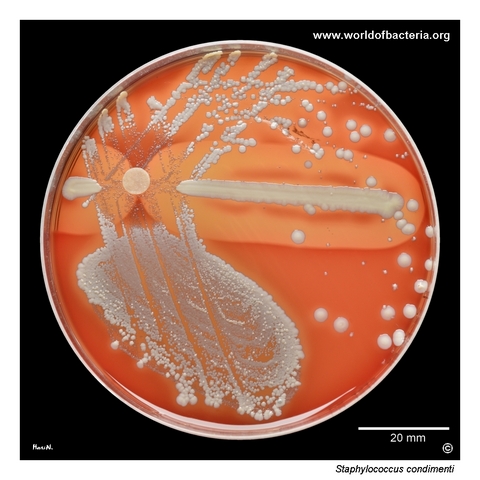
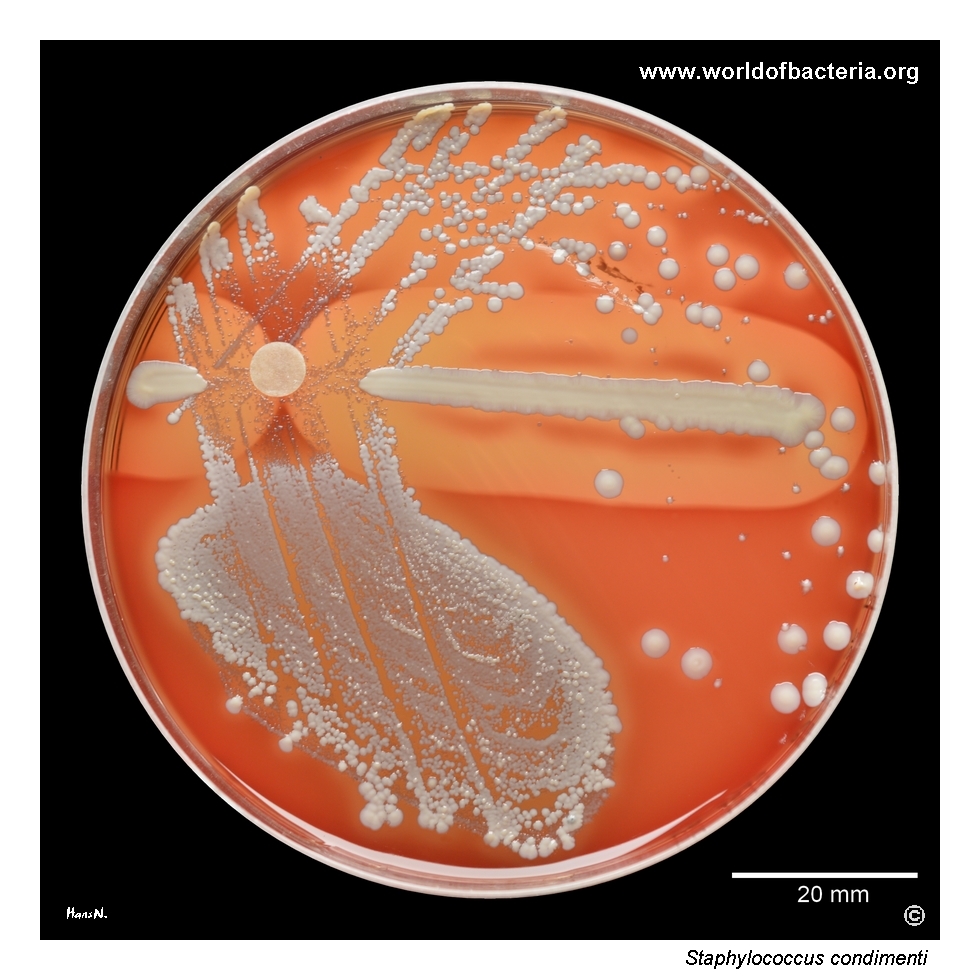
Vaginal swab from a 35-year-old woman examined during a general gynaecological check-up. Colonies of Staphylococcus condimenti predominate in the specimen. In this setting, a pathogenic role of the organism is unlikely. A streak of S. aureus ATCC 25923 and a bacitracin disk were placed on the blood agar plate. Incubation: 48 hours at 36 °C in 5% CO2.
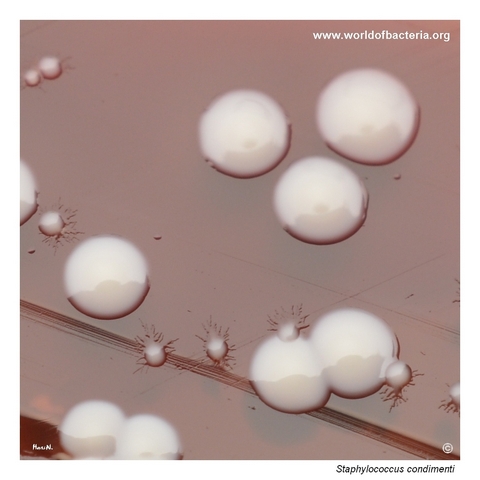
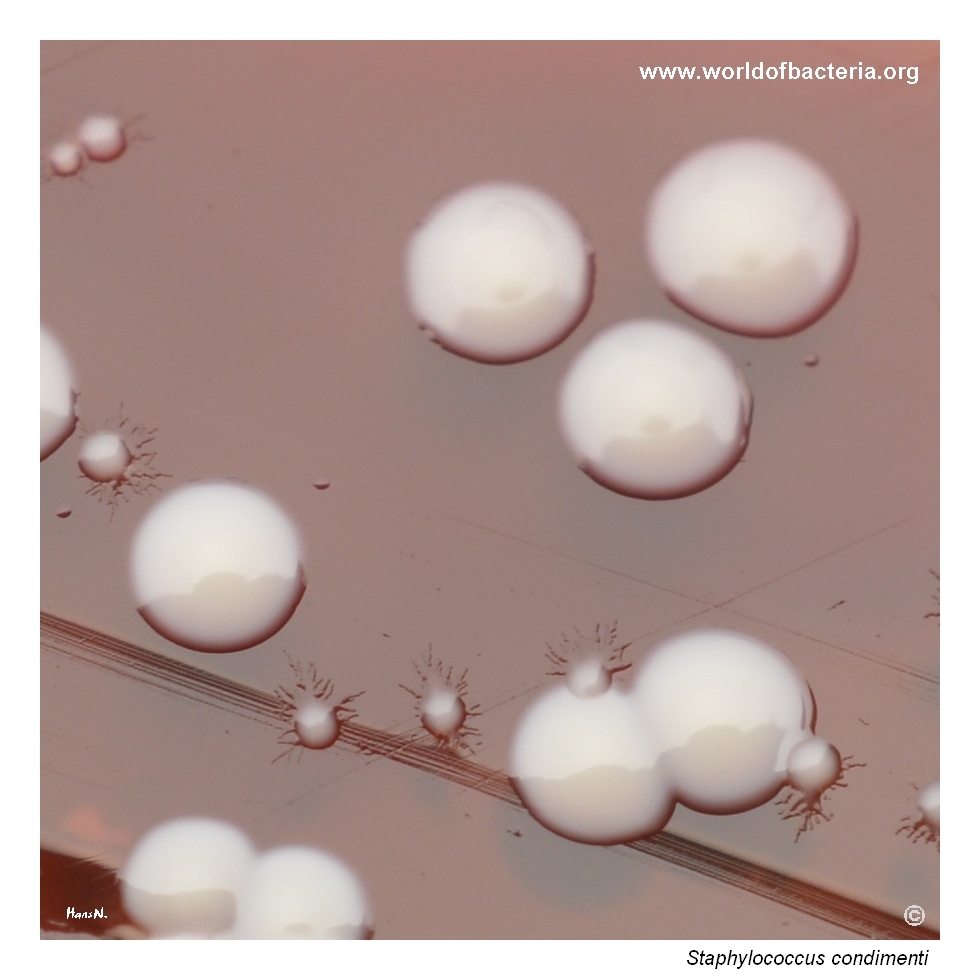
Close-up view of Staphylococcus condimenti colonies. Incubation: 48 hours at 36 °C in ambient atmosphere. The colonies are smooth, convex, and round with entire margins.
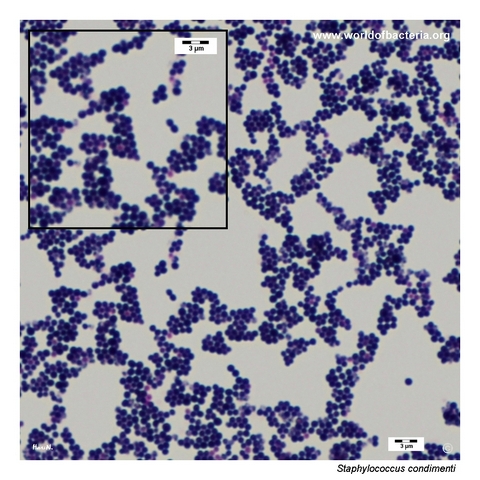
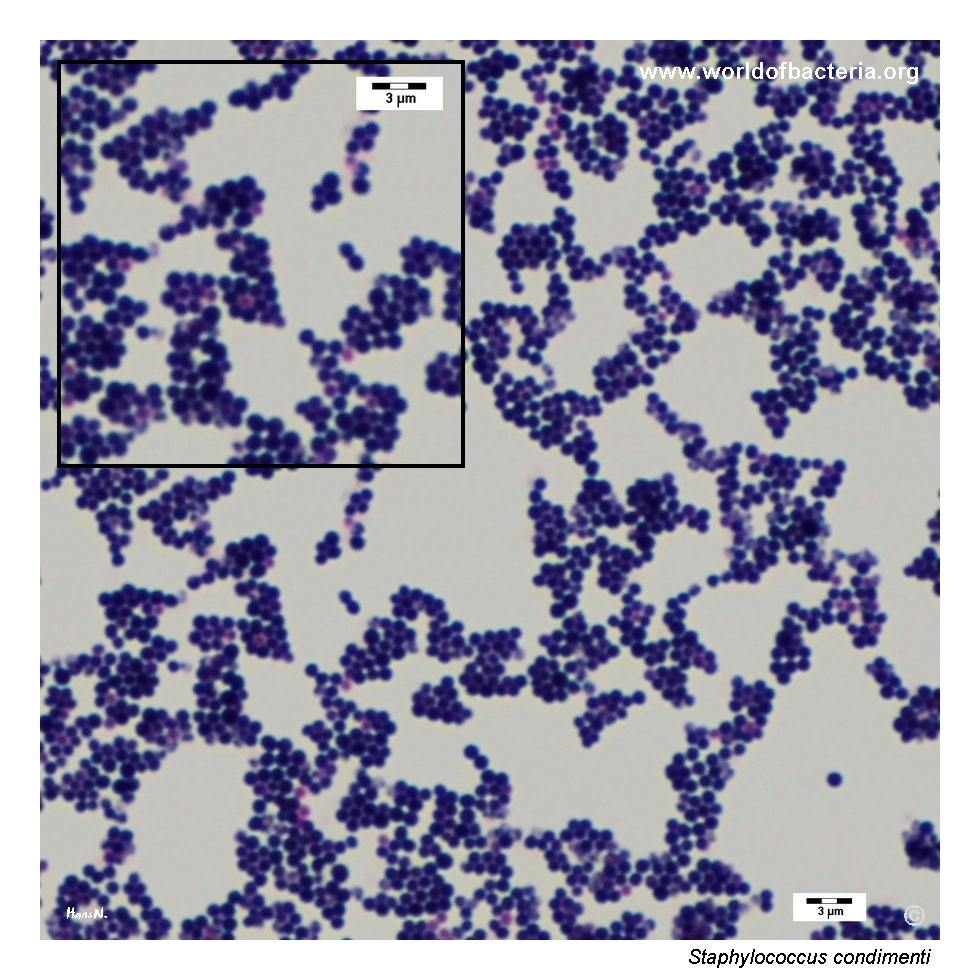
Smear prepared from a colony of Staphylococcus condimenti grown on blood agar and stained by the Gram method. Gram-positive cocci are seen singly, in pairs, and in clusters.
Diagnostic and Clinical Notes
Staphylococcus condimenti is a useful teaching species precisely because it is so uncommon in human clinical microbiology. The culture shown here is not visually dramatic: the colonies are smooth, convex, and microbiologically compatible with an ordinary coagulase-negative staphylococcus. That makes the species easy to overlook or to subsume under a more familiar label during routine reading.
The specimen context is important. In this case, the organism predominated in a vaginal swab obtained during a general gynaecological examination, and its role as a true pathogen is not supported by the culture picture alone. This is a good reminder that detection of an unusual staphylococcal species does not automatically imply clinical significance.
The mixed culture with Candida sp. further illustrates how uncommon bacteria may appear in mucosal material alongside other microorganisms of uncertain importance. For routine diagnostics, that means careful morphological observation should be combined with restraint in interpretation unless the clinical picture clearly supports infection.
From a broader diagnostic perspective, S. condimenti deserves attention because it is a validly published species and invasive human infections have been reported, even though such cases are rare. Reliable identification therefore matters, particularly when the organism is isolated repeatedly or from normally sterile material.
Laboratory Identification
Colony Morphology
On blood agar, the isolate shown here forms smooth, convex, round colonies with entire margins. No striking yellow pigmentation or obvious haemolysis is emphasized in this page set, so the overall appearance remains rather bland and compatible with several other coagulase-negative staphylococci.
Microscopy
Gram staining shows Gram-positive cocci occurring singly, in pairs, and in clusters. This is fully compatible with the genus Staphylococcus, but as with other coagulase-negative species, the microscopic appearance alone does not establish definitive species identification.
Key Identification Clues
Gram-positive cocci in pairs and clusters
Catalase positive
Coagulase negative
Smooth convex colonies with entire margins
Rarely encountered in human routine clinical material
May be hidden in mixed flora or dismissed as an ordinary coagulase-negative staphylococcus
Reliable species-level identification usually requires MALDI-TOF MS with current database coverage or molecular methods
Modern Identification Methods
Definitive identification is best achieved by MALDI-TOF mass spectrometry when the reference database is sufficiently up to date. For rare species or doubtful results, sequencing-based methods may be needed. This is especially relevant for S. condimenti, because its rarity in human diagnostics increases the chance of underrecognition or misidentification.
Antibiotic Characteristics
No simple species-level susceptibility rule should be assumed for Staphylococcus condimenti. Antimicrobial susceptibility must be determined on the individual isolate.
This is particularly important because the species is rare in human clinical microbiology and the published clinical experience remains limited. Therapeutic interpretation should therefore rely on formal susceptibility testing rather than on assumptions derived from its food-associated history or its bland colony phenotype.
In many specimens, the first practical question is not which antimicrobial agent would be active, but whether the organism is clinically relevant at all. That distinction is essential for uncommon coagulase-negative staphylococci recovered from mixed mucosal or surface material.
Note: Antimicrobial therapy should always be guided by formal laboratory susceptibility testing and the overall clinical picture.